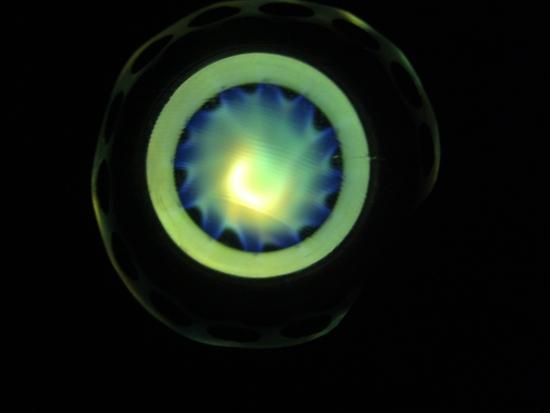
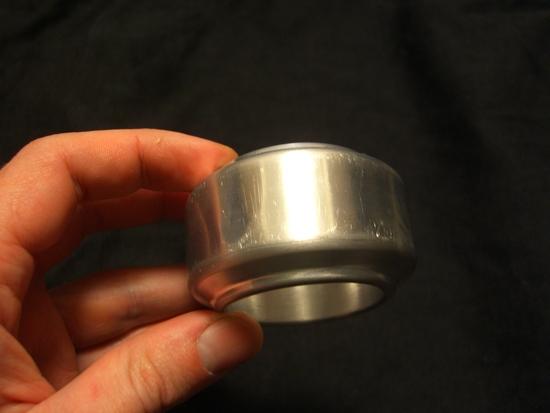
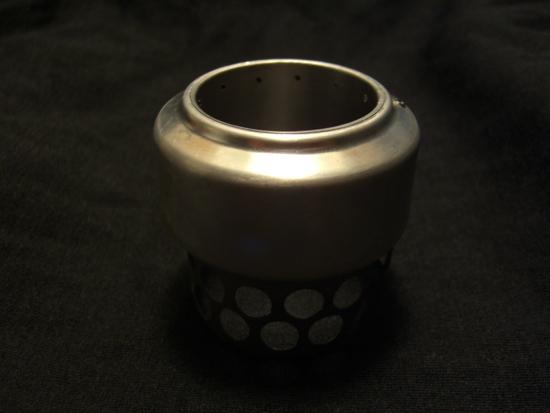
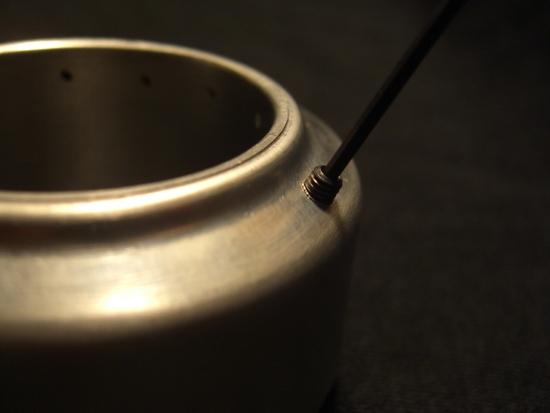
The outer part of this stove is made from the bottoms of two standard size soda cans and the inner is a segment of an old aerosol-toothpaste can (?). A wine bottle was used to flare the inner aluminum tube over the outside lip of the outer parts, to mechanically hold the assembly together and neatly finish the edge. That junction is also sealed on the inside by a small amount of high-temperature silicone. There are twelve pretty large holes in the inner part (about 1/16") and one hole in the outer part with a small allen screw for filling with fuel. A small mound of high-temperature silicone on the inside has female threads and seals around the screw when it's in place so fuel vapor only escapes from the jets. Fuel is added from a syringe that I carry in my first aid kit anyway.
I decided to try the donut shape because I thought it might be possible to construct a bowl-shaped windscreen that has a hole in the bottom and seals around the stove. I thought this might be a good way to prevent gusts from introducing cold air into the space around the pot (inside the windscreen). With a bowl-shaped windscreen that is sealed at the bottom around a donut-shaped stove, all of the gas around the pot is hot stove exhaust, and a chimney effect draws cold outside air through the flame. This idea might not be worth pursuing, but this was my reason for considering a stove of this shape.
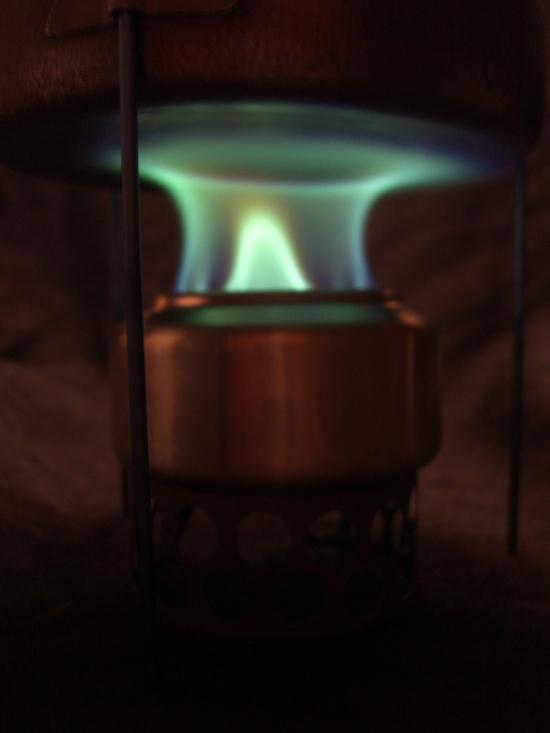
In three boil tests this stove brought to a boil two cups of about 57F tap water in an average of 6:33 min. and burned for an average of 7:51 min. using 15 ml of a 50/50 blend of methanol and ethanol. In the photos below I added a pinch of boric acid to the fuel to make it easier to see (makes it greenish). The stove is primed by burning a small amount of fuel on a small disc of heat-resistant fabric (a "CarbonX" PAN knit). The stand is made from 0.01" thick 15-3-3-3 titanium. The stove, stand, and priming pad together weigh 15 grams (0.5 oz).


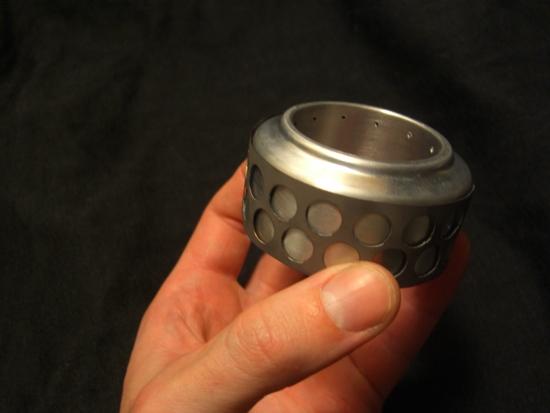



This is a photo of the stove from underneath: