


Suunto Vector's alarm is super super quiet. I would say it is the watches worst quality.
Topic
Become a member to post in the forums.
Suunto Vector's alarm is super super quiet. I would say it is the watches worst quality.
"I'm hiking the CDT, so I liked the Core for the 'Storm Alarm', the digital compass and altimeter."
I presume this isn't your first dance then. The issue then becomes whether you have a stand-alone GPS or not for the trip. Not needed on PCT or AT, and there isn't even concensus on the CDT but I'm in the camp that says "take one". Even if you're pretty good with map and compass, you'll use a GPS on the CDT if you have one. Whether or not it "saves your life" it can certainly save some time/effort, and just make you a bit happier by giving confidence at times that you really are doing the right thing. I particularly appreciated mine a bit over a year ago when sudden onset of snow/sleet/etc in near white-out conditions made it damned difficult to navigate coming out of the south San Juans.
A gps chipset in a smartphone is plenty for the AT and PCT. On the CDT I particularly liked having a dedicated GPS because then I had a dedicated power source just for that, and spare lithium AAs are pretty light to carry.
In terms of digital compass: while I am a gadget type of guy, I'm old school enough to want an analog compass.
Storm alarm: you're walking in the weather, you'll get a good feel for the afternoon storms as the roll in. I, at least, wouldn't see a need for such. I just don't see it as accurate enough to help much with a "climb up and over that thing vs. hunker down low and wait" decision. FWIW, thunderstorms never stopped or slowed me much, i.e., I didn't personally encounter situations where I felt it was too dangerous to proceed (I certainly did experience quite a number of afternoon thunderstorm events of varying intensity).
IF you end up with a standalone GPS unit — then an altitude watch is IMO less of an issue. Yes, you have to fire up the GPS to get that data, but I suspect that a fair number of times when you would even care that you would be inclined to do so.
To be clear, I'm not suggesting that my approach and attitude is universal (!), just what made sense to me on that trail.
Best of luck, and I hope you don't have a high snow year! :-)
Peter, you have a gift card-
Buy a Suunto!
I own 2 Core’s, I like them. I also have a Timex expedition analog, it only tells time, it doesn’t do what the Core does. For me the Core is worth having, but I also know how to use it and what its strengths and weakness are
I don’t have any experience with a Vector so I can’t say anything about it.
There is a learning curve to these type of watches. I use mine everyday.
I gave a Core to my son-in- law and he said the “storm alarm went off during church” and when he got outside it was sunny. I told him- don’t wear your watch in church and wait a few hours, the weather will change; it did. Remember the learning curve.
Here is a thread on Multifunction Watches
I have the Core and have come to truly appreciate the storm alarm. It took me a while to get past the price of the watch, but now that I have had it for more than a year, there are no regrets.
The storm alarm has proved accurate in Scottish Highlands during two different trips this year. The algorithm in the watch seams to do a good job at separating the changes in barometric pressure caused by your changes in altitude and vice the changes in barometric pressure caused prior bad weather. In fact during my first trip I discounted the storm alarm because I assumed that it was only being caused by my constant changes in altitude. I was later hit by quite the winter storm.
I do not use the compass at all, but I will note that the user manual cautions that constant use of the compass will reduce battery life. That might be cause of some of the battery drain stories you hear about Suuntos.
Just got myself a core last week, its cool looking but the main reason for buying it was to keep track of altitude. I tried setting the reference altitude several rt times but in a day it starts to show some random number.

I've been using a Casio PAW1300 for ~3 years now and it's been great. $140 new on eBay. It's the 'slim' option (ie non-huge) in their line of solar powered 'triple sensor' watches. The solar charging is extremely nice and the altimeter has been very trustworthy, which are the main things I expect from it. Only complaints are that the alarm is a bit quiet, so I usually set 2 to make sure I wake up. And secondly, I don't really trust the compass if I haven't calibrated it lately, but that holds for any of these watches.
I don't know that much about Suunto watches, but the hefty price tags and lack of solar charging are a downsides for me. Not a huge deal, but solar charging is the way to go. When I was looking for watches, all the Suunto's I looked at were expensive and bulky.
Regarding the "storm alarm" feature on Suunto's, this is an alarm that goes off if the barometric pressure drops a certain amount in a certain period of time (3 hours I believe). Since changing elevation affects the pressure (they're both just measuring pressure), this feature is useless and automatically disabled if you're changing elevation (ie. hiking in the mountains). If your pressure is only changing slightly (ie. changing weather while at camp, or hiking up a slight incline) then the watch tries to guess if it's the weather or elevation that is changing. The point is, this feature is only handy when you've been sitting around camp for a while or somehow at a constant elevation. A 'storm alarm' may be most useful when you're gaining elevation near a pass or treeline, and unsure if the weather is going to hold for the period when you're exposed, but this is precisely the kind of circumstance when the alarm won't be unable to tell you anything. I'm not sure if Suunto watches do this, but Casio's just give you a nice graph of the pressure and then if you see a nose dive on the graph you can decide yourself if it's because you gained elevation or because the weather changed.

I've had both an Avocet Vertech and a Suunto X3HR. Hands down the Avocet was a much better watch in terms of accuracy and ease of use. Too bad you can't get them any more.
My gripe with the X3HR was it was much too complicated to use. It was also a smooth-surface watch with 4 areas to depress in order to select, read or change settings. It was a real pain to use. Maybe the new Suunto models aren't like that but I will gravitate to another manufacturer other than Suunto when my Avocet kicks the bucket.
Become a member to post in the forums.
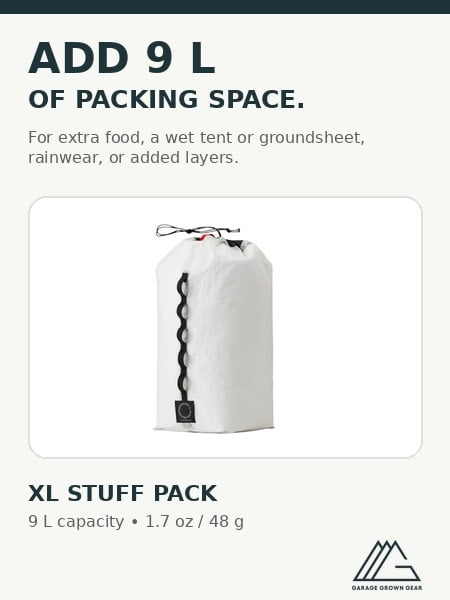 XL Stuff PackLightweight stuff pack designed to secure to the top of your backpack for carrying wet gear, extra food, rainwear, or layers.
 © Beartooth Media Group Inc.
 Loading...