


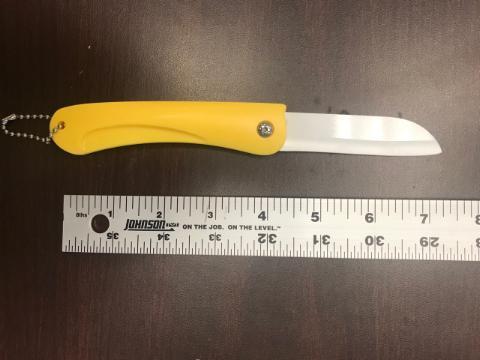
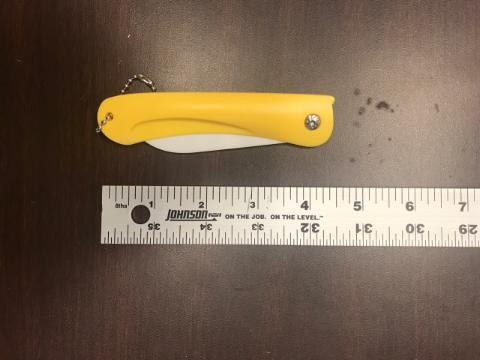
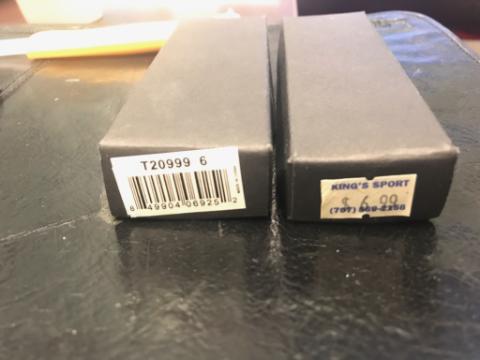
Picked this up at a small sporting goods store in Rio Nido CA this past weekend. Great for fishing use, especially near or in salt water. Super sharp. No brand name visible on knife or box.


Topic
Become a member to post in the forums.
 .
.
Picked this up at a small sporting goods store in Rio Nido CA this past weekend. Great for fishing use, especially near or in salt water. Super sharp. No brand name visible on knife or box.

Looks like it is available on Amazon:
$7.99. Interesting – a dollar more than in the brick & mortar store.
was yours a 2 pack?
Doh! That will teach me to read more closely. Now the pricing makes total sense.

I would be concerned about durability in the field. We tried a ceramic paring knife a few years ago… it survived less than a month before it was broken. After using it for awhile can you post a followup?
I think the ceramic is a lot more brittle than steel, but it is also harder. I use ceramic scissors for cutting Spectra and similar.
Cheers

Hi David, nice find.
Here’s what I use… Opinel no.6 with stainless, lockable blade. 0.9 oz’s, 2-7/8″ blade. Easy to sharpen and keep sharp. I guess I’d rather have a “real” knife.
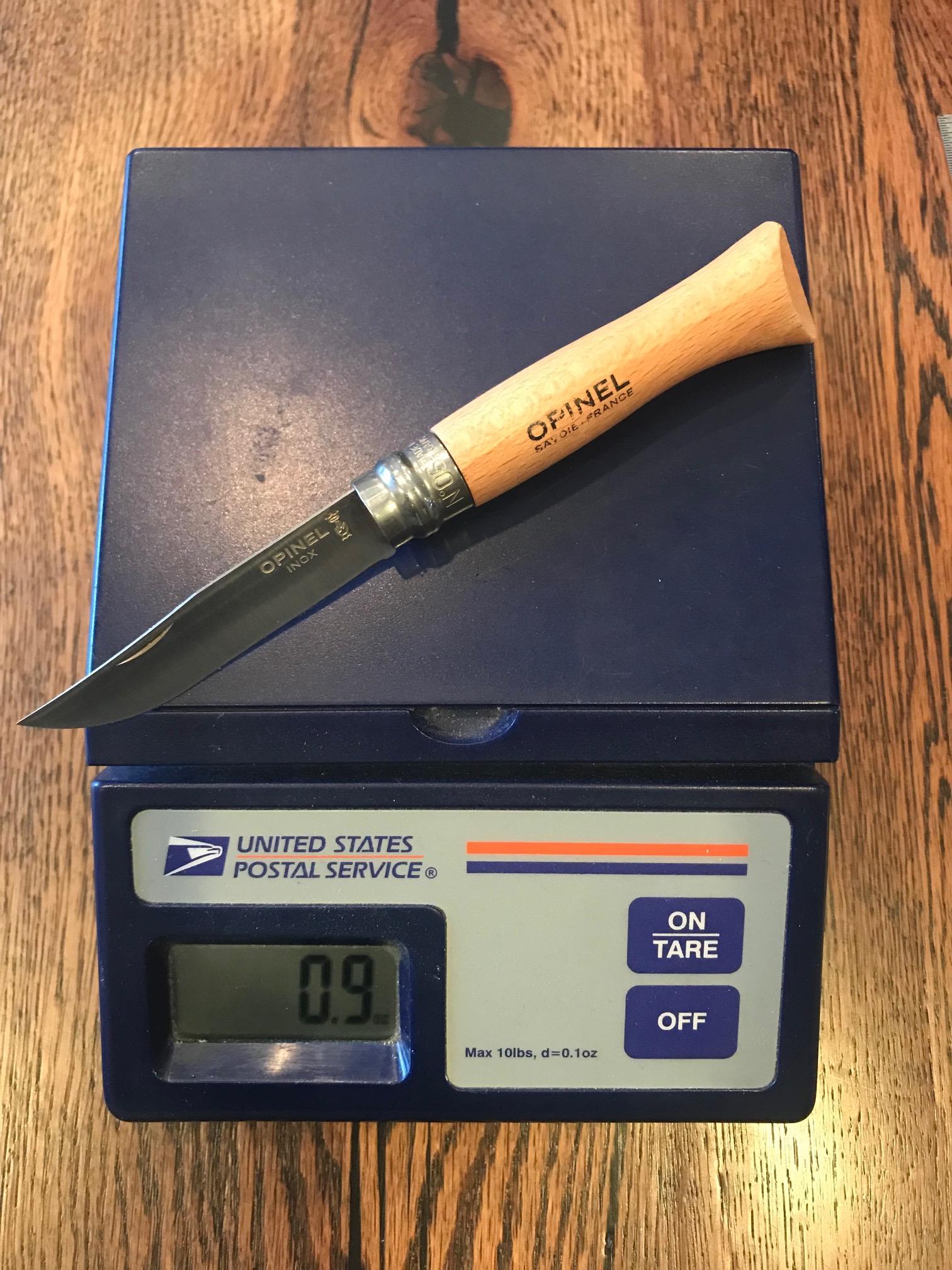
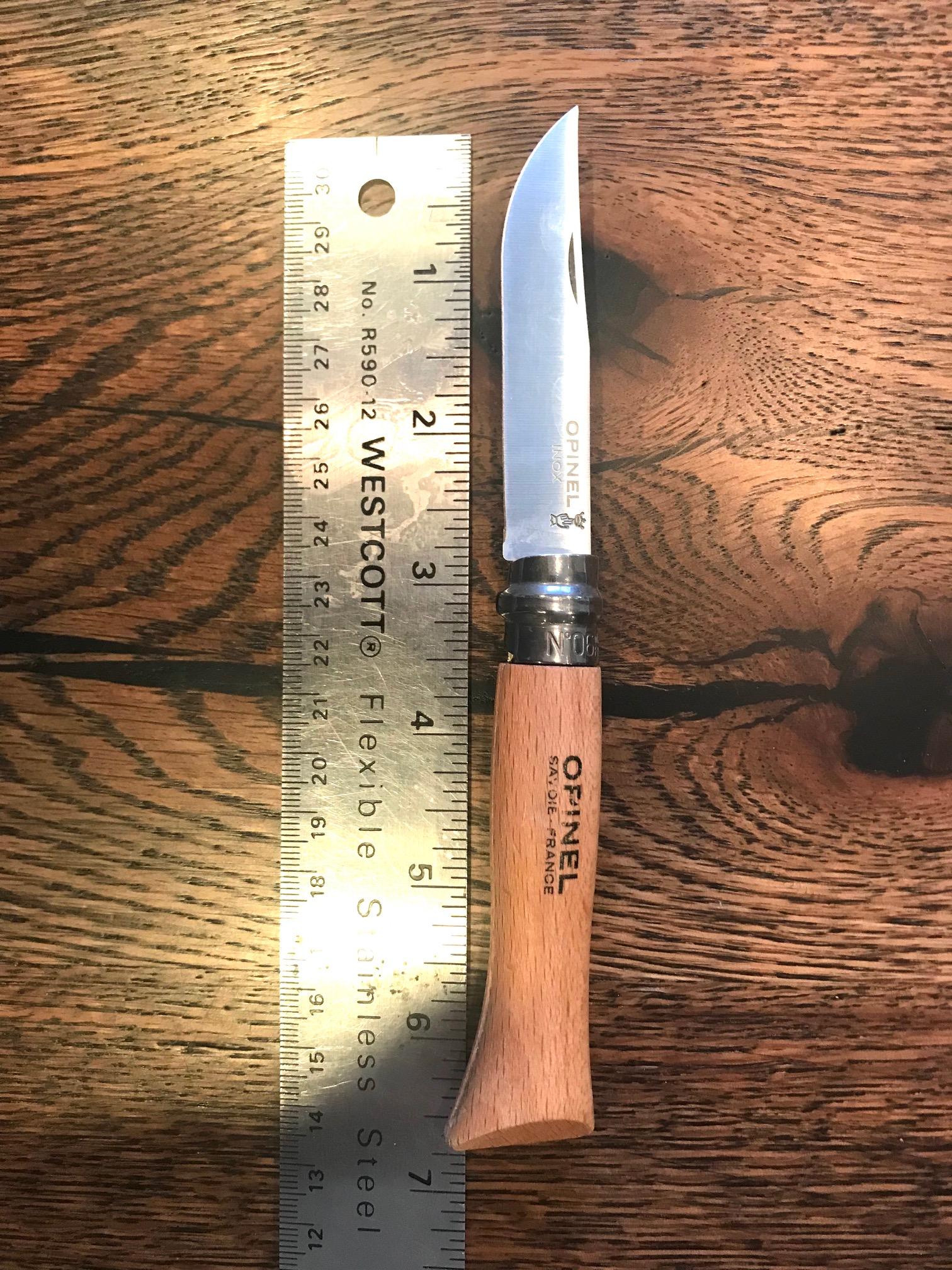
All good points made above. And in general I prefer “real” knives too. On the other hand, I’ve found that even high quality, brand name stainless steel knives like my Gerber and Kershaw can get small spots of oxidation when used for fishing, especially near or in salt water. And I always fish my limit of trout when I’m camping in the Sierras to help control the population of that introduced, invasive species that has virtually wiped out the native yellow- and red-legged frog population (now less than 3% of what it was before high alpine lakes were stocked with trout for sport fishermen). I’ve been using a ceramic utility knife blade for a couple of years with no durability issues, but it’s less convenient and probably less safe than a knife with a handle and longer blade, so when I saw this I grabbed it.
Ceramic is a good solution if your uses dont break it.
My REI sourced stainless steel Gerber pocket knife starting pitting all over after living in my pocket for a few hikes; Zero actual use.
That’s when I realized the brand name knives aren’t necessarily high quality. And most knives are intended to be maintained. Then I fell into the knife rabbit hole.
If you care about corrosion resistance but want to stick with metal check out LC200N, M390, and Vanax
@jakeyjohn1: Wow. I’d love to get a knife made from one of those alloys, but prices ranged from a few hundred dollars to over $2,500!
We have several brand-name stainless steel carving knives at home. I cannot keep them sharp. So I have reverted to an old and rather worn carbon steel carving knife from deceased mother-in-law. It is a delight to use.
Cheers
A few hundred dollars for one of those alloys seems reasonable to me; they should last for years if not decades with less care than carbon steel knives, which as noted by Roger are plenty capable of withstanding the test of time given some love and attention. Those are also technologically cutting-edge alloys, which I find cool.
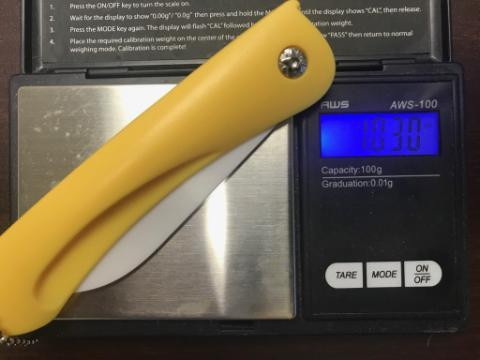
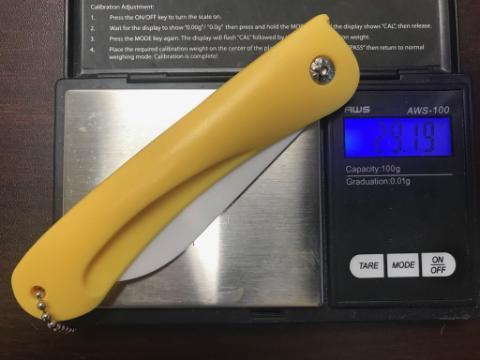
Really makes the $7 price and 1 oz weight of the knife you found standout. Even if it breaks easily that is a low price to replace and low weight to carry extra. I would expect a metal 3″ fixed blade to weigh >2 oz, and that would be a steak/paring knife. Most outdoors/survival knives are heavier.
4 figures for a knife is pretty expensive! Were those forged? Most modern alloyed fixed blades are machined/filed and can be had for a couple hundred; folders with corrosion resistant hardware are more expensive.

This weighs 24g/0.84, with a sheath. I use it when I know I’ll need a longer blade.
The sheath is friction fit and I have never had a problem with it coming undone. I don’t really trust myself to close an opinel barrel lock if I am tired and hungry. Can’t miss the sheath though.
We use a non-serrated version of that Victorinox, and it stays sharp.
Our butcher uses all Victorinox knives in his shop, which I find interesting.
Cheers

The folding ceramic knives are available on Aliexpress for around US$1.
I’ve used one for about a year, fantastic for cutting food or cord or tape and remained extremely sharp.
I lent it to my son to carve a marshmallow stick and it came back broken in 10 minutes.
Moral of the story: get the son a pocket knife he can’t break.
Moral of the story: get the son a pocket knife he can’t break.
Much better moral of story: have son buy his own pocket knife out of his own pocket.
Cheers
So I ordered the knife DavidG described from the Amazon link BenH provided, in fluorescent orange. $7.99 for two, which is remarkably close to $4 each, free shipping.
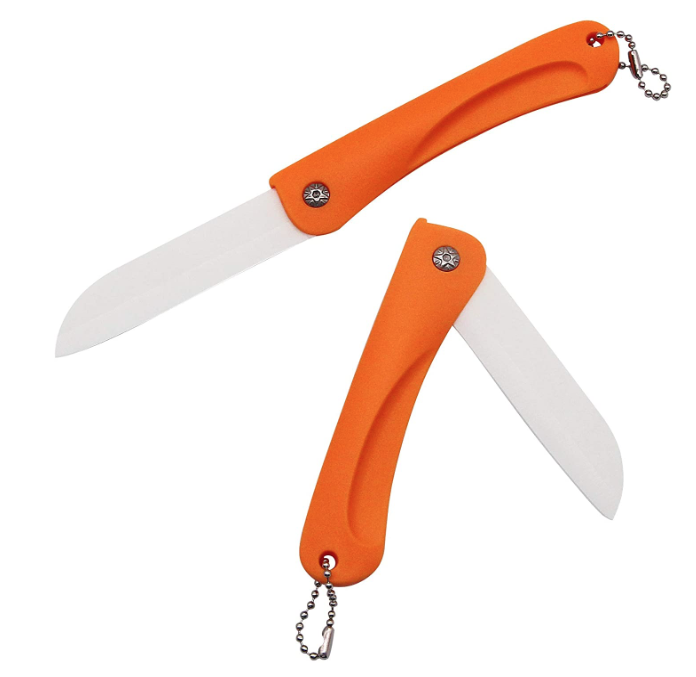
0.96 ounces each with the little key-chain thingie. 0.92 ounces / 26 grams without. Sharp enough to shave with. I like how, as a folder, the sheath and handle are always there. If I was butchering a moose and needed to split those large hip and knee joints, I’d want something, not necessarily much larger, but metal (like a “Little Vicky” paring knife) for it’s lack of brittleness and frankly, UL goes out the window on a moose hunt, but I feel like I could butcher a caribou or black bear, or fillet a sockeye salmon just fine with the ceramic one if I was careful. For a large halibut, man, I’d really prefer my 9″ Dexter-Russell professional fillet knife.
Question for Roger in Australia (and anyone in Britain): Americans say “fa-lay” without the “t”, French-style; while in Zimbabwe, it’s “fill-it”. What do you say?
No long-term test, yet, but it did really well on some tomatoes (which are hard for non-serrated knifes), some cold corned beef (which is a tough cut of meat) and shaved the hair on my arm quite nicely. There was one very small nick in the cutting edge of one of them, but it didn’t effect its use.
All that said, though, I’d still go with a Little Vicky (as MatthewS references) with the snap-on plastic sheath. 23 grams with sheath (lighter!), and well-proven toughness and stays sharp through amazingly long, brutal use. And in a big cut of meat, like a caribou thigh, the thinness of the Little Vicky blade is a definite plus – I noticed the thicker blade width of this ceramic knife when cutting the corned beef.
So the only advantage I’m seeing is $4 for the ceramic one versus $16-ish for the straight-blade Little Vicky with the sheath from the serrated one (so, two knives and one sheath for that price) or less for the serrated Little Vicky with sheath
Nice price point for serrated blade Little Vicky WITH SHEATH for $8.95 at: https://www.knifemerchant.com/products.asp?SRS=1
Longer discussion of the Little Vicky at:
https://backpackinglight.com/forums/topic/in-praise-of-the-little-vicky-paring-knife/
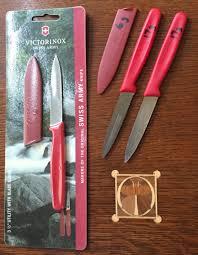
We pronounce it the way it is written: fill-it.
Little Victorinox knife: like I said before, we have two of them: one with a very rounded point (did that myself), to serve as a bread&butter knife, and one with a full point as delivered, to serve as a kitchen knife for cutting up salami, hard cheese, etc. Very sharp, long life, very light, NOT expensive either.
I am quite happy for someone else to spend hundreds of dollars on a knife; just not going to do that myself when I don’t need to.
Cheers
“We pronounce it the way it is written”
Like at the fancy party, where they serve horse duvers?
Which I kind of expected, between a certain British-tradition of bulldogged literal-ness and centuries of “screw the French” feelings.
There are pre-rounded-tip Victorinox paring knives for $5-$7 each, also 4-inches long:
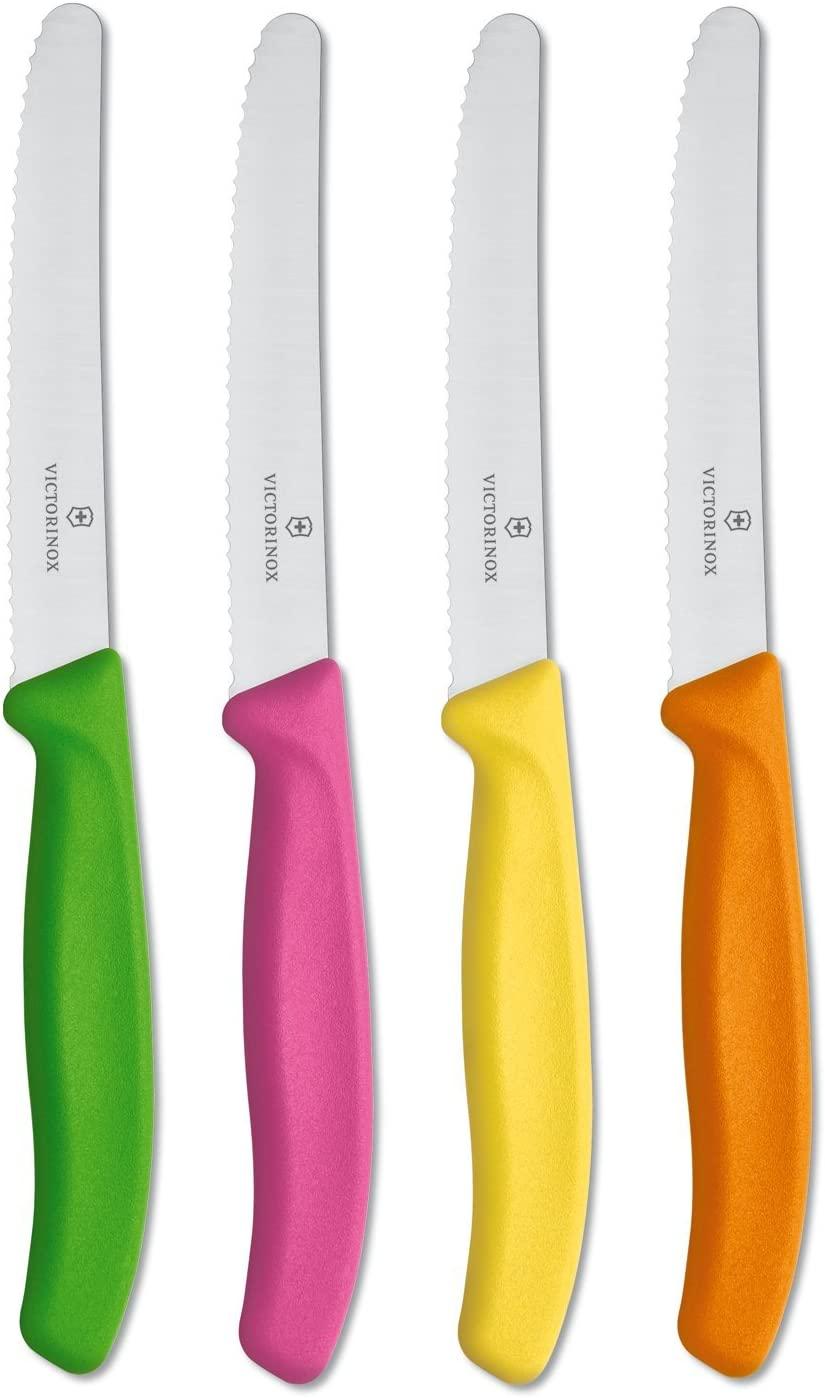
Which is great for cutting bread, salami, cheese, and packaging and is safer than the pointy one and a set of them would be great in a picnic basket; but I prefer Roger’s approach with the serrated Little Vicky and would round it myself on a grinder or belt sander because it comes with that sweet click-on plastic sheath.
horse duvers
Chuckle.
Both the French and any educated English pronounce that slightly differently.
Cheers
Also discovered that at least for some the verb is fill-lay while the noun is fill – it
Become a member to post in the forums.
 Vaer C4 Tactical Field SolarDurable timepiece for wilderness users - 20ATM (200m) water resistance, 120-click bezel, 316L SS casing, sapphire glass, solar-powered, Epson VS-42 Japanese movement, C3 Lume, USA assembly.
 © Beartooth Media Group Inc.
 Loading...