I experimented several years ago with using silica and alumina (ceramic, not fiberglass) woven fabrics for stoves. When I went back to graduate school I had to put that project away, but this weekend I found a few hours to pull those materials out again and do a bit of sewing (with inconel wire-reinforced ceramic fiber thread). I made a windscreen to use with my BPL 900ml pot and MYOG mini-whitebox alcohol stove.
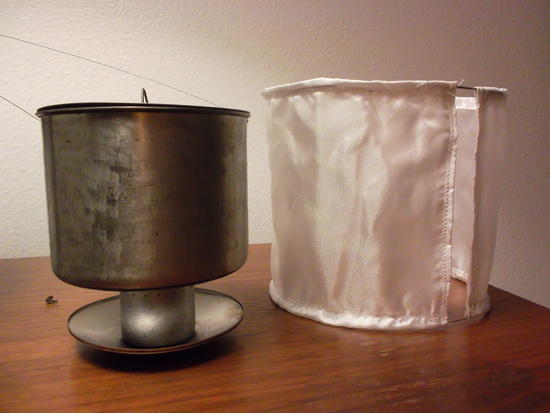
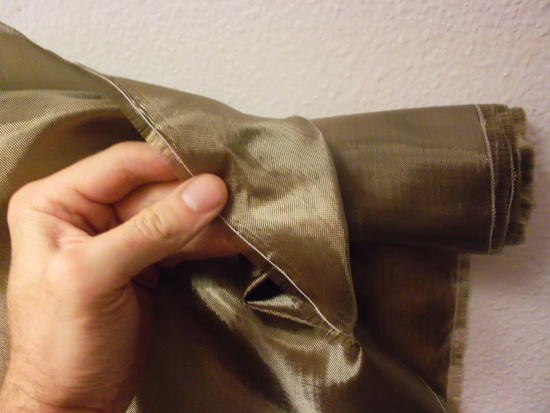
The windscreen weighs 0.65 oz (18 grams). It is made with a rectangular piece of 3 oz/yd tightly woven silica fabric and two hoops of "superelastic" nitinol (nickel-titanium alloy) wire. The fabric will tolerate temperatures up to 1800F. The fabric is very stiff and it is sturdy standing up on its own without vertical pieces of wire (only hoops at the ends). Unlike most aluminum or titanium windscreens, this one is taller than the pot, so it offers more protection from wind and traps the stove exhaust against the pot sides like a caldera cone. It is also lighter than the 4" tall aluminum tooling foil windscreen I have been using (which is 27 grams, or 0.95 oz). On the other hand, the fabric is probably pretty IR transmissive. It doesn't reflect radiant heat against the pot the way a polished aluminum windscreen would.
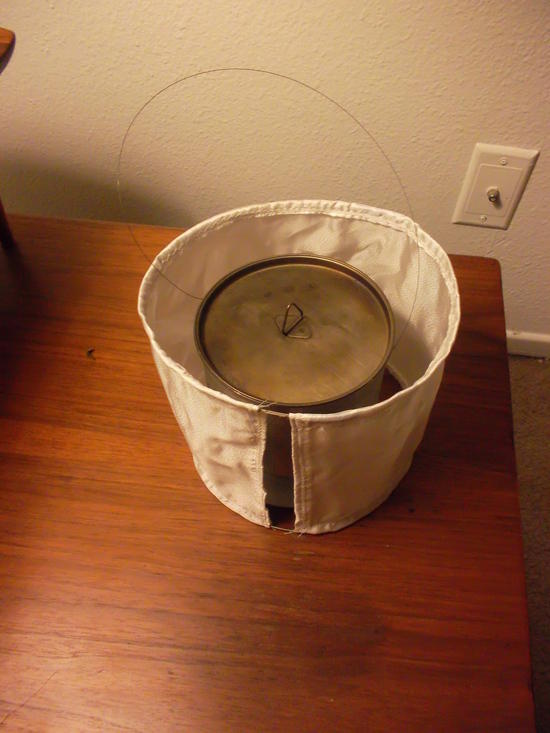
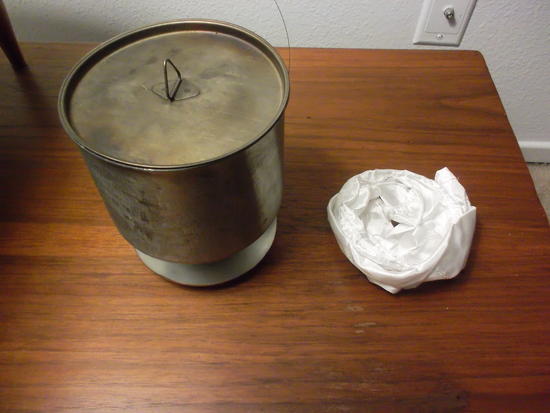
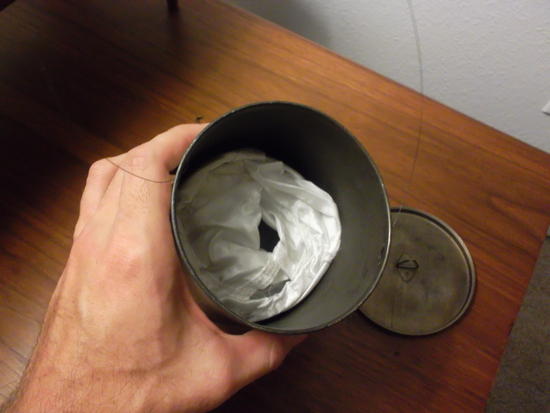
By squishing it down, flipping one side to form a figure-eight, and folding it over, it becomes a compact "puck" that fits neatly inside the pot.

This windscreen has a vertical space at the ends of the fabric that can be brought together or pulled apart (by sliding the fabric along the wire hoops) to control airflow to the stove. When this opening is made wide to admit a lot of air, though, the sides of the windscreen start to bunch up and it looses its cylindrical shape. I'd like to have air holes around the bottom, but I wasn't sure how to do this. The fabric is very stiff and slippery (like fiberglass). Holes cut out of it would rapidly unravel and small holes would be impossible to hem (especially with the stiff, thick, high temperature thread I used). I considered grommets but metal grommets large enough and numerous enough to let in sufficient air would probably double the overall weight.
So I decided to try making "soft grommets". I have a small amount of high temperature silicone gasket compound made by Cotronics called Duraseal 1531. A blue pigment was added to this batch for an industrial customer (I have a friend at that company). Cotronics conservatively advertises a maximum continuous use temperature of 650F, but the product actually tolerates temperatures much higher. My friend used it in a furnace that peaked at 1039F and stayed above 950F for an hour and the silicone gasket was still soft and flexible but it became lighter in color. His company bought this product after trying a dozen other "ultra-high temperature" silicones that deteriorated above 700F.
I painted some of the blue Cotronics silicone onto the silica fabric, covered it with LDPE plastic sheet, clamped it lightly to force the silicone into the fibers of the fabric, and let it cure. The next day, I cut holes out of the silicone-impregnated area.


I plan to make another windscreen, using lighter gauge wire hoops, and add a bunch of these "soft grommet" air holes around the bottom. The silicone couldn't tolerate direct contact with a flame, but it will be on the bottom, on the outside of the fabric, exposed to cool incoming air, so I expect it to hold up just fine (I'll post updates once I have given it a test). I'm also considering making the next windscreen out of 3.5 oz/yd basalt fiber fabric rather than silica, because the weight increase would be negligible but the basalt fibers are stronger, more flexible, less brittle, and I like the brown color better than the bright white of the silica. The air holes and the softer fabric might make vertical wires necessary for a sturdy cylindrical shape. I don't think the extra wires would be a problem for packing it into the pot, though.
Also, the aluminum dish under the stove, in case anyone is curious, is actually a 4" aluminum foil dust cap for a speaker. I thought it's bowl-like shape might help reflect radiant heat toward the underside of the pot, and it protects the ground. It packs neatly inside the pot and it weighs 0.15 oz (4 grams). I got it here: http://www.ebay.com/itm/Aluminum-4-Dust-Caps-For-JBL-Speakers-/150709557033?pt=Vintage_Electronics_R2&hash=item2316fd5729
Any ideas or feedback are welcome.