


I didn't look very much, but found S100 batteries for about $3 each on ebay. It would be a LONG trip before solar or an external auxillary battery would be cheaper or lighter than buying 2 or 10 of those internal batteries.
Topic
Become a member to post in the forums.
I didn't look very much, but found S100 batteries for about $3 each on ebay. It would be a LONG trip before solar or an external auxillary battery would be cheaper or lighter than buying 2 or 10 of those internal batteries.
Mike,
The Olympus TG 1 does have image stabilization. I forgot to mention it.
Like any digital camera with that feature it shrinks the picture a bit when activated. Great for boating, para gliding, etc.
"Like any digital camera with that feature it shrinks the picture a bit when activated."
Please explain.
Some systems have the image stabilization feature built into the body. Some systems have the image stabilization feature built into the lens.
I've never had IS shrink any photo of mine.
–B.G.–
> Like any digital camera with that feature it shrinks the picture a bit when activated.
Um … ??????
Cheers
Cropping is usually true for digital image stabilisation but not for the optical (sensor shift or lens shift) type.
However it is very easy to test, just take a shot of a newspaper or a ruler , with and without the IS on.
Obviously with the camera on a tripod…
(in real life use ,switch the stabiliser off when using a tripod)
The TG1 has sensor shift…so the NOT bit should apply
Franco, I accept what you say about this. Remind me never to buy an Olympus.
–B.G.–
Bob
I just realised that you were thinking about the Dual Image stabilisation of the TG1.
The first is sensor shift, the other is not the same "stabilization" I was referring to (digital image manipulation ) but just a shutter speed and or ISO boost.
For the beginner calling that "Image Stabilization" is a lot easier than trying to explain ISO and shutter speed.
So if we include the Olympus/Fujifilm version of IS we have another type of "anti shake"
1) Optical by lens shift
2) Optical by sensor shift (TG1)
3) Digital by cropping (mostly video cameras)
3)High Shutter speed and or ISO (TG1)
There will be another type coming out in 2013 (I think)
"I just realised that you were thinking about the Dual Image stabilisation of the TG1."
Actually, no, I was not.
The only effective image stabilization that I have ever seen and ever used had it inside the lens, and its purpose was to buck out any slight movements or vibration around the camera and lens.
–B.G.–
Franco is correct, the TG 1 has an OPTICAL stabilization through the sensor so image cropping is not a problem. NICE!
I thought it was a digital stabilization but checking the specs I find Franco has it right.
@ Franco-> Whaddya think of the TG 1 (for backpacking, etc. outdoors) if you've had an opportunity to check it out?
"Franco is correct"
Franco is generally correct, except maybe when he is misinformed.
Image stabilization inside the body makes some sense if you have a sealed-body camera with a non-interchangeable lens. Image stabilization inside the lens makes sense if you have interchangeable lenses, because the IS performance can be tuned better for the focal length or zoom range of focal length of individual lenses.
–B.G.–
The sensor shift stabiliser can be tuned- in for each lens so not all that different from the in lens type.
In fact the Olympus OM D has a firmware upgrade so that you can use non Four Thirds lenses ,such as the original MF Zuiko type, and still get the right stabilisation by telling te camera what you are using.
Try that with a manual focus Canon lens on your DSLR.
Eric
No I have not had the opportunity to take photos with one, I only had a play with a prototype at a show.
I was impressed with the look and specs and generally image quality goes hand in hand with that.
Same for the OM D , some of it due to the new tie up with Sony .
Become a member to post in the forums.
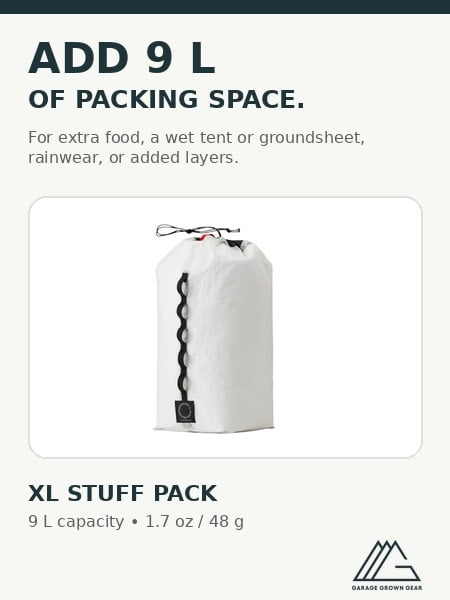 XL Stuff PackLightweight stuff pack designed to secure to the top of your backpack for carrying wet gear, extra food, rainwear, or layers.
 © Beartooth Media Group Inc.
 Loading...