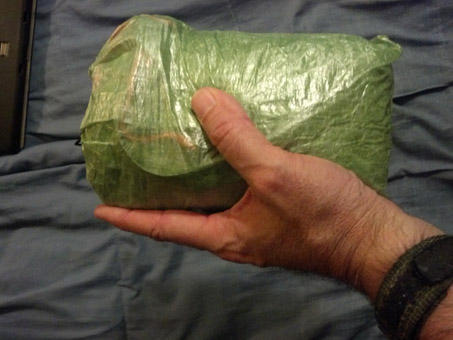
The issue I see is that the listed weight is an important criteria which people use to make their purchase decision, relative to their other purchase options, and they expect only normal possible variances.
The lighter and more expensive the item, the more important it becomes, and the less variance they expect. I suspect that when paired with the silnylon Haven, for a 32oz tent, the objection would have been less than when expecting a 24oz tent paired with the Cuben Haven.
It is especially interesting that some mfgs may report to the nearest 0.1 oz, and be right on the money.
I have no doubt that it is a problem which becomes compounded by scale of operations, outsourcing, raw material variances between suppliers, etc. However, it IS still the responsibility of the manufacturer to maintain the listed information as accurately as possible. The difficulty of maintaining correct information and on-spec product does not absolve the mfg of the responsibility, it is but one more cost of running a successful business, and that applies to most industries.
In this particular case, I dont think 0.5 oz would have raised an eyebrow. 2oz does, especially when it turns out that the mfg knew about it and failed to inform potential buyers.
In my industry, if I shipped a company a product that did not meet the purchase specification, it would be sent right back with a corporate complaint filed, and you would possibly lose a customer. Maybe I just have higher standards based on real world business, I dont know. I am used to mfgs bending over backwards to insure customers have the correct info on their products. It insures a happy customer if their expectations are met, and that means a repeat customer.