


What is an acceptable, in your opinion, percentage for a retail item to be heavier than the manufacturer listed weight?
Thanks for you input.
Steve
Topic
Become a member to post in the forums.
What is an acceptable, in your opinion, percentage for a retail item to be heavier than the manufacturer listed weight?
Thanks for you input.
Steve
Maybe I'm too fussy, but I think in ounces, not percentages. If an item is more than 2 ounces over listed weight, back to the vendor it goes! I've worked hard over the last 7 years to get my pack weight down, and I won't put up with manufacturers who understate weight! The problem is mostly with the "mainline" manufacturers. Interestingly, if the weight is off it is consistently understated–I've never yet found a "mainline" item whose weight was overstated. That's why whenever I visit REI I take my postage scale with me, much to the horror of the clerks. Everything I've bought from "cottage" firms has been right on the advertised weight, or at the most half an ounce one way or the other.
Of course with clothing, weight depends on size, and often the manufacturer won't list what size the weight relates to. The ones that do, say Medium. I therefore figure that my women's Large shouldn't be more than an ounce heavier than women's Medium; usually it's no greater than one-half ounce.
I also will not buy anything that doesn't have the weight listed, unless I can go to the store and weigh it.
Of course with custom items (as when I bought my sleeping pad from the late lamented Kooka Bay), I realize that the weight given by the vendor is only an estimate. My pad ended up a little lighter than Bender's estimate, but I wouldn't have objected if it had been an ounce or two or even three more than the estimate–it still would be lighter than the pad I used previously. In fact, if it had been the same weight as the previous pad (4 ounces over estimate), it's so much more comfortable that I wouldn't have cared.
I like to think of it from the other side of the table: If I was a manufacturer and knew that my product had sample variation (which is a reality of manufacturing), I'd spec weight at the 95% confidence interval, meaning that only 2.5% of production samples would exceed the stated weight. Depending on what I was manufacturing, I would also expect the standard deviation of sample variation to not exceed 1-1.5% of the average product weight of each production run. More sample variation than that means I need to do some investigating of the manufacturing process to determine why the standard deviation is so large.
In general, I'd be OK with 5% overweight for clothes and insulation, or sleeping bags.
I don't see any reason for errors in weight for non-sized or 'hard' parts like pots, or tools. I'd probably grouse about it, but it wouldn't likely affect my purchase of either. I buy for function first, and shoot for the lowest weight I can get that meets my needs.
Become a member to post in the forums.
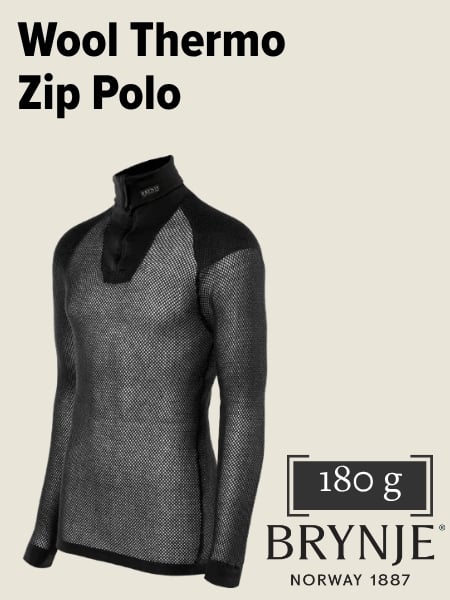 Wool Thermo Zip PoloMerino wool-blend mesh base layer with a 3/4 zip neck for venting and reinforced shoulders for pack-carrying comfort. Weighs 6.3oz | 180g
 © Beartooth Media Group Inc.
 Loading...