


I've been upgrading my gear and I have a question on emergency whistles. What is a more important feature, volume, pitch or a combination?
Topic
Become a member to post in the forums.
I've been upgrading my gear and I have a question on emergency whistles. What is a more important feature, volume, pitch or a combination?
…
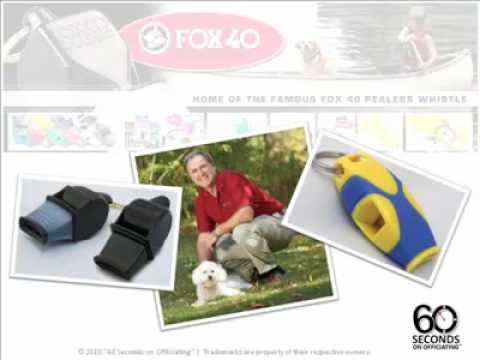
My 10 year old kids have a hard time blowing hard enough to get a loud blast from the Fox 40 mini. The regular 40 requires about 2/3 the breath pressure. However I find the Acme Thunderer to need1/4 of the regular 40's breath pressure and to sound about 1/3 louder.
My wife and kids think the 40 sounds about 5% louder though, so I'm guessing older ears can't hear the 3rd pitch some of the super whistles use. I also find the pea less whistles sound more like wind whistling through the trees, while the warbling that the pea provides is more attention getting in the back country.
I also tried the great big funny shaped whistle that says it uses the correct tone to carry the farthest. In the Eastern forests, and in the fall after the leaves had fallen, it carried about 5-10% father, but was so huge it would not be around my neck our in a pocket…

John,
I think your consideration of breath pressure is important. Who knows what state of health I may be in if I'm calling for help. The less breath pressure the better in my opinion.
Daryl
keep in mind if it is below freezing outside the pea in the whistle can freeze up from your spit, making the whistle until you can thaw it back out. So if you are ever planning to be out in freezing weather go pealess (for your whistle that is)

A couple of links to some whistle testing:
http://www.ysar.org.nz/technology/Testing.htm
The experiment at this link was to determine how far away one could hear a whistle being blown. Some interesting conslusions raised.
http://sgtmikessurvivaltips.blogspot.co.nz/2008/09/whistle-tests-part-two.html
This test tried to determine how easy each whistle was to blow to reach a particular sound level.
I like the simple methodology for the NZ whistle testing.
Informally, I've found that some "loud whistles" aren't very easy to hear or discern in the Lagunas and Sierra, and that whistles with a pea (when audible) are the most easily-recognized as a "human sound".
The "Jet Whistle" is an example of a whistle that's rated for very high db, but that is, frankly, pretty hard to hear in the forest and on Mission Bay in the wind. I think the pitch is so high that it's "wasted" in frequencies that are either inaudible to all but dogs ( ha ha ) or quickly absorbed into ambient, white noise.
I just did an canoe trip in the everglades and gave a lot of thought about whistles [more than I care to admit]. The point about breadth pressure is a really good one. I went with a standard Fox 40 [there are micro versions and flattened out safety versions]. These whistles are loud, carry long distances, don't require tremendous breadth pressure to function and get louder as you blow harder.
As far as dB goes most whistles I came across were pretty close to each other – I think the real issue is pitch and effort. However, this is just my two cents. Just as there are flashlight geeks there must be whistle geeks here on BPL. Hopefully you can find them.
-Brad
If you REALLY want to nerd out!
up here there are birdies that are called the "fox birds" which chirp in the morning … they sound just like the whistle which makes it useless for a few dawn hours
Become a member to post in the forums.
 New Ultralight GearSee the latest releases in ultralight cottage-brand gear from small makers.
 © Beartooth Media Group Inc.
 Loading...