


hello this is my first post on bpl forums!
anyway thinking about making a fleece, kind of like an r1 hoody or close to it. does anyone know of a material that would be similar? or better?
any suggestions would be appreciated. thanks :)
Topic
Become a member to post in the forums.
hello this is my first post on bpl forums!
anyway thinking about making a fleece, kind of like an r1 hoody or close to it. does anyone know of a material that would be similar? or better?
any suggestions would be appreciated. thanks :)
Seattle fabrics sells waffled regulator fleece that is very similar to the R1 fabric. I've used it to make pants and I would recommend it.
If your open to fabric that's a bit different, I would also recommend polartec powerstretch. It's a bit heavier than the waffle fabric, but it has a similar stretch and I think it feels better. It can also be bought at Seattle Fabrics.
ok thanks for the input.
on the waffle fleece does it matter what side is against your skin? seems like the jersey side would be more comfortable…any thoughts?
Usually manufacturers put the waffle side in. The idea is to trap heat between the grids, us the grids to wick moisture, and the smooth face outside is more wind resistant.
Some descriptive links:
http://www.polartec.com/comfort/polartec-power-dry/how-does-it-work.aspx
http://www.patagonia.com/us/patagonia.go?assetid=2300
ok thats what i figured…is there anything special about sewing this kind of material? ive never really done much sewing but i figured it cant be that hard haha. any tips? :)

Sew a scrap piece first to make sure you haven tension good.
Reverse the stitch at the beginning a few stitches to lock the stitch.
i.e. just the same as normal sewing
fleece is fairly easy to sew
I’ve been looking for a pattern and material for a similar project, something like the R1 pullover for use as a mid layer. The Patagonia R1 uses Polartec Powerdry which is a bit different than the Polarstretch..here’s a good breakdown by BPL Staff Member Mike Martin –
“R1 is really Powerdry by Malden Mills (or used to be, anyway). Malden’s Powerstretch is very similar, but has a higher lycra content to provide stretch. Both Powerdry and Powerstretch are available in several weights and finishes.
The Lycra in Powerstretch is fairly moisture absorbent. So, when saturated, Powerstretch takes longer to dry than comparable weight Powerdry. However, with small amounts of moisture, the absorbency of Powerstretch can provide a moisture buffering effect similar to wool, reducing “flash off” chilling from evaporative cooling.”
One thing to keep in mind is that there are different compositions of the Powerstretch. Something like 49% Poly, 38% Nylon, 13% Spandex would be best suited for a tight fitting base layer application. At Mill Direct Textiles they have photos, a small description and material composition of most Polartec fabrics you can find online. Another cool thing about Mill Direct Textiles is that they have an E-Classroom containing a ton of information on sewing fleece.
I’m waiting on a sample of the Polartec 9407 from Outdoor Wilderness Fabrics. It’s 88% Poly/12% Spandex, a composition more suited for a mid layer:
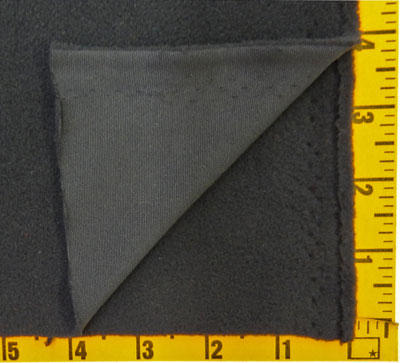
Have you found a pattern? I’m starting on a Thru-hiker Kinsman as we speak, thinking about adapting the pattern but it’s pretty big. There are a few patterns that have caught my eye, both from Finland!:
1. Shelby Kaava Vuokatti Pullover
Looks fairly simply, and free! You do have to print out the pattern, tape it all together and cut it out..
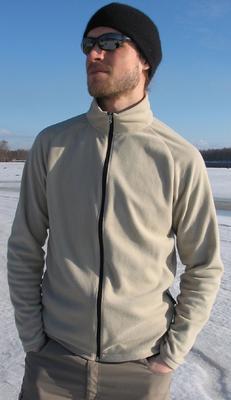
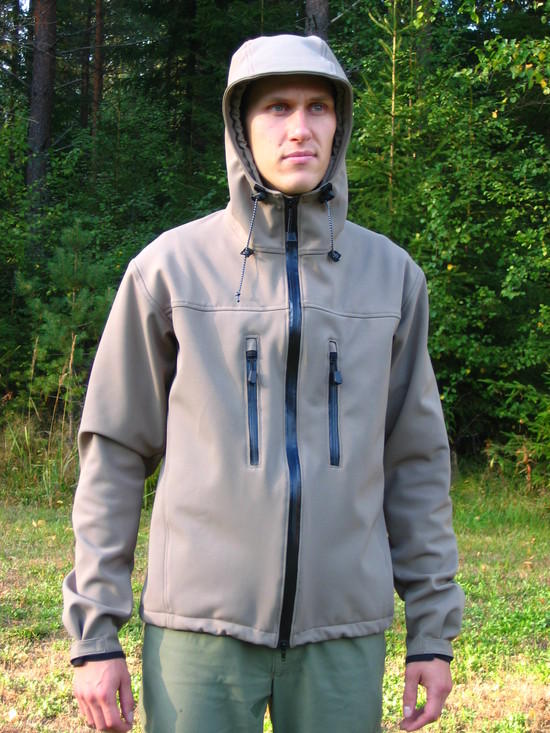
2.Shelby Nallo Jacket This one looks realllly nice, I’m thinking simplify it and go a size smaller, so the fit is form fitting like the R1.
> is there anything special about sewing this kind of material?
I'd suggest that you find a sewing machine that can sew an edge-locking stitch right up to the edge of the fabric (it makes a lot of triangular stitches). I used a Toyota machine that did this perfectly, but then failed to notice that the Elna I bought wouldn't sew to the edge, and needed the seam trimming afterwards, which required great care not to cut the sewing… I put that error down to being treated like 'Buffalo Bill' (the Silence of the Lambs one…) by the little old ladies running the sewing department in the department store where I bought the machine…
Of course, if you happen to have a 4-needle overlocker, that'll be perfect.
It's also a good idea to get a machine that can adjust the foot pressure or foot position, as fleece can be pretty thick.
"I'd suggest that you find a sewing machine that can sew an edge-locking stitch right up to the edge of the fabric"
Fleece doesn't unravel so you don't need to do anything to the edge
It does tend to roll up so maybe something to stiffen it?
The stuff I've used tended to shed a lot of fluff if the edges weren't sealed.
I guess there's fleece, and there's fleece… so worth experimenting with the candidate fleece; if you can get away with a simple seam, then it will make sewing a lot easier.
Almost all commercial fleece garments I've seen are sewn using a 4-needle overlocker, but I guess this may be for other reasons than fraying.
Become a member to post in the forums.
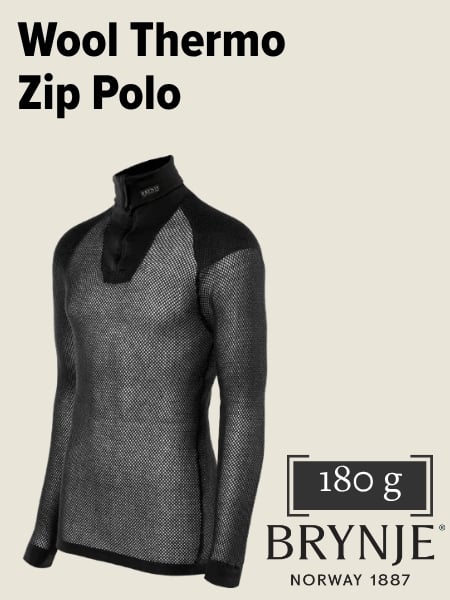 Wool Thermo Zip PoloMerino wool-blend mesh base layer with a 3/4 zip neck for venting and reinforced shoulders for pack-carrying comfort. Weighs 6.3oz | 180g
 © Beartooth Media Group Inc.
 Loading...