So in preparation for this winter hike:
NE BPL Winter Gathering
I began to consider a wood stove to save weight in the winter while melting snow:
Littlbug vs. Emberlit, and Vargo Hexagon testing
The past few days I tested my new (to me) Littlbug Junior and I freakin’ LOVE it!
Pros:
– Relatively light. It is 5oz on the button (no storage case). My Vargo Ti Hexagon stove is 4.1oz (no case). For this gram weenie, it truly is worth it in the winter because it can crank so much more heat. If I were to carry a wood stove for 3-season, it’d be the Vargo.
– Fast to boil. I’ve boiled .9L in as fast as 4 min in 40-45F temps from the start of the match (not including prep time). In terms of speed to boil and heat output I’d put this stove up against them all.
– Packs down small. It came with a canvas envelope to hold it. It’s definitely going. Going to try and rock a tyvek FedEx envelope, gotta get a hold of one to try out.
– It’s a great warming fire. Granted my tests with my Vargo ti Hexagon were in colder temps, but man does this Littlbug Junior crank some heat.
– It is incredibly easy to feed from the top while I sit on a stump and monitor.
– You can set relatively large sticks in the top of it, and let it feed down as it burns. No you can’t go off for 10 minutes leaving it unattended, but at least I can leave it alone for a few minutes while I baton some more, or siphon water from my pot to my Platypus.
– Flexibility in starting. Some pack the entire Littlbug Junior and light tinder on top, then let it burn down. In this time you can easily boil a cup or two (I boiled near a liter in 4min) and then some. Others light a starter fire then place the littlbug Junior over it, immediately start adding wood, and place their pot on top to start getting heat in to the water ASAP (this is my preferred method).
Cons:
– Soot. This is present with any wood fire, but as someone who doesn’t carry soap and wears contacts, man is this a b*tch to keep my fingers clean. At the very best, I figure my glove liners will be all messed up at the end of the trip. Any suggestions at managing soot welcome (maybe I suck it up and carry a single leather glove)
– Gathering wood. Only time on this trip w/ snow will tell. Maybe it’ll be easy, maybe it’ll be a PIA to gather as much wood as needed to melt snow and cook meals. It certainly was easy enough to find fuel during my tests, but snow will change the game depending on how much. I’ve practiced batoning bigger sticks, and that has worked really well to source dry wood in all conditions.
– Can’t put HUGE sticks in it. The stove works best when not overpacked and having a lot of air circulating in there to get a full burn. I fear with the amount of time this stove will run (melting and then boiling snow), ash buildup from sticks not fully burnt could be a problem in the extreme. Moderate sticks sticks burn great, just fill the top rim of the stove with them and good to go.
Here is the Littlbug Junior w/ a Vargo Outdoors .9L pot: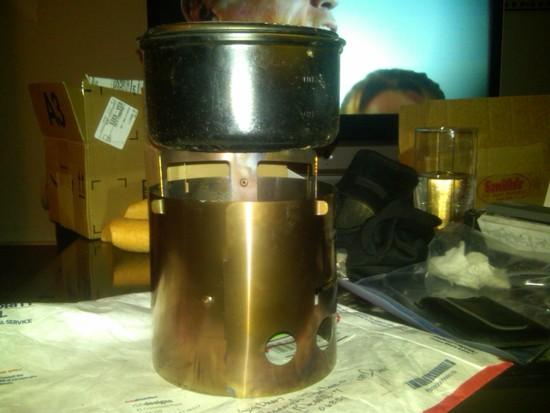
Vargo pot is 5.25″ in diameter. The Littlbug Junior is 5.5″ wide. Perfect fit to maximize catching the flames at the base while allowing access to add more wood.
For reference, here is my Samsung TV remote inserted into the stove: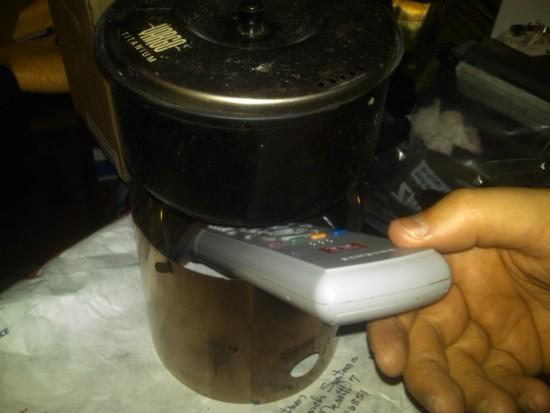
Little thin split wood over a cottonball. W/ something like a cottonball, you can cheat and skip the ~really~ thin kindling: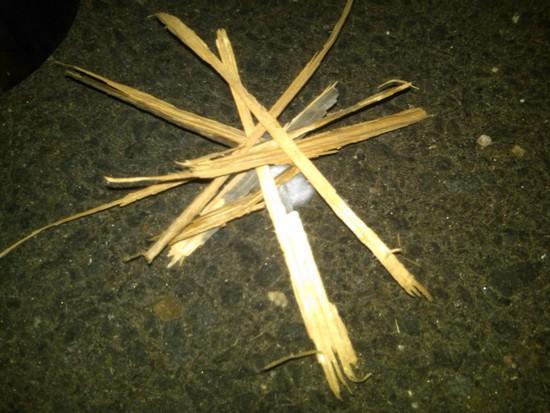
After I lighted the cottonball, just placed the Littlbug Jr. over it and off we go with adding fuel: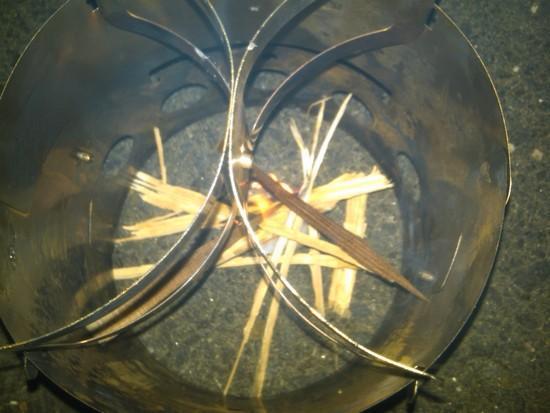
Before you know it, the sucker is ROARING!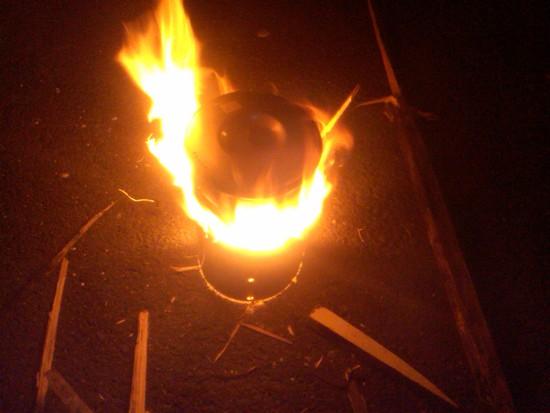
And once you start admiring the fireball you’ve created, you can stuff the sucker with long sticks, every few minutes you tap them down further. This is where the skills of choosing a big stick to last long vs. too big and incomplete burn comes in. You don’t want thick sticks burning 1/2 way, then ending up in the graveyard of the stove at the bottom. Yeah coals are nice, but complete burns are better.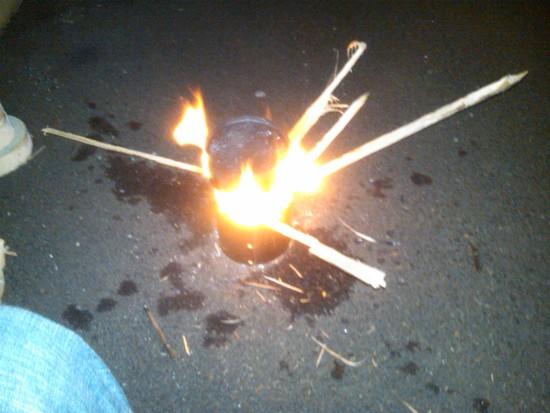
Roaring right along…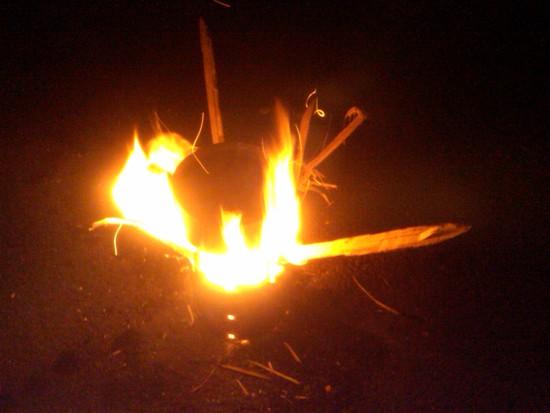
Afterglow…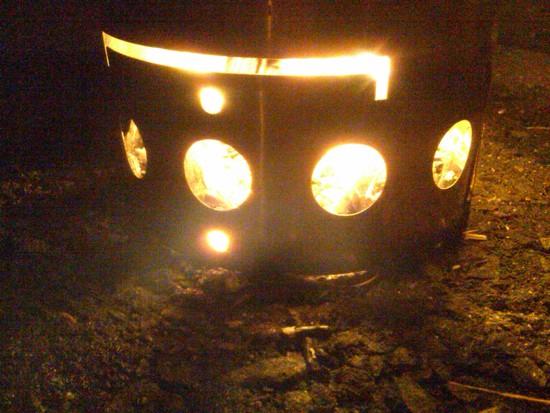
The lid on the Vargo pot weighs 1.27oz… tinfoil is a WHOLE lot less. :p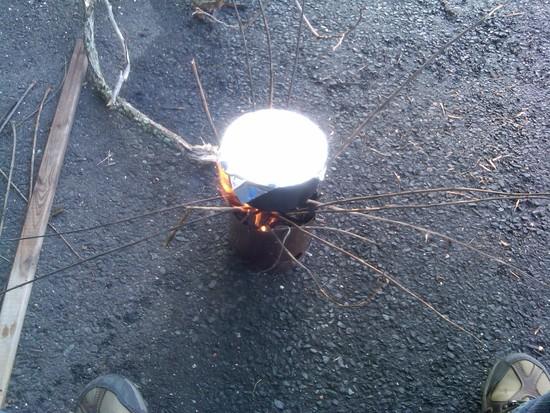
I tried feeding sticks through one of the 5 air holes, kinda like an Emberlit stove, but it’s not designed for this. It’s possible with small, thin sticks, but not optimal since the holes are smaller than the Emberlit’s feed hole and you optimal combustion height is above those air holes inside the stove. The Emberlit’s feed hole is higher. In the end, if you want to feed the stove a big stick and let it burn while tapping it in every once in awhile, feeding the sticks from the top is much better. Feeding from the top also allows for higher heat output (advantage in the winter and why this stove consumes fuel pretty fast) as more surface area of the stick is exposed extending down to the bottom of the stove as opposed to the Emberlit setup: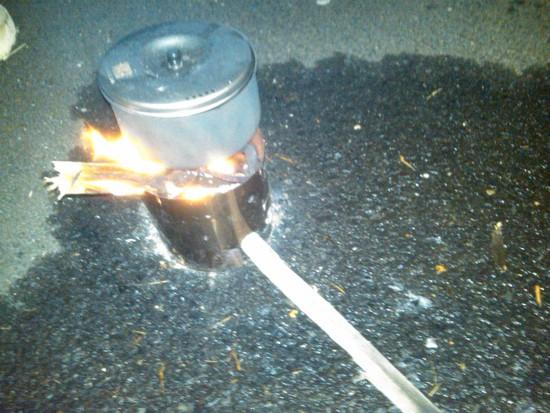
Firestarter / Tinders
I was experimenting with this ultralight sparker:
SOL FIRE LITE
In the end, it was just so much easier & quicker to rock the mini bic when it was cold out. I think that will be even more important when I’m cold, it’s night time, and I’m exhausted from a long hike. It’ll be good to start the fire quickly. I didn’t want to rock a larger fire starter (with bigger/hotter spark) like a flint and steel or something from Ultimate Survival Technologies as they were heavier than a mini bic.
As for carried tinder… It came down to four items.
1) Alcohol pads. If I used these, they would be multi-use (WIN!) but in the end, they just don’t put out enough flame for winter use (for me).
2) Vaseline Cottonballs. Work great in starting fires, but messy as heck handling something with Vaseline all over them….especially when I’m trying to keep my hands clean (contacts).
3) Vaseline “tacos.” Using a cotton pad, I scoop vaseline inside and wrap them up keep my hands mostly clean, then store them in a Ziploc bag.
4) Weber Firestarter Lighter Cubes. Cheap and light. No mess.
(times, flame size, knifing it)
Not shown here, but the Weber cube goes up “like a match.” The vaso takes a second or two of the mini bic lighter, but catches fine eventually (no I’m being lazy, and not fluffing out the cotton pad). This is after a minute of burn time or so: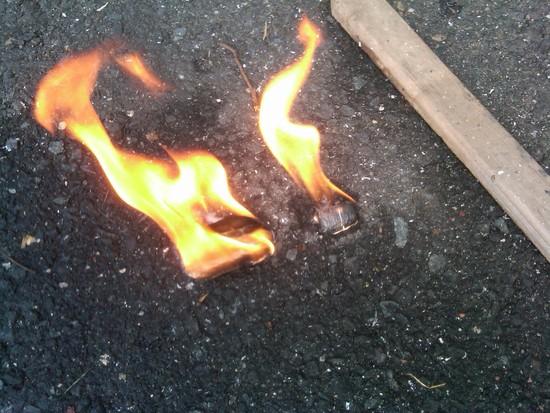
And a few more minutes: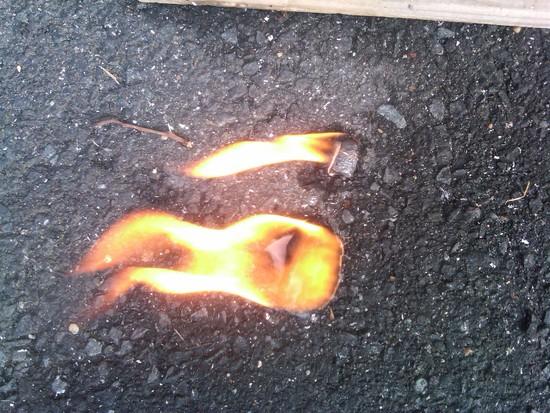
This is near the end of the weber’s life: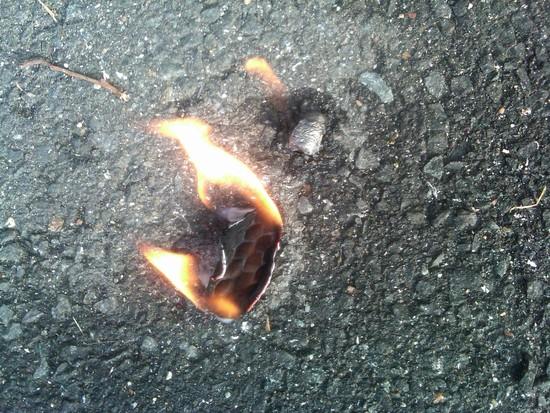
The 1/4 cube of the Weber (2g) lasted 4:37. The 4g Vaso “taco” lasted 6:24. Both are more than enough to get a fire going…piece of cake. I’ll be carrying the Weber cubes…no fuss, burns a good long time…AND if I want to, I stick it on to the end of my knife and can place it lit, right in the middle the Junior’s firebox if it is light/decently packed to start the fire (but I use the other method to start the fire as mentioned above).
Hope this has helped anyone else who is as interested in wood stoves as I as of late!