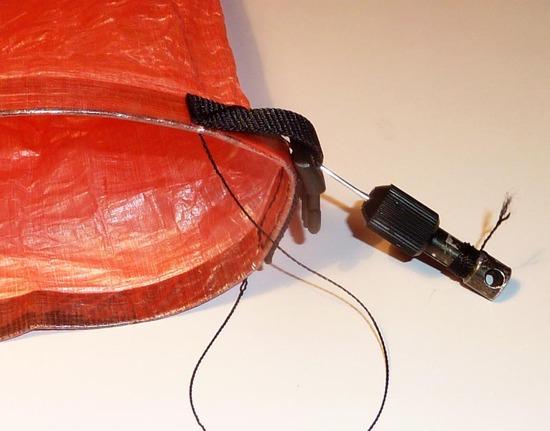
Back in the early days of cuben there were a LOT of seam failures. Most people were stitching the material like silnylon, putting on seam sealer and going for it. Durability was thought to be poor because seams didn't hold up well. Later taped and glued seams became more the norm. Mostly, these have good durability, but they are not like the older silnylon. They do not stretch much and do not have that forgiving nature that made working with silnylon easy. And, the cuben material itself has evolved. Mylar, extra reinforcements, improved lamination all mean the material is better.
During the same time, silnylon has actually degraded. Prior to 2006, the coatings were a bit thicker, tended to be a more forgiving and were better bonded to to fabric. A fine hole often repaired itself. This means that the new stuff no longer resists weathering that well. The cheaper substrate material is lighter (from about 1.5oz/yd in 2006 to about 1.3/oz per yard today, total weight change.) It is not quite as waterproof and can develope "spray" issues after several uses in heavy downpours.
For today, the issue of cuben vs silnylon means generally going with products of about equivalent durability. (Older silnylon, if you can find it, has a significantly better overall life span and works about the same as cuben, albeit heavier. Weight per Days of Use was better with silnylon.)
The techniques for using the two materials differ. You do not NEED a sewing machine with cuben. Tape & glue. The cuts need to be much closer, there is little room for error. Kevlar reinforcment means cutting with shears/scisors is not really good; hot cutting or a disposable razor/X-acto knife works well. Engineering a tent can be difficult because the pieces need to line up exactly for tape & glue to work. Allowances need to be made for slightly greater seam widths. Generally, you avoid seam stress, and do not count on the rolled seam as reinforcement for a ridge line. Broken loops can be painfull to replace, or, simply not possible. Adding a new one next door may be the only option. Maintenence is poor. Once taped & glued, it is permanent. You cannot use a seam ripper to repair or modify it. In the field, duct tape works well for repairs, though, with up to 6mo's, to a year out of a patch.
Silnylon requires a sewing machine. The material stretches, so, carfull tension is required. It is slipery, but, this is both a boon and a detriment. Layouts don't need quite the same accuracy since it will stretch a little. Cutting with shears is easy and it does not dull them. Engineering within an inch or so is all that is needed. The material will sag or tighten depending on humidity. After a few uses it is easy to "train" a tent. Seams can be narrower, or wider within a fairly large tollerence. A rolled seam *can* be used for reinforcement on a ridge line for example. A broken loop?? Sew it back on after removing the old one. A seam ripper can allow fixes and mods as needed. Sealing a few small needle holes is easy. Repairing in the field is not quite as easy with duct tape. It should be considered temperary at best.
Of course, the same issues with reinforcements on guy line, corners, any pole mounts, and high stress areas still apply to both. Only the methode of attachment will vary a bit.
Cuben is fairly transparent. If you are body modest, not the best to use. Silnylon is generally more opaque. Other people may object if they can see into your tent, soo, use some caution in public camp sites if you use cuben.
Overall water resistance of cuben is very high. Despite tested results of low hydrostatic head. It is more than enough to turn rain. Sylnylon is OK, but not qute as good, despite tested results of higher hydrostatic head. Generally speaking, condensation is *terrible* with cuben. It needs well engineered vents!! Sylnylon is much more forgiving, but still traps condensation. On a scale of 1 to 10, I would put cuben about 9.5 being close to the worst. Silnylon would get about a 7. This is from personal observation, soo, YMMV.
So, comparing cuben to silnylon, is kind'a like comparing apples and oranges. There is a LOT more to it than simply cost. Yes, it costs about $30/yd(USD.) My last batch of silnylon cost about $7/yd(USD.) For the few yards in a solo shelter, this means about $150 for cuben. For silnylon this means about $42 for silnylon. $300 for a full 2 person tent from cuben is about right. $85 for a silnylon version. Weight of a two person tent will be about 12oz for cuben. Silnylon will weigh about 20oz. The materials are simply greatly different, though. I would suggest too different to compare on a simple cost basis.
A pretty fair example would be a simple 4 night camping trip to the ADK's. We need to drive ~5 hours, soo, we end up staying at a state campsite. We hike the next two nights, getting back to the state site late the fourth day and get a shower. We pack up, and leave the next morning, cleaning gear, sorting laundry, etc…2 nights in a state campsite, people may object if we use cuben, soo, we use an older tent. Out in the woods we use cuben. Or, 1/2 of the time we have, we cannot use our brand new cuben tent. And we still use silnylon. Car camping means we don't care about weight, silnylon is fine. Our cost per Day of Use doubled. And we need two tents with us, not one. More packing and unpacking. More storage in the car, and, in the gear room. I really don't care about the extra half pound at this point. The complexity has just risen to beyond tolerable. One tent works. Why carry two? Extra effort in loading, extra effort in unloading, … a logistical problem I CAN avoid.
If I am going solo, things are much different. I will not stop at a state site, rather, simply hike out for several hours to some starting campsite. I don't usually stink that bad, well…I can't smell it (ha hey…) When I get back, I will sort gear and do whatever…I don't have to duplicate anything. My gear is simpler. Cuben makes MUCH more sense. I get all the use out of it per day that is possible. It generally works better in rain. And, I can be a bit more carefull with it. My choice?