Topic

Insulation versatility

  • This topic is empty.
Viewing 24 posts - 1 through 24 (of 24 total)
PostedNov 11, 2011 at 8:06 am

So I was thinking about the versatility of our insulating layers and thought I would post to get a few thoughts.
down vs. synthetic vs. fleece

Down
pros – best warmth to weight ratio, easy to slip on over baselayers to greatly increase warmth, some wind protection, DWR protection
cons – usually too warm for any activity, not breathable enough for activity, easily damaged (in comparison), most susceptible to moisture, costly

Synthetic –
pros – good warmth to weight ratio, easy to slip on over baselayers to increase warmth, some wind protection, DWR protection, can be worn for some activities,
cons – heavier than down, less life span, somewhat susceptible to moisture

Fleece –
pros – bulletproof, can be worn for activity even high levels, very breathable, quick drying, least susceptible to moisture, usually cheaper
cons – worst warmth to weight ratio, not much wind protection, not much DWR protection, may need to add more insulation when stationary

So with those thoughts bouncing around in my head, it seems to me the trusty down jacket may not be the best choice. I know my nanopuff sees more use than my down sweater. Also some of these concerns can be easily addressed, i.e. be careful with your UL down jacket to not get it wet or torn. I know I always bring a shell with me to the backcountry so the addition of a shell to a high-loft fleece mitigates the wind and moisture protection of the fleece.

I guess what it really boils down to is different tools for different jobs. When in higher altitudes where temps drop dramatically at night but are nice during the day, the down is the best choice since it will be used at camp. In a cold and wet environment a fleece with rainshell may be the best choice. If I could only pick one it would probably be the synthetic or fleece. luckily we don't.

just some random thoughts bouncing around in my head. any thoughts?

PostedNov 11, 2011 at 12:42 pm

It all depends on the conditions, as you likely know.

SEDENTARY> (like stand hunting or ice fishing or sitting around camp) DOWN the insulating layer is best for warmth and breathability. For active backpacking – not so much. I distinctly remember using a North Face down parka in the '70s in -5 F. temps that entirely wetted out in the back by the time I reached camp. I sold it and bought an Alpine Designs (remember them?) Polarguard parka.

ACTIVE> (like backpacking and ski touring) SHELLED SYNTHETIC FIBER is the lightest for the warmth. I now use shelled Thermolite Micro jacket and pants for very cold weather when I'm active. Try NOT to compress shelled fiber garments if possible to retain their loft over time.
HEAVY WEIGHT PILE/FLEECE is fine as well for active events but heavier for the warmth. It's good for day activities where weight and compressability is not much of a factor. Plus, this kind of insulation dries the fastest of the three types.

I do use only pile or thinner fleece for glove and mitten liners since the weight difference is negigible and the warmth seems to remain longer because loss of loft is small compared to poly fibers. Plus these liners dry fastest. Always carry spare liners, usually one thicker and one thinner, for varying temperatures and to always have a dry liner. Usually you'll wear the thinner liner while hiking/snowshoeing/skiing and the thicker one in camp or at lunch. A spare DRY liner is really nice to have.

PostedNov 12, 2011 at 7:03 am

Eric,
yeah i agree with everything you said. that sucks about having a jacket wetted out.
also agreed about the spare liner gloves. The last trip I took in the winter, I forgot my fleece gloves and my liner gloves got wetted out. Well i forgot to dry them during the night and I woke up to two frozen solid liner gloves as my only gloves. SUCK. what I would up doing was wearing my extra wool socks on my hands. wonderful. I will always have my gloves and liners from now on.

HkNewman BPL Member
PostedNov 12, 2011 at 8:33 am

When you need a fleece on the move, you really need a fleece in cold, damp conditions (example: summer monsoon season at 10,000+ ft in the southern-most Rockies or even AZ during their early spring monsoon). I'd be willing to consider synthetic insulation for camp if there's a good potential of rain at about the freezing point but currently use my water-resistant Epic-shelled Feathered Friends Hyperion vest, sized to go over my rainshell. Of course, one could always just get under shelter according to UL doctrine. Redoing my winter stuff, I'd consider lightweight down if camping well below freezing. I use another Epic shelled Hyperion jacket for that and round Albuquerque/Ski Santa Fe — but it must have shrank since there's no way I could have gained weight. It is not sized to go over multiple layers, especially now – holiday eating season could be a problem.

PostedNov 12, 2011 at 9:03 am

I think 100 weight fleece is the forgotten layer in UL hiking. It goes over my base-layer as soon as the temps drop.
It has a lot going for it. Water can be easily rung out of it. Stick a windshell over the top, and it insulates well.
I wouldn't carry it as spare insulation, as down or synthetic is warmer for the weight and volume.
For actually wearing whilst active in colder temps, i don't think it can be beaten, and is a mainstay of my hiking gear.
I hike in a wet/cold climate though.

James holden BPL Member
PostedNov 12, 2011 at 6:46 pm

tons of people use thinner fleece here … either 100 wt, a R1 powerdry type, or even a 200 wt vest ….

it all works when yr cold damp and moving a tad slower on technical ground

i personally use a combination of all 3 …. you just have to know when and where to use em

one really good use of them $$$$ UL down jackets is to use em as a "booster" layer around camp under yr synth puffy … the MB exl does that rather well at ~5oz

PostedNov 12, 2011 at 8:57 pm

"Holiday eating season" I like that

Mike, yeah. I got a lighterweight fleece for running last winter and it has seen a lot of use. I have had a couple of trips when I wish I would have brought it. Fleece is very versatile, especially in wetter and humid climates like Missouri.

Eric, when you say "synth puffy" are you talking about heavy or light? Wouldn't you want the synthetic closer to you? I'd think the better system would be synth layer then big "puffy" down, right? I guess at camp the down UL layers are hard to beat for the weight.being from NM I got really used to using down, it works in those climates. Now I'm in Missouri which is totaally different. The whole wet and cold is a new thing to me, so some adjustment of thought process is necessary.

PostedNov 13, 2011 at 6:39 am

> If I could only pick one it would probably be the synthetic or fleece. luckily we don't

We don't but not only thinking of different trips in different environments, also on any trip where we may need to face different conditions. That's what layering is all about and it fits perfectly with the UL phylosophy: a high number of specialized layers that you can combine to face the conditions.

You don't need to choose between fleece or high-loft insulation, just take both. Think of it all as a team that works together and size all items accordingly, i.e. if you take a thin fleece for wearing while active (where fleece shines and high-loft insulation doesn't fare well) you may choose a not-so-thick high-loft item than what you might carry if it's the only insulating specific item in your kit. Layers to take the best of all (both in this case) worlds.

A thin fleece in a shirt configuration (tight fitting, pullover style) weights no more than a typical base layer. Over a base layer (or as a base layer itself) and under a shell (wind or rain shell) it can keep you comfortable while active down to really low temps. It won't be enough though once you stop and you'll need the high loft insulation then.

David Chenault BPL Member
PostedNov 13, 2011 at 7:26 am

I'm not at all sure fleece is less thermally efficient than the thinner synthetic layers. Richard N's findings that a Thermawrap jacket is about as warm as Powerstretch would seem to support this.

That said, I have a vest (9 oz) and hooded jacket (16 oz) of thicker high loft fleece (Patagonia R3, fantastic stuff), a thicker synthetic coat (23 oz, 180 g/m Primaloft 1), and a big down parka (27 oz). The durable fleece gets the most use and is most likely to be worn in warmer temps (ie rain). The synthetic parka is great for moister winter activities (BC skiing), and occasionally makes the grade for overnights in milder winter temps. The down coat is the business for cold camping, I just make sure to dry out my layers a bit before putting it on.

PostedNov 13, 2011 at 7:46 am

Ben,

I would add closed cell foam to the list of insulation types. It has cons but its primary pro is that it's insulation value is unaffected by moisture.

I use a closed cell foam float coat as my primary upper body garment when hiking. It doubles as part of my sleeping pad.

Daryl

James holden BPL Member
PostedNov 13, 2011 at 10:18 am

ben

layer the down under the synth puffy (light or heavy)

– protects the down from the outside elements
– yr synth becomes the last layer where body vapor will likely condense … which is what you want as it dries quickly

PostedNov 13, 2011 at 10:24 am

Forget layering down and synthetic if it's for outside use,imo.
If there is a chance of rain, carry synthetic. If it's a dry cold, carry down.
Why carry both?

James holden BPL Member
PostedNov 13, 2011 at 10:34 am

quite simple for me IMO … for quick stops you only need a a light synth puffy … but for camp, put on a booster down layer where you need a bit more insulation

the MB exl weights ~5oz and is as "warm" as roughly 2 fleeces or 2 light synth puffies … more weight efficient and more importantly space efficient that carrying a single synth puffy of equivalent "warmth" ….

it works for me, may not work for you

PostedNov 13, 2011 at 11:08 am

I don't understand what you are saying. You seem to be contradicting yourself.
Carry a synth for outside in the wet, and layer over with down under cover?
If it's warm enough for rain, why carry down?

James holden BPL Member
PostedNov 13, 2011 at 11:25 am

mike

layer the down UNDER the synth … just like a down bag under a synth overbag

as im sure you know …. for quick stops that are typical during hiking or even short belays for climbing … you do not require as much insulation as for camp … for this a simple light synth puffy will do and IMO works well

for longer stops such as in camp you want more insulation as your metabolism cools down … thats when i use the booster layer

now you may ask

1. why not just wear down …. well other than the obvious wet conditions … even in "dryer" snowy conditions … constantly stuffing yr down jacket in and out of your pack induces moisture there even when you shake off the snow … do that enough times and you can easily get the sleeves or hem damp … which are the most common places for initial dampness …

2. why not just use synth …. well a combination of an EXL and a synth puffy hoody weights ~ 500g or so … this is the same weight as a 100g/m synth puffy … the MB exl alone is roughly as warm as a 100g/m+ primaloft puffy …add a synth puffy on top with an air gap effect … and it outperforms a 100g/m synth puffy alone for the weight

if you want to do the math … the WT belays jacket has ~100-120g/m old PL1 for a TESTED iclo ~1.5 (likely around the same as modern dead bird or patagucci exmaples) …. the exl (or MB UL) and a light synth puffy have an iclo ~ 2.2 added up, plus you add the air gap … as a bonus because the exl is fairly thin, it all fits under my fairly trim windshell and rainshell … which a thicker synth will not

http://www.backpackinglight.com/cgi-bin/backpackinglight/forums/thread_display.html?forum_thread_id=18950

in the real world i find the EXL and light synth puffy to be good down to ~20F

James holden BPL Member
PostedNov 13, 2011 at 11:39 am

i hope yours is not one of the ones richard tested with ~ 1.5 iclo ;)

PostedNov 13, 2011 at 11:47 am

Richard didn't test the over 200gm2, so i don't know what you are talking about. Do you?
Anyway, i've had enough.

PostedNov 14, 2011 at 7:40 am

eric, yeah i see your point.
makes sense. I don't really like the idea of having to push moisture through the down. If a synthetic layer is needed i'd think you'd want to just stick with synthetic. know what I mean? But i do understand how the vapor condenses closest to the outside and the synthetic would be better for that reason. I'm thinking that the reason this would work is by the time you have rested long enough for your metabolism to slow down you wouldn't be pushing nearly as much moisture through. I guess i've thought of lightweight synthetics as a great midlayer that can be thrown on right when you stop moving because they will handle more of the moisture, and a down piece as the "camp" insulation that goes over everything else. I usually try to take less items when backpacking so I pick whichever garment I think will cover the lower temps with my current selection of baselayers. I have this montbell UL vest that I rarely use, but thinking of pairing with a nanopuff makes sense. maybe i'll have to try it out on some cold days. Also curious as to what synthetic jacket you are using?

Dave,
that R3 is pretty nice stuff. I've never used it but I've tried it on. Sounds like your system would get into some pretty cold temps. Colder than I would probably want to be….

Daryl,
really?!? how do you move in that? seems pretty stiff and uncomfortable. kudos on the multi-use though. do you have any pics?

PostedNov 14, 2011 at 8:15 am

I've been using the same "system" for a couple years now. I use it when it's cold and wet and cold and dry.

Merino 1, R1 Hoody, Nanopuff, Houdini or rain jacket if it's really wet. The only thing I have ever added was an R1 pullover that I cut the sleeves off of. I got an older one, from here actually, that fit a little bigger than I wanted. So I cut the sleeves off and it fits perfectly over my base and R1 hoody if it is super cold.

PostedNov 14, 2011 at 8:48 am

Ben,

Yes, really.

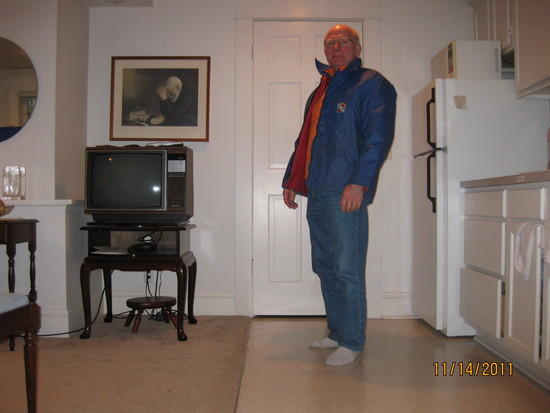
Here’s a photo of one of my float coats. I find them from time to time at 2nd hand stores. The older ones tend to be lighter than the newer ones.

here

Here’s a link to a foam vest discussion:
here

Yes, it is a bit stiff. I try to get large loose fitting ones. They are typically made of ensolite which drapes better than most foams.

I get them at 2nd hand stores. The older ones are lighter than the newer ones. They weigh about 1 3/4 lbs. Weight is partially justified by multiple use (raincoat, insulating coat, sleeping pad) but I would prefer lighter.

The photo shows my best looking coat. I’ve torn the outer fabric off the one I usually use (to save weight) and it looks bad enough to scare people on the trails.

I use them because I’m usually wet from either rain or sweat and it is the only garment that will keep me warm when wet.

Based upon previous discussions I may be the only one on this planet who wants to use closed cell foam garments for backpacking.

Daryl

PostedNov 14, 2011 at 9:22 am

I agree with you on fleece. My fleece pullover is one thing that goes with me on every hike I take, day hikes and beyond.

Like you said, it's really not that hard to keep down dry with a good solid rain jacket and some common sense. I did go with a synthetic vest for my layer that goes over my fleece for colder weather hiking because when moving sweat happens, but for me if I need something more than my baselayer, fleece, synthetic vest, and wind shirt/rain jacket while hiking then I'm obviously not working hard enough! I would never use my down while actually hiking, but it keeps me toasty warm in camp and while stopped.

James holden BPL Member
PostedNov 14, 2011 at 9:28 am

ben …

i use he exl under a dead bird atom lt hoody … id always put the down under a synth, you cant always with thick poofays … but the concept itself is sound

i think yr MB vest will provide quite a bit of a boost under your nano with minimal weight gain …

give it a try around town ;)

PostedNov 14, 2011 at 11:36 am

daryl,
i'm impressed. Not only by your garment choice, but by your TV. i get the impression you are one of those guys who doesn't give a flying flip what anyone thinks. i respect that. so the vest with a shell? sounds interesting, very out of the box thinking. i can see where you are coming from now, just having a hard time wrapping my head around the comfort issue.

eric,
arcteryx? really? i thought you would steer clear of that "yuppie" brand. just playin. i can see where the two would come together to provide a decent system.

anyhow……thanks for all the discussion, it has really got me thinking.

Viewing 24 posts - 1 through 24 (of 24 total)
Loading...