


How well does acrylic lend itself to backpacking or active use? I know nothing about it. I have a 30% wool 70% acrylic beanie that I use all the time. Is it good? bad? just ok?
Topic
Become a member to post in the forums.
How well does acrylic lend itself to backpacking or active use? I know nothing about it. I have a 30% wool 70% acrylic beanie that I use all the time. Is it good? bad? just ok?

It doesn't seem to be a fabulous material, but it seems to be cheap and practical for some light stuff like a beanie.
–B.G.–
Works okay as hot weather socks. Dries faster than cotton. Holds smells like most synthetics.
I use cheap $1 beanies made of it for cold weather exercise so they can be washed frequently and replaced often.

I like acrylic balaclavas because they're stretchier and don't fit too tight and give me a headache like the fleece ones do. They also seem to be easier to breathe through when I cover my mouth and nose in strong, cold wind or while sleeping in winter.
the reason why a lot of headwear is made with acrylic is because it is exceptionally cheap to manufacture, and it adds a lovely, soft hand to sometimes scratchy wool – especially when used next to sensitive areas like foreheads. however, acrylic is a dirty fiber. the production process requires heavy chemicals that including neurotoxins. some manufacturers have replaced the acrylic in beanies/handwear with nylon and/or poly. it's a bit more expensive to manufacture, but it is much less enviro impact.
I picked up an acryllic flannel shirt at my local goodwill. I'm surprised, it's actually very, very warm. Weighs about 10 oz. I thinking about carrying it as a midlayer for colder weather. I don't know how it will manage being wet.
I have a Stillwater ThriftyKilt made of the stuff.
It's the quickest-drying piece of clothing I own (over and above my polyester blend Nike DriFit shirt), but is somewhat abrasive. If I didn't wear underwear, I'm pretty sure I'd want to sew in a liner to the waist band on the kilt; it's not something I'd want rubbing against my skin.
That being said, it's still the quickest-drying piece of clothing I own.
I've tried acrylic sleep socks before. They're not terrible, but a good pair of thick wool socks is warmer for the same weight/thickness. And sleep socks is usually a section of my kit that I don't have to worry about getting soaked (a little damp, yes, but not soaked).
YMMV, though.

I didn't know that Sarah, thanks for the tips. I do have a little acrylic blend stuff, like some lightweight, thinner merino-acrylic blend sweaters/shirts. Things i do like about it, it's got a low density which is just slightly higher than nylon, so it can be lighter, but it's more thermally resistant (warmer) than nylon.
Since it's a bit less hydrophobic than polyester, it doesn't stink up quite as fast or as bad. Experiments with the 55% merino 45% acrylic have so far proven to show satisfactory odor control, though obviously the slight predominance of Merino of that acrylic is a big, helping factor.
Other problems besides potential toxicity, bad eco profile, is that for a synthetic isn't not particularly strong or durable–i believe woven acrylic is less strong and durable than woven polypro, which in turn is a bit less strong and durable than polyester, which in turn is a bit less strong and durable than nylon. However, it's still significantly stronger than lighter weight, thinner, and non felted Merino.
Become a member to post in the forums.
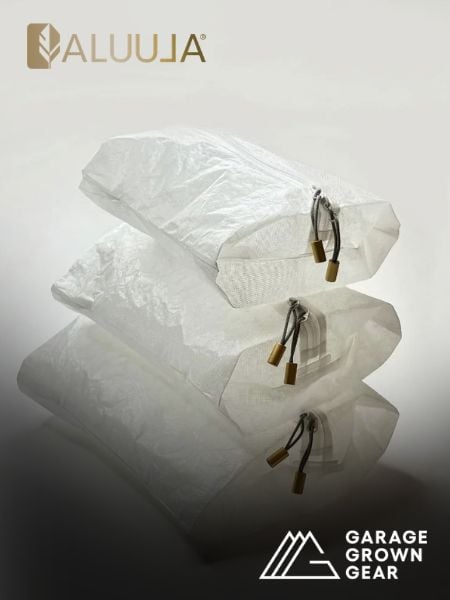 New Gear with Aluula FabricsLighter, stronger, more abrasion-resistant, and highly water-resistant - explore ultralight backpacking gear made with ALUULA Graflyte fabrics. Engineered for exceptional strength, durability, and lightweight performance, ALUULA Graflyte helps reduce pack weight without sacrificing reliability, making it ideal for demanding backcountry adventures.
 © Beartooth Media Group Inc.
 Loading...