Topic

wow, it’s hard to prevent condensation under a tarp

  • This topic is empty.
Viewing 25 posts - 1 through 25 (of 27 total)
PostedOct 25, 2011 at 7:40 pm

Here is my setup (5.5'x7' OWare flat tarp) from an overnighter I did this weekend:

http://i122.photobucket.com/albums/o255/Fire-Is-Life/Middle%20Prong%20_%20October%202011/tarpsetup2.jpg

There was an intermittent mild breeze coming from the north, and I expected it to pick up later in the night, so I pitched that side of the tarp within inches of the ground (but not pinned to it). Turned out the night was almost windless, and the low was 25 degF. The air that day was quite dry.

Within a few hours after dark there was a lot of condensation on the inside of the tarp. Thankfully it never dripped, and later in the night it froze. In the photo, the right side is the east side and the morning sun dried everything out nicely.

I realize the windward side was pitched pretty low, but wow how much more open could the rest of it be? It's hard for me to see how condensation could be prevented in anything but perfect conditions. In rainy weather the humidity is 100% and you have to pitch the tarp low, so how do you NOT get soaked by condensation?

PostedOct 25, 2011 at 8:14 pm

Some , if not most, of that condensation would have come from ground evaporation.
Grass is very good for that.
I leave it to the tarp guys to give you some advice.

tarp camping
Franco

PostedOct 25, 2011 at 8:35 pm

Great point Franco, I hadn't considered ground moisture. I suppose the only fix is a larger groundsheet, though I expect it would gather more spray in a rainstorm.

PostedOct 25, 2011 at 9:25 pm

I have an integral designs sil-shelter (which is basically just a tarp), I sleep under it with my girlfriend (2 people under the same tarp, twice the condensation), and it is always pitched low all the way around. (I mostly camp in designated camp sites with other people around, we value our privacy)

How do I prevent condensation? The short answer is I don't. Condensation, while mildly irritating, isn't actually a problem, the condensation never drips, and if anything it will simply follow the inside wall of the shelter to the edge before dripping. The only irritating part is that if you actually touch the shelter itself you get a bit damp… the solution? Don't touch the shelter! usually by the time I've finished breakfast the shelter has dried enough to pack up, if it's especially wet I'll hang it on a tree in the sun while I have breakfast, and if it's still not dry before I want to leave I shake it out as best I can to pack it up. Never really been a big problem.

Acronym Esq BPL Member
PostedOct 25, 2011 at 10:30 pm

The first time I took my tarp out for real, I set it up similarly to yours: totally wrong. Deep grass, wind block, no sky cover, no ground cover, cool temperatures… I basically set up an optimized green house.

Dew, Frost, Condensation, and Radiation (http://johncwalton.com/WindowOutdoors/Dew%20Frost%20Condensation%20and%20Radiation.htm) helped me understand what I did wrong. If you would like the punchline, it is the first paragraph or two after fig. 1.

I rarely have trouble with condensation now.

GL!

acronym 10/26/2011 12:28 AM

Stuart R BPL Member
PostedOct 26, 2011 at 1:23 am

Thats an excellent link which explains the science really well. He could have also mentioned what happens when the dew point occurs inside your sleeping bag…

Unfortunately, if there are no clouds, no trees and no wind, there is little else you can do to prevent condensation forming on any shelter.

PostedOct 26, 2011 at 11:14 am

Excellent info, thanks folks. That article explained the parameters I camped in perfectly: little wind, dry air, open view to the sky, etc. It is quite interesting to note that the maxim "great ventilation = no condensation" is not universally true. However, I suppose it could be argued that you can't have great ventilation without wind.

I didn't have much choice on where to pitch camp that night. The spot in the pic was the only moderately flat place on the ridge that was not covered with rocks or thorn bushes. And ultimately, like Roger says, I didn't actually get dripped on so things worked out OK.

PostedOct 26, 2011 at 11:17 am

Acronym said:

"I rarely have trouble with condensation now."

How do you achieve this in dry, cold, clear weather, beyond site selection?

PostedOct 26, 2011 at 11:32 am

At least with a tarp, you are getting some reduction in condensation on/in your sleeping
bag, with the tarp blocking some of the radiant heat loss to the night sky.

Increasing warmth inside a shelter should have some effect.

Winter campers in the far north sometimes use two layer shelters with both layers made of breathable nylon (or the inner cotton). They may also use a stove inside.

Of course nylon and open flame don't mix, and CO poisoning has to be considered.

RVP BPL Member
PostedOct 26, 2011 at 11:52 am

Thanks for the link Acronym — interesting and very accessible.

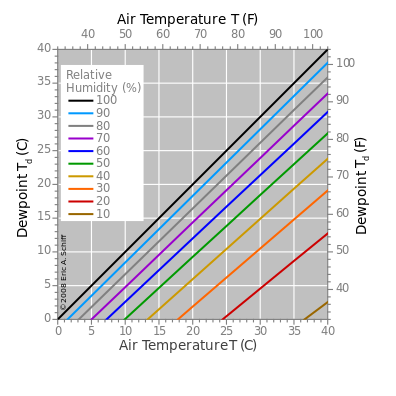
Does anyone have a sense for the strength of this effect? i.e. theoretically how much cooler can objects be compared to the surrounding air on cool, clear nights?

PostedOct 26, 2011 at 11:53 am

Great to hear from you David! The tarp was a joy to work with. Yes, despite my complaining about condensation, the outside surface of the tarp was loaded with frost by morning, which would have soaked my gear otherwise. Everything beneath the tarp was dry.

I wish the tarp had the extra tieout on both ends, like on the bigger OWare flat tarps. I found that tieout provided a more "hollowed out" shape that kept the lower half of the tarp further from my bag. In the pic, you can barely see on the right side how I rigged a pullout line from this tieout along with a stick. I'm going to try taking a round cork and tieing it off from the outside with a clove hitch to improvise another tieout on the other end of the tarp.

PostedOct 26, 2011 at 11:59 am

"Does anyone have a sense for the strength of this effect? i.e. theoretically how much cooler can objects be compared to the surrounding air on cool, clear nights?"

It varies with humidity, and it's called the dew point. As humidity goes up, so does the dew point temperature.

Dale Wambaugh BPL Member
PostedOct 26, 2011 at 12:14 pm

Stuart wrote, "Unfortunately, if there are no clouds, no trees and no wind, there is little else you can do to prevent condensation forming on any shelter."

If there are no clouds, no trees and no wind, you don't need a shelter!

There are so many times I have woken up to everything covered in a thick layer of dew.

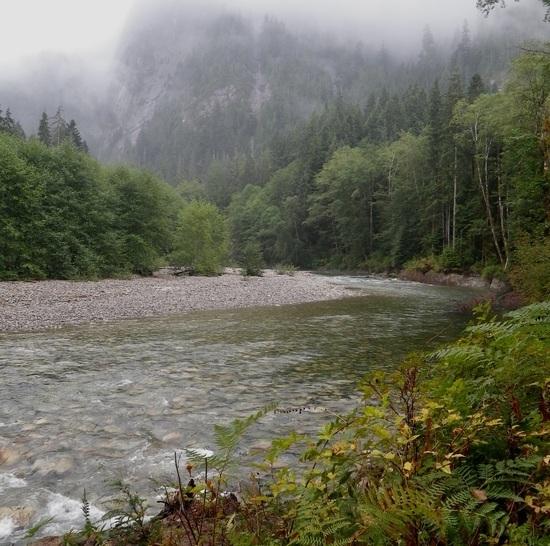
Dew country:
USFS 1003

I think all you can do is have as much ventilation as conditions will allow and use a full ground cloth. Minimizing wet clothing makes sense and if it is cold with high humidity, clothing won't dry much anyway– you might get your base layers dried out with body heat, but I wouldn't expect much change in thicker insulation layers.

If it is calm and low precip, a lean-to pitch with a campfire is the time-honored classic for a cozy shelter.

Acronym Esq BPL Member
PostedOct 26, 2011 at 12:22 pm

> "I rarely have trouble with condensation now."
> How do you achieve this in dry, cold, clear weather, beyond site selection?

Another way to read that article is that dry, cold, clear weather is difficult to tarp in.

I use a double walled tent for temperatures below 40 F.

Is that cheating or knowing/accepting the limitations of my gear and personal comfort?

It's cheating. Eh eh.

Anyone have any thoughts on adding a radiant energy source (candle) under a tarp? I'd like to try that some day.

acronym 10/26/2011 2:14 PM

Hiking Malto BPL Member
PostedOct 26, 2011 at 1:33 pm

"If there are no clouds, no trees and no wind, you don't need a shelter!"

Exactly! But you may end up transferring the problem to the sleep system. However; I rarely have condensation problems using my bivy without a tarp.

Stuart R BPL Member
PostedOct 26, 2011 at 1:47 pm

Dale wrote “If there are no clouds, no trees and no wind, you don’t need a shelter!

Ahh but you do if it’s cold, otherwise the condensation will form on or in your sleeping bag/quilt. See unmanageble wetness thread

PostedOct 26, 2011 at 2:25 pm

I always thought a layer of aluminized mylar (the stuff they make emergency blankets from… super light) might do wonders as a radiant barrier when you can't setup under a tree and the sky is cloudless.
Often wondered why manufacturers don't aluminize shelter fabrics as standard. Seems like a no-brainer to me.

Jerry Adams BPL Member
PostedOct 26, 2011 at 5:21 pm

Seattle Fabric used to sell 1.1 ounce silnylon that was aluminized. It's in my bivy bottom. I don't know if it makes any difference.

Now they sell some 1.9 ounce silnylon that's either gold or aluminum coated. I don't know if this works as IR reflector. Kind of heavy for a tent or tarp.

PostedOct 26, 2011 at 7:11 pm

Don't know why there was ever an expectation of not having condensation.

PostedOct 27, 2011 at 10:49 am

"Anyone have any thoughts on adding a radiant energy source (candle) under a tarp? I'd like to try that some day."

Campfires out front as mentioned easily do the trick.

I frequently use a hot water bottle in my sleeping bag to force moisture away from the
bag and to start the night warm.

Stuart R BPL Member
PostedOct 28, 2011 at 2:26 am

Keep this in perspective:
A hot water bottle containing 2 pints of hot water which cools by 100F will give off 50kCal of heat.
The human body gives off 80-100kCal every hour (approx 100 Watts)

James Marco BPL Member
PostedOct 28, 2011 at 3:24 am

Candle: Yes, I have used one in exactly these conditions, ie. 35F, by a small lake, surrounded on three sides by water, a grassy spot to set up on, clear night with LOTS of dew in the morning, some evapoartive cooling/frost on the grass. It works better than without, but it is not a cure-all.

It helps drive ventilation through a closed tarp. An open configuration, like a shed or lean-to, it probably won't help much. Under a closed tarp, it helps. But with two people, you can still overload the ventilation needed. Once you start getting condensation, the evaporation will usually continue cooling the surface and the water droplets sealing any spaces (while a tarp will hold water, most used tarps are not air-tight) exacerbating the condensation conditions.

One note on your set-up. I would also suggest 2-3" loops or large sized hair ties at the stakes. This lets you pull the tarp up a bit allowing somewhat more ventilation along the inner skin. Generally this will help a bit.

PostedOct 28, 2011 at 12:00 pm

"Keep this in perspective:
A hot water bottle containing 2 pints of hot water which cools by 100F will give off 50kCal of heat.
The human body gives off 80-100kCal every hour (approx 100 Watts)"

My experience has been that this amount of extra heat is enough to drive the dew point to
the outer layer of my sleeping bag or bivy and keeps me warm while I dry out damp
clothes in my bag. I find a liter of boiling water in a wool sock lasts about 6 hours before it cools to body temperature.

I suppose you could do like one of OB buddies on a winter J-Tree night and use a gallon
nalgene of boiling water.

Viewing 25 posts - 1 through 25 (of 27 total)
Loading...