


How have you successfully prevented your water filter from freezing?
Putting it a pants pocket seems like it would work down to 10-20F, but at a certain point, there's not enough body heat and contact to keep it from freezing.
Topic
Become a member to post in the forums.
How have you successfully prevented your water filter from freezing?
Putting it a pants pocket seems like it would work down to 10-20F, but at a certain point, there's not enough body heat and contact to keep it from freezing.

Keep it in your sock drawer at home…
I really suggest not using a filter and instead going with chemicals (allowing for extra treatment time in cold conditions) or a Steripen. Filters, their hoses and everything about them are an even bigger headache in cold conditions (IMO).
Steve,
Thanks. :) That's what I've done so far. I've always had "safe" water available or just drank it raw on my winter trips.
I whole heartedly agre with the sock drawer solution. Well put!
I'm a filter user but always carry chemicals for backup. In sub-freezing weather I boil water usng a wood stove (no fuel weight penalty). It takes time but I never complain about warm tea or a cup of soup in winter.
Store extra warm water in an insulated container. A friend started using stainless steel bottles in winter because they can be heated directly in the fire. That's got me thinking….
The MSR Hyperflow cartridge or the Sawyer cartridge go into a Ziplock in my sleeping bag on sub-freezing nights, but I've never used them in weather that was below freezing 24/7 so haven't faced that. I suppose I'd keep it in an inside-facing jacket pocket, presuming it doesn't interfere with pack straps.
The MSR is more slender than the Sawyer, so would be less noticable.
Cheers,
Rick
My PUR and First Need filters have been replaced with a SteriPen Adventurer and Katadyn chlorine dioxide tablets for the past 3 years. I think for winter this combo would be a far better answer than filters that are prone to clogging (if not cracking) through freezing. Not to mention the weight savings.
I melt snow in winter to get my water so purification is a by-product of the melting & boiling. A CC Sidewinder/Inferno wood stove is my solution for fast snow melting. If I expect high winds I use my MSR Dragonfly multi-fuel stove and white gas.
I was on a high-altitude trek, and the outfitter had supplied one of those big Katadyn expedition filters with a ceramic element inside. I think they cost over $1000. We were camped well above 18,000 feet, and somebody forgot to purge the water from the filter overnight (it was cold). In the morning, they had about a hundred small pieces of ceramic. So, there was no more water filtering for the rest of the trek. That made me kind of nervous in a tropical third-world country.
–B.G.–
Sock drawer. We rarely carry a filter in the snow. What for?
Cheers
It can be useful if you are yellow – white colour blind.
Thanks everyone for your insightful and funny responses. I wanted to make sure there wasn't some technique I was missing.
For my approach in Appalachian mountain wilderness areas, boiling water or melting snow would generally work well because I have a campfire in the evenings. I don't like chemicals because of the taste, and they require a 4 hr treatment time for protozoa at low temperatures, which I estimate is the most likely pathogen. If I can wait 4 hrs for water, I'm in camp and could easily just boil some water.
I'll probably just stick to what has worked for me in the past in the winter: drinking straight from carefully selected sources. I do like to filter when possible just to be safe, since it's only a 4 oz weight penalty. But, I'll save that precaution for the 3 seasons.
Assuming winter camping means there is snow on the ground in sufficient depth.
Duane
Become a member to post in the forums.
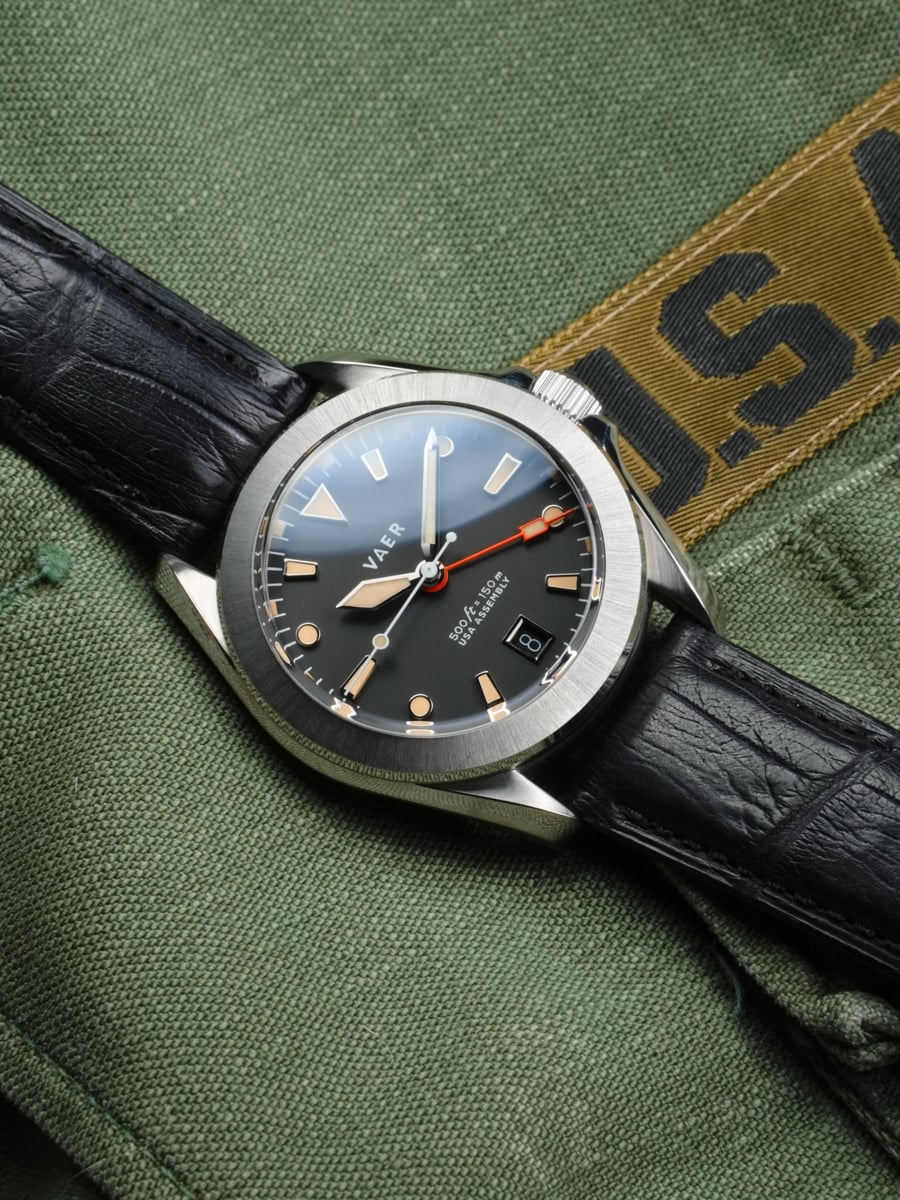 A Cult-Classic GMT Reimagined for Everyday WearInspired by the famously bezel-stripped Rolex GMT-Master worn by Marlon Brando in Apocalypse Now, the G2 Apocalypse turns a piece of 1970s film and watch history into a practical everyday GMT. Its restrained 39mm design pairs a Swiss Ronda quartz GMT movement with sapphire crystal, 150 meters of water resistance, strong BGW9 lume, and USA assembly. The result is an accurate, low-maintenance travel watch with a story collectors will immediately recognize.
 © Beartooth Media Group Inc.
 Loading...