


lol. Yeah, cutting a stove in half just *might* be destructive.
Any interesting in running the stove for a few minutes to see if the uppermost portion of the canister stays room temperature or above?
HJ
Topic
Become a member to post in the forums.
 .
.
lol. Yeah, cutting a stove in half just *might* be destructive.
Any interesting in running the stove for a few minutes to see if the uppermost portion of the canister stays room temperature or above?
HJ
Maybe there is an option to use other fuels that need the preheat tube, such as white gas?
Well, considering that it has threads to screw into a canister (just like a Pocket Rocket does), probably not.
HJ
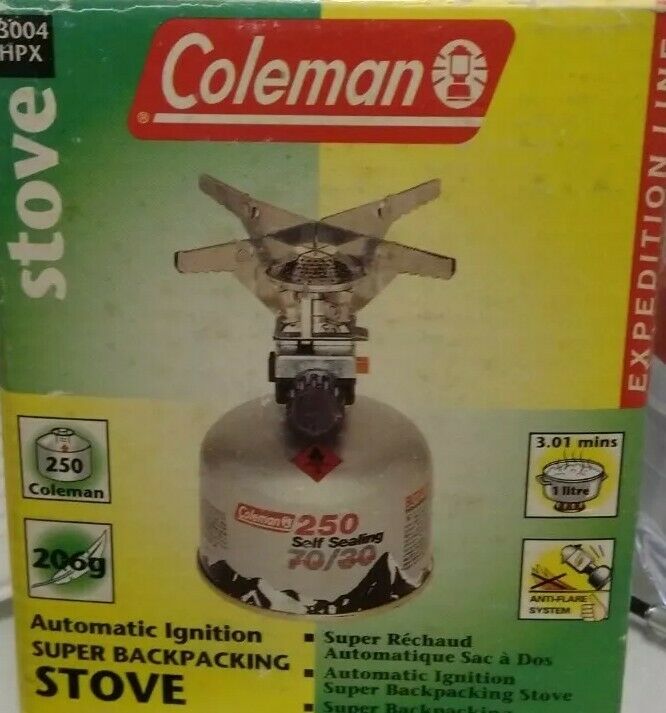
I for one would love to see this thing taken apart to determine if that is indeed a pre-heat tube, or simply a heat conductor. Functionally there would be very little difference on an upright canister.
Blimey. I think that has to be a classic example of a totally confused design team. Taking the stove as shown, there is absolutely no reason for the preheat tube to exist.
One explanation is that the stove was an very early Chinese produuction, where the Chinese had no idea what they were doing!
Nicely made, but wierd …
Cheers
Thanks, so I suppose the only possible reason is to avoid flaring if knocked over: knocking it over still dangerous though. :)
According to the label, was made in England.
Digging up the dead here but, just for the sake of closure, it is indeed an anti-flare safety in case of tipping as show on the box.
Become a member to post in the forums.
 New Ultralight GearSee the latest releases in ultralight cottage-brand gear from small makers.
 © Beartooth Media Group Inc.
 Loading...