Lightest 1 Person 3 Season Traditional tent? Probably want free standing but willing to consider other options. Hoop bivvies and tarps need not apply ;) Easy in, easy out, room to sit up and organize gear, unfold map, etc.
Topic
Become a member to post in the forums.
Lightest 1 Person 3 Season Traditional tent? Probably want free standing but willing to consider other options. Hoop bivvies and tarps need not apply ;) Easy in, easy out, room to sit up and organize gear, unfold map, etc.
I don't know if single wall is your idea of traditional but I have a TT Sublite at 20 ounces using Trekking poles. I think the Sublite Sil would shead a hard long rain better at 24 ounces. What part of the country will you be hiking in?

Also consider:
Six Moons Lunar Solo
BA Fly Creek UL1 (not much headroom)
Tarptent Contrail (24 oz before seam sealing)
Tarptent Moment (my choice, 32 oz before seam sealing and necessary extra stakes/guylines)
Tarptent Rainbow (heavier)
MLD Solomid or Duomid with netting inner
Re: "Probably want free standing"
I don't know of any traditional tents that are freestanding?
Maybe a silk tarp pitched as a lean-to or a-frame is about as lightweight and traditional as you can get.
Animal skins are definitely not light weight.
Lightest traditional double wall might be big sky tents. I would skip them though and get a tarptent rainbow if hybrid tent was okay and maybe a Big Agnes or MSR if I wanted a double wall tent.
The Big Agnes Copper Spur line of tents is tempting for a more traditional shelter. The 1 person is listed as 2 lb, 11 oz and 22 sf while the 2 person is listed as 3 lb, 6 oz and 29 sf. They are a little heavier than the Fly Creek series but worth it for the additional head room width in my opinion. The TT Rainbow is a popular choice as well.
I don't think you can call most of these recommended tents as being very traditional?
Most are of a quite modern design and many were invented in the last few years.
Steven – I couldn't agree with you more. A tradition tent is portable shelter of made from skins, canvas, or some sort of similar material, which is supported by poles or a frame, and often secured to the ground with rope.
Also, if the OP don't want a shelter with a tarp, wants going to keep the rain or wind out? Almost all tents will have some sort of tarp, which is defined as a waterproof, protective covering. I'd hate to spend a stormy night outside without a tarp.
Now, I realize that I'm being a bit snarky, but I think it's important that we begin to change the way people talk about backpacking shelters. The idea that there is a dichotomy between "tent" and "tarp" camping is misleading and needs to be corrected by the UL backpacking community.
I like the copper spur 1 if we are talking "traditional" tents. I mostly like it for its above average 1 person room, and the side entry. One other thing I like about it is the fact that it has solid fabric 1/2 way up the sides. This really decreases the drafts you feel if it is windy during the night.
Yes, a freestanding dome tent is not traditional at all.
Single wall, tarp tents, pyramids, tipis, tarps, … that are common on this forum have been popular with backpackers for centuries.
Freestanding dome shelters are a fairly new invention.
The reason backpackers still carry the traditional style tents is because they are usually lighter and more flexible than freestanding domes.
Car campers on the other hand don't mind the extra weight so much and that is why the freestanding domes are so popular with outfitters.
the fly creek ul1 is a full double wall tent but it is really small inside. With some minor modifications (changing guy lines, mesh stuffsack, etc.), my fly creek is 31 ounces with stakes in its stuff sack.
Nemo Obi Elite:
http://www.nemoequipment.com/nemo2011-obielite-tent
1lb, 15oz, side entry and more usable space than the BA Fly Creek.
David, you know very well those Nemo tents were not around back in traditional caveman days. Please try again ; )
John,
an ancient dig near Damascas is about to blow the whole lid off these definitions. You would be amazed at what the ancients used. Aluminum poles too. Just no Cuben.
http://www.nemoequipment.com/nemo2011-obielite-tent
Packed weight is listed as 2.7 oz.
Looks a lot like my Hubba HP which only weighs a few ounces more.
Maybe something like this. Roomy and well ventilated.
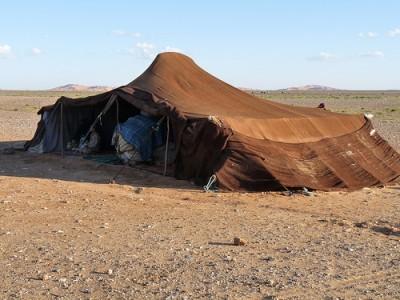
Packed weight includes repair kit and waterproof stuff sacks. Your HP Hubba is 2lb, 8 oz not packed so the Elite is over 1/2 pound lighter with considerably more room.
It would great to find one without a vestibule! No walking sticks — I don't always carry them and besides I have switched to the BD Ultra Distance. (While I've never had a serious incident, telescoping poles scare me.) I would consider single wall or some combination depending on the over all package.
I know it's easy to laugh when Steven and I questioned the use of the word "traditional" with regard to tents. And I speak only for myself here, but I firmly believe this type word usage of is no small matter.
You might find these terms important if you recall the case of Tyler Wright, the hiker who went missing last August 10, 2010, and who is still missing to this day. When Mr Wright first went missing, some news sources reported that the "Squamish RCMP say Wright is not an experienced mountain hiker and did not take a sleeping bag, tent or compass with him into the woods." Yet, a friend, Evian MacMillan said: "He’s been hiking on his own for decades. He has shelter and sleeping equipment with him.”
It seems that Mr. Wright didn't have a "tent," he only had a "tarp" with him. So, the implication was clearly that he was unprepared. I'm actually surprised that they didn't jump on the fact that he was wearing trail runners and not "proper hiking boots." Actually, I don't remember the exact incident, but I remember there was a rescue video earlier this year, and at the end the report made a point of saying: the victim was wearing hiking boots. As if that made everything okay.
Perhaps if you or I ever get lost, our "quilt" won't count as a "sleeping bag," simply because it's not a brand name mummy bag.
Picture:
http://4.bp.blogspot.com/_jIsITBoR3yE/TG2pw-ENloI/AAAAAAAAAEw/u0P0_3380wk/s1600/photo2.JPG
Here's a news story:
http://www.metronews.ca/vancouver/local/article/607902–missing-hiker-no-stranger-to-woods
And, the BPL thread:
http://www.backpackinglight.com/cgi-bin/backpackinglight/forums/thread_display.html?forum_thread_id=36460
Since Mr. Wright has not yet been located, we don't know what really happened to him. We only have vague reports and speculation and some tracks. That's not the point. The point is that the gear and techniques used by many of us in the UL community is familiar to the majority of other backpackers, never mind the news-people and car campers of the world. We need to be careful with the way we talk about these things and promote a proper understanding of these issues. Otherwise, one of us may one day be the missing backpacker with the $300+ cuben "tarp" shelter who "went hiking without a tent."
PS: Sorry, I'll shut up now. Not trying to derail this thread. I think the anniversary of this incident just has me a little testy. You're looking for the lightest, brand-name, free-standing, pre-designed camping tent that doesn't require trekking poles for 3-season use somewhere.
Awe – we were just having a little fun.
Traditional to me implies mainstream, i.e. Trad gear or the Trad approach to backpacking. Heavy tent, heavy backpack, etc.
Maybe 'vintage' would be more applicable?
By "easy in, easy out" do you mean about the size of the opening on a commercial dryer or perhaps something a little larger. I'm just askin'…;)
I deeply apologize for employing the word "traditional" and for any misunderstanding it may have caused. Maybe "conventional" is less offensive.
Just the "word" tent may have sufficed as the tarp and blankie crowd seem loathe to call their sleeping arrangements tents, preferring the word "shelter". "Shelter" — now that is really descriptive!
David, yes, that is the way I was using the word! And everyone reading this knows it! However, the critics here ARE correct!
I suggest the Big Agnes Fly Creek UL1. It has metal poles, two layers, and weighs something around two pounds. I purchased mine when I was going to serious bug country. Later, I re-did my load plan and discovered that I could not take two pounds of tent, bugs or no bugs. At the end of a week, the final score was Bugs 45, Human 3.
–B.G.–
If a tent has two layers and some kind of hoop/pole structure, then I call it a tent. If it has only a single layer, then I call it a shelter. If a shelter can't even be pitched down to the ground very easily, then I just call it a tarp.
In contrast, I have a bombproof North Face Mountain 25 expedition tent, and it weighs 12 or 13 pounds. I refer to it as The Big Top.
–B.G.–
from Bob :
"If it has only a single layer, then I call it a shelter"
Please let Bibler, Black Diamond and Integral Design (amongst others) know that they are using the wrong term.
Franco
FG:you missed the Vegemite spread. It's over the butter and under the cheese.
Wait a Moment……how about the Tarptent Moment?
(Franco sent this idea to me by telekinesis. Right now I also desperately want a grilled cheese sandwich)
Become a member to post in the forums.
 DualFuel XLCompact alcohol-or-Esbit stove with a low-profile design that fits inside most standard cooking pots.
 © Beartooth Media Group Inc.
 Loading...