The electronic aviation CO detectors are vastly more sensitive than the UL-rated ones for home use. UL decreased the sensitivity early on because so many people were calling the fire department when worrisome levels were reached for short periods, so it now takes higher concentrations for longer times to trigger them. And it’s just an idiot light – no read out. Or, at least the ones I’ve played with, even if it has a digital display, the display is delayed and time-weighted averaged.
General Aviation planes are often heated with an exhaust-gas-to-cabin-air heat exchanger (think VW Bug) which is a pinhole away from really high CO going into the cabin. And it’s hard to step out of the cabin for fresh air. Hence, the aviation ones have a real-time readout. I was transporting one in my car to investigate some “sick building” complaints and backing my car up 30 feet through its own exhaust was enough for it to alarm (cold engine, rich mixture, catalytic not to temperature. One current one is the Tocsin 4 at $190.
Then there are the multi-gas meters all over Amazon for $30-$40.
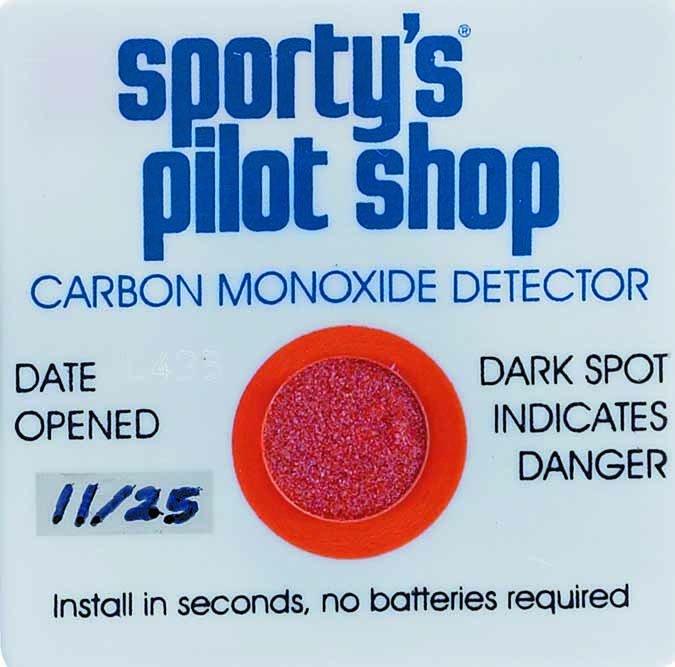
Or, the most UL option, is your father’s aviation CO detector with color-change spot. 
A slight graying of the spot indicates the presence of CO. The spot turning black indicates sufficient concentration to cause sickness. The spot will return to normal color after exposure to fresh air. Adhesive backing. Useful life is 90 days once opened; 3 years unopened. $5. Size and weight of a credit card.