Topic

Synthetic Sleeping Bag

  • This topic is empty.
Viewing 9 posts - 1 through 9 (of 9 total)
PostedNov 27, 2006 at 8:42 pm

I was recently thinking about purchasing a synthetic bag because of the humid environment that I live & camp in. Does anyone have any suggestions on what synthetic bag would be good for temperatures down to around 32-35 degrees? It has to be fairly lightweight & compressible. Thanks!

Also, has anyone heard any news about the cocoon sleeping bag from Bozeman Mountain Works? Are they going to release it & when?

PostedNov 27, 2006 at 9:51 pm

Jordan, I recommend the Sungpak Softie Micro. 0’C(32F) low (sleeping in an insulation layer), about 1kg in the stuff-sack, compresses to a circumfrence a little larger than a CD. Other features are a variable length system, chisel foot, optional 1/2 length zipper, L/R option, mating bags, etc..

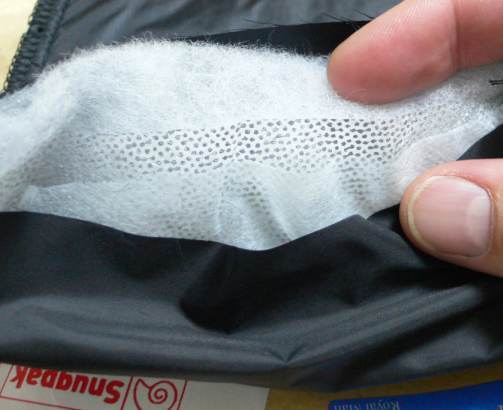
It uses a metallic layer called reflecatherm which partially reflects radiated heat without being a vapor barrier; so the bag stays bone dry in humid conditions. (according to many reviews) Supposedly adds a few degrees of warmth.

These aren’t well known in the civilian community, IMO, but are sought after items for soldiers. The micro is the civilian version of their best selling bag.

Most Snugpak models have a full length expanding and stretchable baffle which will give you room for another layer, or in an emergency, another occupant (YMMV). (for example, your hiking friend’s down bag is wet)

Also, checkout the Montbell SuperStretch synthetic bags. As you can tell Im a big fan of variable-girth bags.
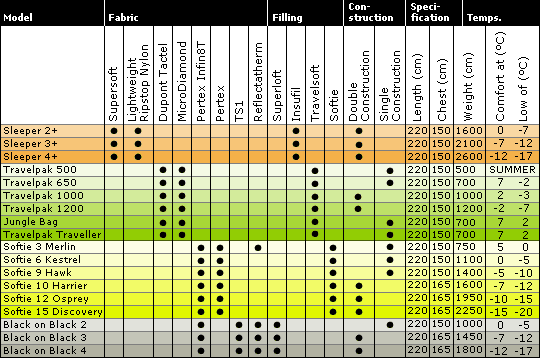
In the chart, the Micro goes by the military name, Softie 3 Merlin. (those Brits…)
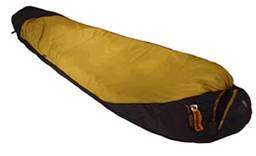
Pics of the Micro..Snugpak MicroMicro, highly compressed
Reflectatherm is the shiny layer in this fabric sample
Snugpak temp chart

PostedNov 28, 2006 at 1:38 am

Brett, for those unfamiliar with either or both of these lines of bags, can you please…

1) make a few points of comparison b/t snugpak and MB?

2) What are the good and bad (if any) points of each?

3) Why would one choose one over the other?

Roger Caffin BPL Member
PostedNov 28, 2006 at 1:53 am

Softie 6: comfort at 0 C, Low at -5 C, weight 1100 grams.

Hum … my Pertex Microlight plus 800 loft down bag takes me down to 0 C happily, and weighs precisely half that: 550 grams.

Reckon the synthetics have a long way to go before they come NEAR good down.

PostedNov 28, 2006 at 3:26 am

pj,
In response to your request I would be happy to talk Snugpak vs Montbell.
I am tempted to take Roger’s bait and enter the down vs. synthetic wars, but since I own and use both, I would not help either camp win a victory. As Roger pointed out, good down is about 1/2 the weight of a comparably rated synthetic bag; but still, there are reasons people use synthetics (even Ryan on his Alaska trip, I believe?) I would leave an analysis of the fabrics to one of our BPL experts, and sum it up as follows;
I would take at least one synthetic bag per pair of hikers on a trip where water vapor, condensation, humidity, or actual liquid water might enter my bag(s).
I prefer stretch baffled bags as a further security measure, because they can fit two small people in an emergency (say a pack is lost or something..)

To answer your specific questions pj,
1) “make a few points of comparison b/t snugpak and MB?”
– They weigh about the same as a function of temperature rating. YMMV.
– Snugpak verifies ratings via EN 13537 (verified via email; they actually sent me the results!), but Montbell does not. However, I find MB’s rating to be spot on for me. Snugpak bags seem a few degrees colder.
– Snugpak relies on a partially metalized layer to reflect some radiated heat. Montbell relies on loft, and its stretch baffles to maintain loft.
– Snugpak has a full length longitudinal expanding baffle; imagine a double zipper with material between it; you can choose the second zipper to get 8″ or so of room (further stretchable) Montbell relies on circumfrential expanding baffles which hug the occupant, and thus maximize loft continuosly.
– Snugpak and Montbell both have length adjustment systems. The Snugpak bag folds the last foot or so of bag and secures it with two clips. Montbell has a circumfrential draw string which closes off the last baffled section of the bag, effectively shortening it. The occupant can then stuff this last section into the bag as extra foot warmth/foot pillow, etc..

2) “What are the good and bad (if any) points of each?”
Snugpak uses pertex shells and “Softie” filling, and only makes synthetic bags. Reviews and reputation is that these bags stay bone dry in humid conditions. Montbell uses nylon of varying denier, with “Exceloft” dual denier filling, or 725 fill down. I only have experience with MB’s down, and like any high fill down, it tends to wilt and loose a little loft in humid situations.

3) Why would one choose one over the other?
SP vs. MB:
I chose Snugpack before I knew about Montbell, because of the good reputation the bags had among my fellow soldiers. Now I would buy only the Montbell bags due to the superior super stretch baffle system.
Down vs. Synthetic:
I choose synthetics over down for those early purchases based on what I knew/felt at that time. I was concerned about a down bag getting wet. Now, I prefer down for all but the wettest situations. As an example of a non-down trip, on a waterfall climbing trip (sawanobori), I carried a synthetic bag as a warm-up bag in case it was necessary, not down. If I was backpacking in a remote area with a novice companion (typical); I would carry synthetic in case the other person somehow soaked their down bag (left out to “dry” in the rain, etc..). Maybe I’m just overly cautious.
I prefer my clothing system and sleep system to both have a mixture of materials, half natural, half synthetic, as a form of risk mitigation.

I’m sure my post is not informative to the majority of our members, but maybe it will prompt some new readers to join and read the informative premium content.

Dondo . BPL Member
PostedNov 28, 2006 at 12:27 pm

Jordan, first of all, ignore the manufacturers’ temperature ratings. Synthetic bags tend to have overly optimistic ratings. Instead, go by the EN 13537 rating system which tends to be more realistic for most folks. Expect to carry about a kilo for the temps you are considering. Two bags that come to mind are the Marmot Pounder Plus and the TNF Orion, both using highly compressible Primaloft Sport. The Pounder Plus weighs 2lb, 2 oz. and gets a EN 13537 rating of 36F for the “standard man”. The Orion weighs 2lb., 6 oz. and goes down to 30F. The lightest down-filled bags weigh about a pound less for similar EN 13537 ratings.

Too heavy? Consider using a bag with a higher temp. rating and making up the difference with your clothes. Or consider using a quilt. Active sleepers may find that a quilt works best for them inside a 6-7 oz. bivy.

I don’t know anything about a Cocoon sleeping bag but I read that the Cocoon quilts are due out in the spring.

PostedNov 29, 2006 at 8:41 pm

Ive known about Snugpack sleeping bags for years and yes, they are mostly marketed to military. Snugpack is a British military thing. Ive never personally used one, but I want one. The thing about them is they are not rated very low temperature wise.

For summer, late spring or very early fall sleeping bags, you probably couldnt get a whole lot lighter (or more compactible) synthetic bag than a snugpack.

I would think that UL backpackers wanting a synthetic bag for warm to moderate temps would go apesh*t over a Snugpack bag. Some of them are probably lighter than warm weather down bags.

If you want lower temperature range synthetic sleeping bags, go with Primaloft filled bags. These are not quite as light as comparable high end goose down bags, but almost as light. And you can wash them more easily and more frequently and Primaloft has some of that warmth when wet or damp property that comes in so handy in many climates.

Primaloft is lighter and more compactible than Polarguard HV or Delta. It is claimed to not be as tough as continuous filament fibers like Polarguard, but I havent found that to be the case. I talked to a salesguy from Wild Things, Inc. recently and he told me that primaloft one is much tougher to cut and work with than primaloft sport…so from that it would make sense to say primaloft one is tougher than other subtypes of primaloft.

Personally, I dont understand why it isnt being used more by companies that make synthetic fill bags.

Vlad

Aaron Sorensen BPL Member
PostedNov 29, 2006 at 9:17 pm

Wow,
This takes me back.
I now remember when I first got into lighter, (back then) backpacking, that the Snugpak looked like one of the top bags to get.
I ended up going with an REI Kilo.

The Snugpak is still a good weight and price for anyone new to BPL who is looking at dropping some weight.

Viewing 9 posts - 1 through 9 (of 9 total)
Loading...