When the Leki breaks
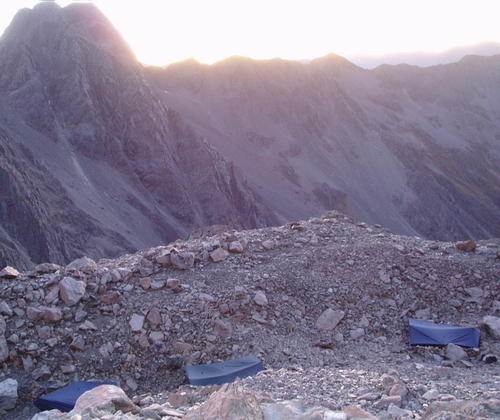
No one recalled hearing the pole snap. However, in the maelstrom, everyone had developed a sixth sense for when a guyline had broken again. On top of the wind noise, muted by your sleeping bag hood, you could just detect the tight thrumming of the guys, and the angry snapping of the tarp. The tarps became a sort of wind powered musical instrument. All that rapid vibration and constant tension was playing hell with the guys though. They were cutting through where they were hitched to the boulders, despite our best attempts to pad them. When one of the guys went, that barely detectable tarp song vanished entirely into the background wind noise. When the tarp went quiet, a few headlamp beams would shoot straight up. Occasionally, several guys would fail at once. Instead of illuminating a sheet of blue fabric, 18 inches above the headlamp’s owner, the beams would stab up into swirling mist.
This was all a bit of an experiment. Southern hemisphere summer, 2005. I was fairly new to NOLS (the National Outdoor Leadership School), and NOLS was still fairly new to New Zealand. My co-instructor was neither new to NOLS or new to tarps.
But he was, however, new to New Zealand. He thought tarps were great for teaching the students better campcraft, and providing a more intimate outdoor experience. They'd also lighten up our packs. He had used tarps in Patagonia and Alaska, both known for their meteorological and insect challenges. I thought it was madness, but his experience and persuasive logic swayed me. It turns out he was right.

It was a downdraught that did it. Not the biggest gust of the night, but this one dropped straight down from above. We were hiding in an earthquake fault scarp, a rift contouring around the hillside like a moat. It had protected us from the worst of the wind for hours, but the boulder berm could do nothing to stop this leaden parcel of air falling straight from the sky. I imagine the gust had eddied horizontally over the nearby ridgeline, before spotting our tarps.The downdraught flattened the tarp against our sleeping bags. From above, it could bear down on every inch of the tarp's surface area. It felt like I'd been sat on by a giant bean bag full of shot pellets. The gust soon abated, and headlamps flashed on as we scrambled to save the tarp. To my amazement, it was intact. Loose and flapping, but in one piece. In the noisy night, harassed by more gusts, we re tensioned the trucker's hitches before scampering back into our sleeping bags.

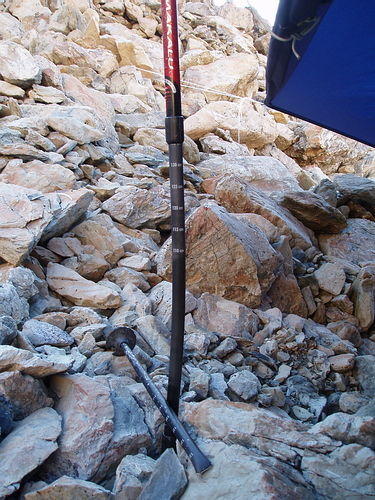
In the morning we saw why the tarp had inexplicably slackened during the downdraught. The bottom section of the leki pole, holding up one end of the tarp, had snapped in half. The pole was of course now shorter, but none of us noticed until the morning light illuminated the pole's lower section sitting on the rocks.
Has any NOLS NZ course gone out again with just tarps? No. Would I try it again? Hmmm, possibly not. Was it a success? Absolutely! I had started out a non-believer. Yet those tortured tarps, over the next couple of weeks, proved my colleague right. The students developed great campcraft. They also got the full 360 degree, 24/7 outdoor experience; bugs, drafts, drips and all. In fact, they came to like their battle scared scraps of nylon so much, when offered nice new 4 season tents for the next section of their semester, they turned them down in favour of their trusty tarps.