I recently purchased a commercial low pressure hydrostatic head (HH) tester (0 – 3,515mm H20). It is neither low-cost nor portable; it weighs over 23 lbs. even though the bulk of the system is aluminum and it is quite bulky. The pressure system consists of an electric water pump and control valves; consequently HH tests can be completed quite quickly and accurately. The test head is approximately circular with a diameter of ~4.5”. At the upper end of this systems test range, the fabric looks like it is going to explode. Consider that this level of hydrostatic head is a water column that is 12’ high and you can understand why. There are HH units that will test higher pressure than this but fabric damage (sometimes catastrophic) is not uncommon above a 12’ water column.
Waterproofness
Water-pressure measurements are shown in millimeters (mm) or pounds per square inch (psi); 704mm = 1 psi. This is the height of water column in which water starts to pass through and bead up on the other side.
Water resistance in fabric is determined by employing a water column or hydrostatic pressure test (JIS 1092 method A; AATCC test method 127). Fabric samples have been laundered 10 times to simulate field use.
What level of water resistance qualifies as waterproof? No widely accepted waterproof industry standard for fabric exists. On the low end, REI considers rainwear fabric to achieve a minimum standard of "rainproof" performance if it permits no leakage at 3 psi (2,112mm). On the high end, the US Armed Services most frequently define waterproof as 25 PSI (17,575mm).
I am just starting to look at the question of shelter HH values. I tested four of my shelters so far: a Six Moons Designs Gatewood Cape that I have used about 10 – 20 days in the field; a new Mountain Laurel Designs Serenity Shelter; a Mountain Laurel Designs DuoMid which I have used about 30 days; a Black Diamond Megalite which I have used about 60 days; and a new Golite Shangri-La 5. The following are my test results including the fabric thickness in mm, a 200x microscope photo of the test area prior to the test, and the hydrostatic head of the test area. If others have recently calibrated HH testers, please add your test results to this thread including the number of field days the shelter has on it.
Six Moon Designs Gatewood Cape (After 15 days use)

200x microscope picture
Avg Fabric Thickness .08mm
Hydrostatic Head 211 mm H2O
Mountain Laurel Designs Serenity Shelter (Unused 2011 version)

200x microscope picture

Hydrostatic Head Tester showing this item at 1,195 mm H20 (note that most of the droplets start at the intersection of the rip-stop grids as Roger Caffin has previously discussed)
Avg Fabric Thickness .08mm
Hydrostatic Head 1,195 mm H2O
Mountain Laurel Designs DuoMid (After 30 days use)
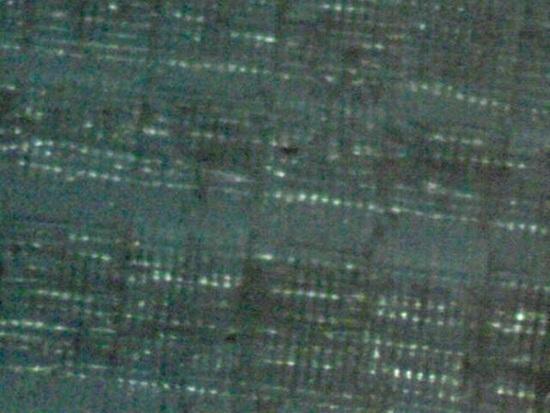
200x microscope picture
Avg Fabric Thickness .08mm
Hydrostatic Head 562 mm H2O
The above DuoMid was tested a second time after being coated with a 1 part silicone to 3 part mineral spirits. It was brushed on multiple times while still wet from the prior coats in an attempt to maximize the coating amount. It was tested after the coating had dried but it has not been used in the field.

200x microscope picture
Avg Fabric Thickness .10mm (resulted in a ~ 10% shelter weight increase)
Hydrostatic Head 1,406 mm H2O
Black Diamond Mega Light (After 60 days use)

200x microscope picture
Avg Fabric Thickness .08mm
Hydrostatic Head 562 mm H2O
GoLite Shangri-la 5 (2011 version unused)

200x microscope picture
Avg Fabric Thickness .05mm
Hydrostatic Head >3,515 mm H2O