Again, I'm no expert or anything but
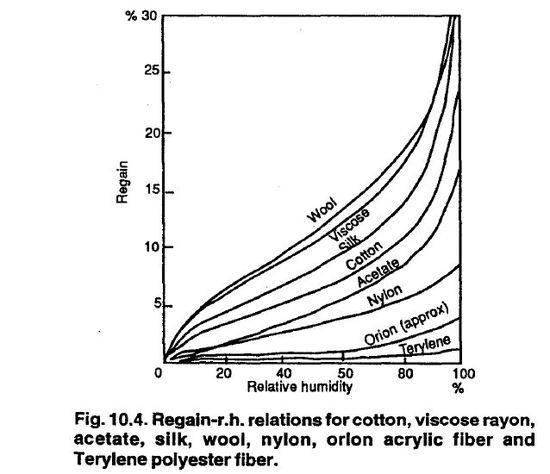
It seems like there are factors other than fabric thickness that affect water absorption. If you had two fabrics of same thickness, one with monofilament thread and the other with normal thread, and they got wet, the monofilament thread fabric would absorb less water because there wouldn't be any soaked up into the thread. Maybe this isn't that important and effect and most of the water is soaked up between the threads that make up the fabric.
An interesting thing about your table is that it says when the fibers are wetted the data isn't relevant. The hydrophobic and hydrophilic sites are covered by water so they no longer have those properties.
That makes me think maybe all this talk about wicking fabrics using the words hydrophobic and hydrophilic is mostly marketing. In the real world, the fabric gets slightly damp from sweat and then that property goes away.
Instead, you should have the fabric that feels good dry, and absorbs the least amount of water so that when it gets wet hiking it'll dry off quickly when you're done hiking at your campsite.
Supplex nylon is pretty good.
Maybe Capilene polyester is better, based on all the wicking clothing advertised, but then my marketing alarm is going off like crazy so I'm skeptical.
Now, let's argue about cotton…