


Just a curious question:
How come the actual weight of gear never seems to match what they are listed as. it seems that when I way most things, they seem to be a tad heavier than how they are advertised?
Topic
Become a member to post in the forums.
Just a curious question:
How come the actual weight of gear never seems to match what they are listed as. it seems that when I way most things, they seem to be a tad heavier than how they are advertised?
because compaines usually weight their prototypes or samples. these are usually almost finished product so they may have different materials or missing parts that werent ready for the product sales viewing.
Also not all products are made the same, so a sleeping bag using 800 fill may have a couple ounces from 800 to 850, to 874. this may drop the weight of it by a couple of oz.
If you take a newly sewn sleeping bag with fresh down and weigh it, let's say it tips the scales at 2 pounds 0 ounces. Then just leave it sitting around in normal air humidity for a week and then weigh it again. It might go 2 pounds 3 ounces. Synthetic stuff won't react quite the same.
There is also the process known as high-grading, and it happens sometimes at retail stores. They may receive ten of some item, and the weights vary from 2 pounds 0 ounces to 2 pounds 4 ounces. Some purchasers are picky, and they will sort through the stock and pick out the one that is the lightest, if that is what they want. If you arrive there late and only the last one is left, it might be the heaviest one. The same thing can happen through mail order, only it may not be the consumer who picks.
–B.G.–
many manufacturers of outdoor gear may not be able to keep their production within a certain variance … and at the end of the day … does it really matter? … an +- 5% ???
IMO … counting the smallest grams based on manuf spec is self defeating … as most will likely list the weight for one size only … and the weight variance is likely +- 5 to 10%
example my OR chaos jacket is listed as 747g for a large … my medium weights 620g … i would never have known that by looking at the listed weight, a 127g difference is 2 days+ of fuel
here's a thought … would you be happy with a down jacket/bag that came in UNDER weight … how do you know that yr not just getting less down?
Yeah, manufacturing with synthetics is fairly straight forward. You get some varience, but not that much. Fabric varience at the mill. Coating varience. Streatching, calandering, humidity, etc. For good or bad, this stuff happens.
Down is a natural product. As with any natural product, it is subject to the year it was produced. High humidity, heat, outright rain, food supply, etc. All can effect the quality a little.
Soo, you get this varience, besides the manufacturing varience. I did QC for a while, and I know that there are different tolerences to the pieces and parts.
Companies like consumers. Soo, when the consumer likes light stuff, they weigh 20, pick the lowest weight and state that. Perfectly correct. Weigh 20 and devide by 20, thay get the mean or average weight. A consumer will not like that soo much. Nor will he like the heaviest, nor median, nor mode so much. Soo, these numbers are controlled by the manufacturing process,and, the statistical methodology used. Neither of which are often stated. Nor do they often state the varience nor standard deviation. These require more knowledge to understand. More complexity… Consumers don't like the knowledge required to understand the complexity. Follow? You don't like me to even get into it.
Soo, they choose one number, then refuse to comment on it unless asked directly…then you get "I Don't Know." The poor salseperson or service person is just a consumer at his/her work. He is not an expert in the gizmo wiz-bang you are asking about. Indeed, he may not be aware of your item.
They give legal numbers, never absolute. Typically, a legal person will talk you blue in the face to say "It depends…" The numbers are nothing but guides… As others have commented +- 5-10% is actually doing pretty good.
My thoughts only . . .
jdm
Thanks everyone…definitely makes sense. Its really not a big deal to me…was just curious.
Scales aren't always as accurate as we'd like them to be and can become more inaccurate over time, especially if they use springs.
I check my scales every April–I weigh my Federal and State tax returns (the state return has copies of the Federal return so is right on 1 ounce) at home and then have them weighed at the Post Office.
What I want to know is, why are some manufacturers' weights _consistently_ less than the actual object? There have been a number of times that I have returned items or refused to buy them because the manufacturer's weight was blatantly lower–often several ounces. Sometimes, though, it's the retailer's fault!
Become a member to post in the forums.
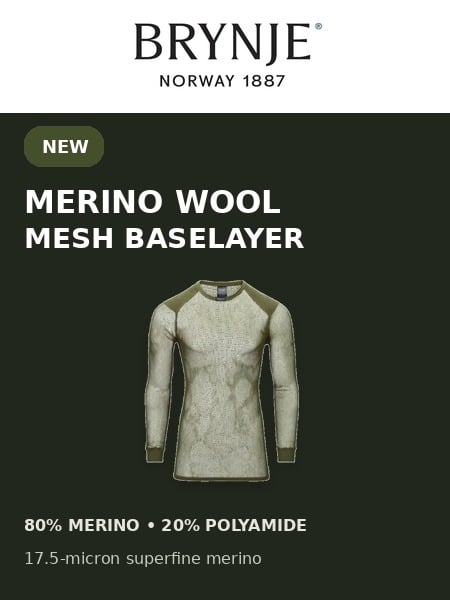 Tactical Wool Thermo ShirtSuperfine merino wool-blend mesh baselayer with a slim unisex fit and densely knitted shoulder panels for pack-carrying comfort. Weighs 4.9oz | 140g
 © Beartooth Media Group Inc.
 Loading...