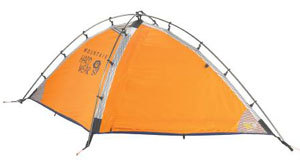
Came up with a list of requirements for a solo tent, along with a model, that you may find useful:
COMFORT:
> Minimal, competitive weight
> Adequate room – length, depth and height, for 1 adult and child or pet
> Ventilation and netting sufficient on all sides and overhead to minimize and protect from condensation
> Room for storage and cooking, fully accessible, but separate form living area
> Entry and exit without crawling or obstruction by gear
> minimal pole length for ease of setup and low weight
STABILITY:
> Freestanding – not dependent on stakes for support or shape
> Minimal obstructions on canopy surface – sheds wind, water and snow
> Minimal vertical and horizontal canopy surfaces – sheds wind, water and snow
> Strong, rigid but flexible frame
> Tent pitches taut, and remains so
WEATHER PROTECTION:
> Pitches from outside without flooding floor
> Fabric does not sag once taut, and is reliably weather and wear resistant
> Entry and exit without flooding
Began with stability, and came up with the following model:
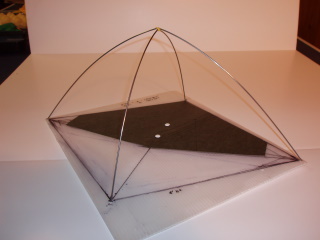
and,
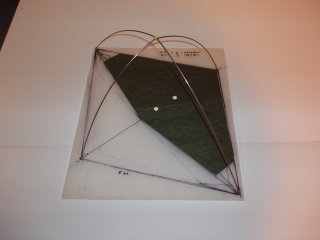
> The darker piece is the floor outline
> The four panels are equal in shape, so a pattern for 1 panel is sufficient, except for making the inner net door
> There would be Ti internal elbows at the apex to allow for use of stiff,
carbon poles
> Vapor permeable fabric would be used for the rear panels if something light and reliable in polyester can be found
> Front panels would be polyester or cuben
> Inner net door would be inverted T zip, and zips would be on both sides of the front pole for complete access
> There would be a small cap fly on top covering zip open vents.
Have constructed a full size frame model to be sure the inside space will be adequate before building a full size jig to make the panel pattern.
Have worked out nearly all the details, but as you know, glitches always come up. If I can't find a good polyester WPB fabric, the rear design will be more complicated, with a net inner and cuben outer.
Would welcome your comments and suggestions.
Sam