Topic

No lightweight cuben drysacks anymore?

  • This topic is empty.
Viewing 6 posts - 1 through 6 (of 6 total)
PostedOct 7, 2010 at 7:00 pm

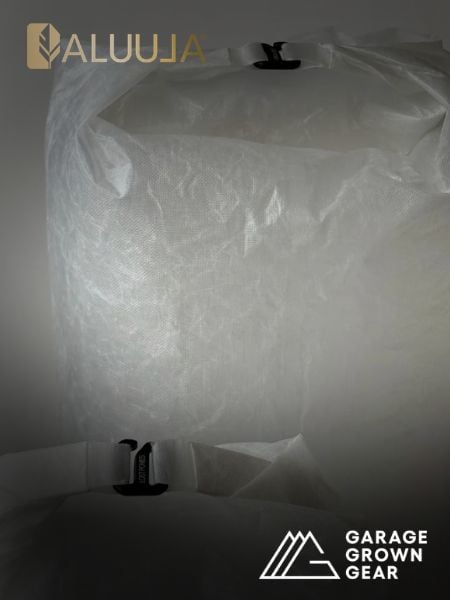
As far as I can tell, no one makes rolltop dry sacks out of the lightest cuben fiber anymore. This seems silly since you can find non-rolltop stuff sacks out of lightweight cuben or rolltop dry sacks made out of heavier cuben.

Mountain Laurel Designs used to make dry sacks with what was advertised 0.74 oz cuben — I have three, a small, medium and large, and they've all held up great — but switched to heavier fabric for the dry sacks (though they still make lighter stuff sacks).

Zpacks makes lightweight (0.6 oz cuben) stuff sacks, but no dry sacks of any sort.

Granite Gear makes cuben dry sacks with no listed fabric weight, but given the bags' spec weight (17g for a 10L bag), it's the lightest bag still out there, but slightly heavier than the old MLD cuben. Also, the GG bags are ridiculously expensive. Yes the fabric is expensive, but not *that* expensive, as the other manufacturers show.

Mountainfitter makes cuben dry sacks, but with self-described "thicker" cuben (30g for a 10L bag).

What gives? Does no company think that lightweight cuben can hold water? Even if they're not 100% waterproof, surely they can't be any *less* waterproof than lightweight cuben stuff sacks many of these companies are shipping, right? Am I crazy or is there an unserved market here?

On a related note, if anyone has an old XL MLD cuben drysack, I'd be interested in it :-)

PostedOct 7, 2010 at 7:55 pm

What do you mean by the 'lightest' cuben fiber? The 0.33oz stuff? The Granite Gear ones seem to be 0.74oz cuben. I have some. My 10L one weighs 16.0g. Using lighter cuben than this wouldn't save much weight because most of the weight is in the roll top. A 0.33oz 10L cuben drysack might weigh 12-13g instead of 16g.

Zpacks stuff sacks are 0.51oz or 0.74oz cuben. There is no such thing as 0.6oz/yd cuben. Usually when people refer to 0.6oz cuben it's 0.74oz.

Personally I'm a bit wary of even 0.74oz cuben as a drysack material. The 0.74oz cuben is plenty strong to live a nice long life as a stuff sack, but it seems that over time you get tons of tiny little holes in it from abrasion caused by day to day wear. I have a MYOG 0.74oz cuben bonded sack that I use for all my small random gear. After a summer of use it still looks great but if I fill it up with water I get a pretty steady drip (ie. 2 drips/second) coming out of all the tiny pinholes in the bottom that have apparently been caused by abrasion from day to day wear like setting it on rocks. These pinholes are unnoticeable to the eye and I wouldn't have guessed it would leak until I filed it up with water and was amazed how fast the water was dripping out and I could see it seeping through the bottom. It definitely wasn't coming through the 1" bonded seams.

Water probably wouldn't leak up through the bottom of this sack if it was sitting on wet ground, but if was submerged I bet water would find its way in (not counting the cinch cord top obviously). If you want a dry sack to keep your stuff dry from rain etc. then these lighter weights of cuben might work, but if you want a real drysack that withstand immersion then I'd look at heavier stuff. I think MountainFitter is on the right track with their 1.2oz or 1.5oz cuben drysacks. This variants of cuben use a mylar layer that is 2.25x thicker and it shouldn't develop pinhole leaks like the lighter weights do. For something crucial like your sleeping bag I would opt for the heavier cuben unless you're using the lighter weight of cuben in combination with a pack cover and/or pack liner.

All the lighter weights of cuben (0.33oz, 0.48oz, 0.51oz, 0.74oz) use the same mylar membrane so from an abrasion resistance standpoint they should all fare about the same. From a strength perspective obviously the 0.74oz will be much stronger than the lightest variants but even this seems to be overkill for a stuff sack unless you are really cramming a sleeping bad into it. I like 0.33oz cuben for most simple stuff sacks (ie. pot sack, miscellaneous gear sack, clothes sack) and I like heavier (1.2oz+) cuben for my food sack, stake sack and sleeping bag sack.

Lawson Kline BPL Member
PostedOct 7, 2010 at 8:08 pm

Hey Jeffery,

I have always used the heavier weight cuben fiber for my drybags because it has a higher concentration of dyneema fibers and uses a much thicker film. This combination helps for added abrasion, puncture and water resistance. As Dan said, weight gain is minimal due to the lack of material. With a big bag your only talking a few grams difference.

I am pretty sure Granite Gear uses the CT1K.51oz stuff and as Dan said this stuff can get pinhole leaks after time. I assume Ron realized this and is the reason he switched over to a heavier weight material.

Cheers,
Lawson

Ron Bell / MLD BPL Member
PostedOct 8, 2010 at 9:10 am

The current MLD Cuben Dry bags are very Waterproof, Durable and Lightweight and all seams are bonded.

We did use a lighter version of the Cuben for dry top * Style* stuff sack for a while and I (and many customers) thought they were nice and worked well for the intention- BUT- even though we went to great lengths to describe them as only a dry top style stuff sack- enough users found they could not use them underwater to inflate via aux scuba tanks and raise sunken treasure cannons to the surface and that they leaked under those conditions…go figure- OK just kidding a little.

We got enough returns that we lost money on them so we switched to the slightly heavier but far more waterproof and durable weight cuben and no returns at all. – Really it's only a very small- only a fraction of an ounce for some sizes -weight gain.

Maybe the word Dry Bag was confusing for the lighter version and perceptions were for something extremely waterproof.

It's funny how posts on the web work sometime…if a couple people fill them up with water and there is a little leak then they are rejected as a dry bag style stuff sack. Filling with 10+lbs of water is a very high pressure- far more than say -if you had a short swim with a pack on. So when some people read a post like that maybe they think – no good- even if their intended use is not to fill it with water or submerge it.

We also offer a Cuben Dry Sack version in the MDL Bear Bag System as a stock menu option made from the same wt cuben as our other dry sacks.

Also- We can offer tarps and shelters in the heavier wt cuben as a custom order. -About +20% cost over reg cuben. Just think of the strength!!! A little bit heavier than Silnylon but incredibly strong- A DuoMid / SuperMid from this would need some really big stakes…

Even though MLD offers more Cuben products than any other three companies combined and we have been making cuben BPing gear as long as any company- we still learn new things all the time and look forward to customer feedback to develop new Cuben products. We will have the new Cuben backpack on the site next week. No details yet.

PostedOct 8, 2010 at 9:37 am

Judging from my own use of of different weights of Cuben
as stuffsacks, the lighter weights do develop pin holes,
but mostly, as they get wrinkled they just LOOK like an old
plastic bag and my confidence in them suffers due to the
appearance. However when I compare them in use inside a
sodden pack, they outperform the more visually
appealing silnylon sacks in terms of waterproofness. At this
point, I wouldn't trust just one layer of any of it for expensive electronics in swimming or heavy rain conditions.

BPL just commissioned a batch of sacks for their bear hang
kits using extra heavy cuben.

PostedOct 8, 2010 at 10:21 am

"BPL just commissioned a batch of sacks for their bear hang
kits using extra heavy cuben."

This is the main reason I ordered a couple of these "heavier" drysacks from Lawson; for bear-bagging.

I think that in general, the idea of a drysack made of the lightest possible material is, as Ron has aptly demonstrated, ultimately counter productive. Different story perhaps for a stuff sack intended to see use only inside a pack, among other items of clothing, sleeping bags, etc. I think it's kind of assumed a drysack will see use OUTSIDE of a backpack, subject to greater wear and tear, including direct exposure to warm-freeze cycles, rain, snow, higher solar radiation at high altitudes, abrasion against bark, rock, gravel, sand, etc, so on and so forth.

I'd want a heavier fabric for that too.

Viewing 6 posts - 1 through 6 (of 6 total)
Loading...