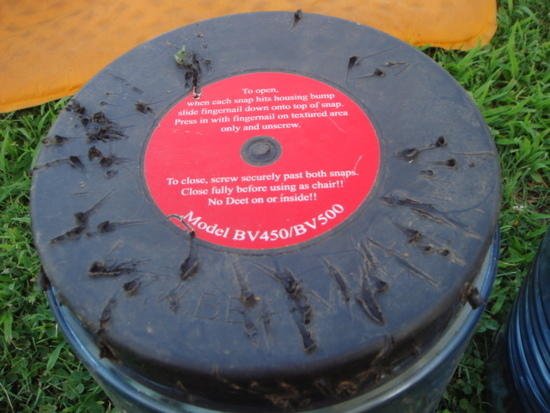
IIRC, hanging a canister up high is one of the most common ways of making it fail. Pretty much the only way a bear can open a canister is if it the canister drops from a considerable height and cracks open.
"I'm making my first foray into bear country in a couple of weeks, so I'm curious what you guys (and gals) do."
What's worked great for me is simply avoiding areas that are extremely heavily impacted by human beings. If there are so many people camping there that the guv'mint has seen fit to put in bear boxes, then that's probably (a) a place that won't provide me with the solitude I'd like, and (b) a place where there are a lot of bears habituated to humans.
Don't stress out about it too much. Black bears are usually about the size of a large dog, and they virtually never harm a human being. If you see one, count yourself lucky for having had the experience. If you don't see one, count yourself lucky for not having had the hassles.
Some people like to seal their food inside an odorproof bag that's thicker than a normal freezer bag. This makes it less likely that the bear will be able to find your food cache by smell. The brand I use is OPsack, but they're kind of expensive. Don't leave food in the car at the trailhead.
If possible, put all scented items (soap, toothpaste, etc.) inside an odorproof sack, and inside the bear canister. Put your canister far away from where you sleep, to avoid losing sleep while a bear messes with it.
If you don't go no-cook, many people suggest cooking an afternoon meal, then hiking some more before camping for the night. That way bears won't find your campsite by the smell of the cooking food. This also has the positive side-effect of making it less necessary to sleep near a source of water; areas near water tend to be extremely heavily impacted.
If you tell us more about your route, people familiar with the area might be able to give more specific advice.
-Ben