Topic

Availability of new TICA Ice Tools

  • This topic is empty.
Viewing 7 posts - 1 through 7 (of 7 total)
PostedJun 8, 2010 at 2:36 am

I post this message here because I think Steve’s answers may be of interest to someone else.

According to the Suluk 46 website the TICA Ice Tool is sold out. However, new shafts are being tested. So… when the new ice tools will be available?

Summer is here and a lot of high country routes cry out for a tool like this.

Steven Evans BPL Member
PostedJun 17, 2010 at 6:31 am

I just finished testing the new shafts last week and am in the process of placing the order for them.

Improvements:

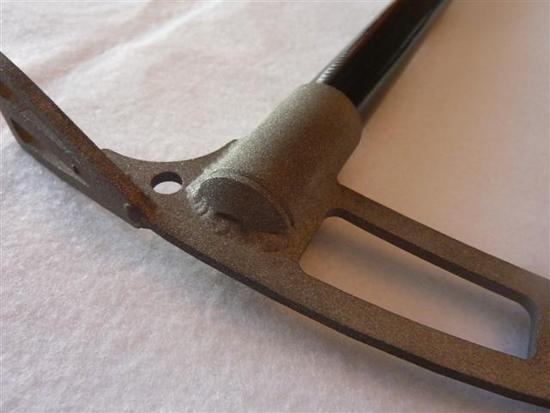
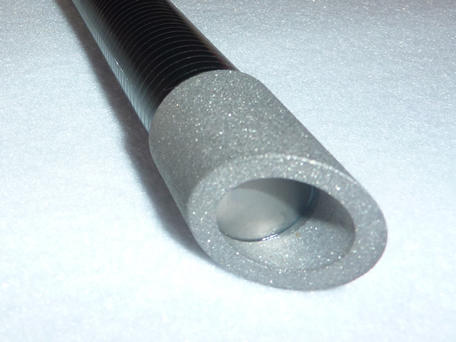
– The top of the shaft is now plugged so snow does not enter.
– The bottom of the shaft is also plugged to stop snow from entering.
– The spike is now bonded to the outside of the carbon shaft in order to reduce the risk of rocks/debris from damaging the shaft.
– My testing of the new shaft shows it is over 103% stronger then before, when loaded in a cantilevered manner (The first UIAA test for those have read the Ice Tool article)

They'll be in stock sometime this summer, but giving an estimate on the availability would be a complete shot in the dark.

Steve

PostedJun 21, 2010 at 5:34 am

Hi Steve,
All those changes look good. How is the new shaft different? What weight is revision 2? I would be interested if I were buying an improved axe, which I do not think I am at the moment in tests on the shaft with a load at the mid point, for use as an ice axe belay in for example crevasse rescue. You never tested our type 1 ice axes in that way. So if an axe belay situation arose I would not trust it. I feel that the type 1 axe would fail at relatively low levels (compared to type B ice axe tests) at all other tests of the shaft except the cantilever one.
All the large stresses I have put on mine in use have been cantilever stresses. Example trying to lever rocks by getting the pick under the rock with a fulcrum at the pick base and pulling on the shaft. I got some deflection of the shaft before I gave up. You reported large deflection without failure so I felt safe to give it some pull.

Steven Evans BPL Member
PostedJun 21, 2010 at 11:29 am

Hi Derek,
The new shaft has the same constant outer diameter, but the inner geometry is where all the design changes occured. I think for what the original axe was designed for, it fits the bill. The reason for the change is that many people voice concerns over the "cantilevered tests" as the other tests were handled quite well. The B-rating would be to withstand a load of 0.6 kN (cantilevered methoc) and the new shaft held 0.55 kN without breaking. Deflection was very large mind you, somewhere in the area of 8 inches. If I can get a little more strength out of it, I can surpass the requirements.

The other tests from the UIAA will not see a substantial difference, but they will increase some amount. It's just the new shaft was specifically designed to overcome the cantilevered test.

As for using it as a belay, if I am thinking along the same lines, it was covered to some degree in the UIAA tests. No?

I feel that the type 1 axe would fail at relatively low levels (compared to type B ice axe tests) at all other tests of the shaft except the cantilever one.

When you say Type 1, you referring to the TiCa R1 which you have? If so, the tests showed that the cantilevered test was (by percentage) it's weakest point. I'm thinking that I am not reading this right as I know you have read the article and seen the results. Maybe a little clarification for me…

PostedJun 21, 2010 at 12:32 pm

Hi Steve,
totally edited
I found and re-read your tests. I am not clear if the tests were with the CF insert or without, I think without, but anyway that is not relevant to the centre of the shaft test.
I agree with your analysis concerning this test. A walking axe does not get anywhere near this central stress in ordinary use, until you walk roped on a glacier and someone falls in.I have now become interested in that situation.
The B axe test expects 562 pounds which is 3.7 times my body weight. Your theoretical test of the shaft gave 400 pounds and your physical test with a chain broke the shaft at about 220 pounds which is about 1.5 times my body weight.
The comment in the report that the UIAA test would have used webbing to put on the load would make quite a difference. Also the test in bending over a 50 cm wide void is quite different to my impression of an axe belay with 2 narrow slots in the snow in a T shape. The test is like a point load situation max bending WL/4. In the situation I envisage The axe shaft should be supported quite close to the central rope by snow that will probably crush under load. If it became a uniformly distributed reaction on the snow, because the snow was so soft you would get a situation like a double cantilever UDL = WL/8. That doubles the safety margin. In most circumstances the snow would be harder and the reaction would be greater nearer the centre, a triangular distribution of reaction. I am not quite clear on that but even more safety margin, maybe 3 times. We are now at at least 4.5 times my body weight. A little bit more safety and I would be happy.
Your new shaft is theoretically stronger in this way?

Viewing 7 posts - 1 through 7 (of 7 total)
Loading...