I can’t really give a review of the Rocky Socks because I did not actually use them on the trip. Instead I thought I would give my impressions of using trail runners on a very cold, very wet trail and why I WILL use the gore-tex socks next time. Also, a side by side comparison to a user of gore-tex boots. FYI: This test turned out to be just a long day hike due to a couple of nasty hangovers.
TESTING CONDITIONS:
Temp: 40f at start & 30f at highest elevation
Weather: Rain / Snow mix
Trail Conditions: Deep mud / 1”-4” fast flowing water / Up to 16” of wet melting snow and ice.
Footwear: inov-8 flyrock 310 (Mesh Train Runners) + Ice Breaker low cut sock with light padding. No Gaiters.
Trail length: 4.7 miles each way (total 9.4) 4.5 hours walking time (day hike).
Terrain: Mostly moderate uphill with some steep parts requiring stair climb like steps followed by the reverse.
My body type: Male, 5’8”, 160lbs, generally very warm blooded.
THE VERY WET TRAIL:
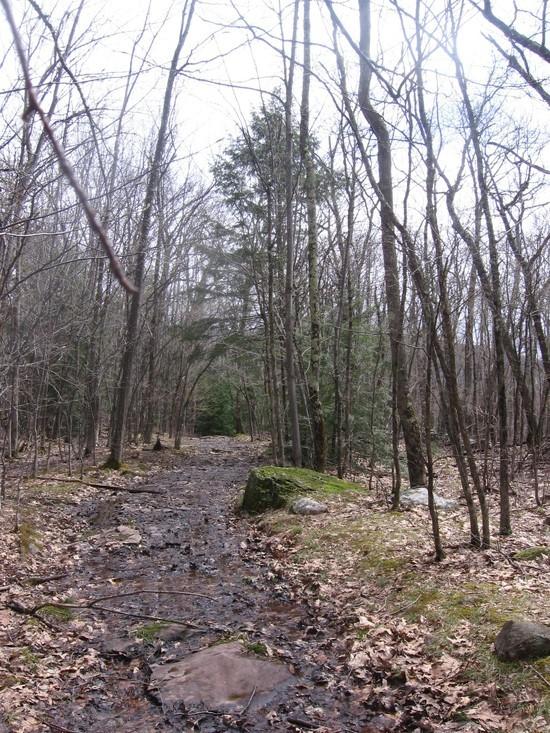
This was a very, very, very wet trail. The first 2 miles were over an old mine access road which was deep wet mud. The trail was lined with thick brush that was difficult to walk through, so a lot of time was spent in the mud. Some areas were as deep as 4”. Thankfully there were lots of rocks and logs to walk on but my feet were soaked after the first mile. The next 1.5 miles were a steady uphill with water flowing down the trail! There were many parts where it very hard, if not impossible, to avoid walking through 3” – 4” of ice cold fast moving water. The trail had literally turned into a stream! The next mile was a gentler uphill, with hard packed snow, ice, & some free flowing water. Mostly walking on hard packed snow with an occasional splash in icy water. The last part of the trail was deeper snow and ice with the occasional drop into a 16” snow drift. Surprisingly, I do not think I got any snow stuck up my pant leg!
Like James said, my feet were wet and generally warm as long as I was moving. After submersion in water and after walking through deep wet snow, the next several minutes would be cold, but not numbing cold. However, there were a few stretches where I was walking through so much cold water, so frequently, that my feet did get uncomfortably cold. We stopped for about 30 minutes for a snack break at the midpoint (4.7 miles) of the hike and my feet were defiantly cold!! Wringing out my socks helped to warm me up a bit, but if I had to be stationary for a prolonged period of time I would have been VERY uncomfortable.
Gore-Tex Boots vs Mesh Trail Runners:
My friend wore Gore-tex boots and during the hike in he said his feet were a bit clammy, but relatively dry and comfortable. He was doing a lot more acrobatics to avoid deep water which required dangerous jumps from one rock to another, but he just walked through shallow wet areas which I must admit I was jealous of. On the other hand, I was being careful at all times to avoid the cold influx of water, but just walked through the water when a risky jump was required or when my feet were warm enough. When we stopped, he complained of cold feet as well, so he must have been a little wetter than he thought. I think the big difference between the gore-tex boots and the mesh trail runners would have been made if it were dry and sunny the next day. I would have dry feet and his would still be wet. Also, if he was unlucky enough to have his boot flood, he would have been in a much worse position than I was.
Gore-Tex Socks:
Although I did not use them on this trip I did pick up a pair of Rocky Gore-tex socks to keep in my pack as a safety measure. Based on my experience this time, I would defiantly use the Gore-tex socks on my next wet and cold trip! Perhaps, I would skip them during the day (as I did this time) if the trail was not as wet and save them for camp use at the end of the day to avoid wearing them out too fast. At 2.7oz (size 10) it’s just a good insurance policy. If it were any colder or longer than it was I would have put the Rocky socks on during the hike. The gore-tex sock really gives you the best of both worlds and the flexibility to adapt to conditions as they change. Since I did not actually use them, I cannot attest to how well they breath or how water tight they actually are. The problem I have with trying a neoprene sock is that you have no way to dry your feet until you are tucked in for the night and no option to stay dry during the day in really cold wet conditions.
Side Note: After the hike and about a 30 minute drive with the heat on in the car, we stopped for dinner. At that point my feet were still wet but warm and fairly comfortable. By the time we were done with dinner and drove another hour my socks were just damp, wringing them out resulted in just a few drips. I left them in the unheated garage overnight and were just about bone dry by morning.
Hope this helps somebody.