Six Moon Designs Haven – Field Shots
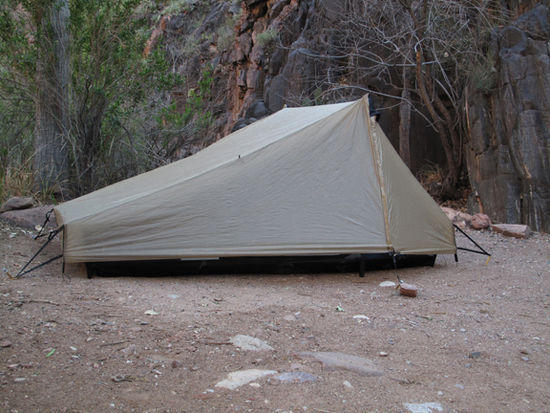
The inaugural trip was 2 nights at Bright Angle Campground in the Grand Canyon. No wind, no rain, no need for a tent except for privacy and to keep the squirrels at bay.

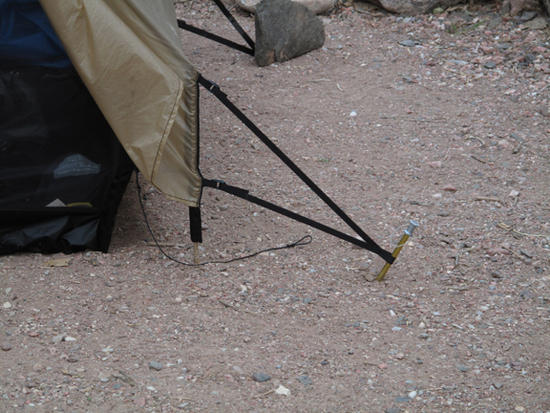
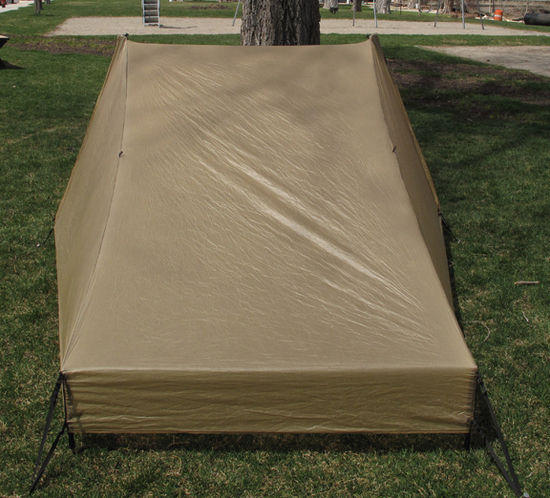
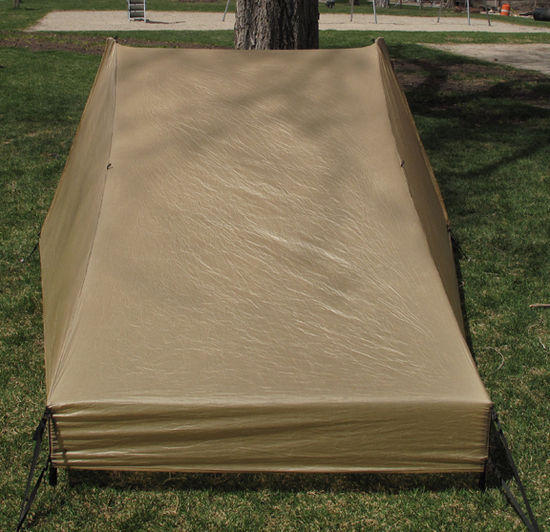
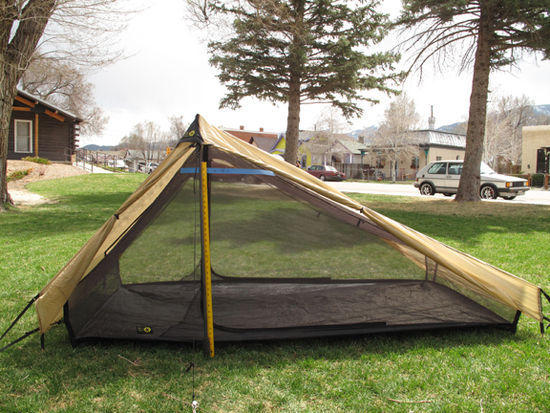
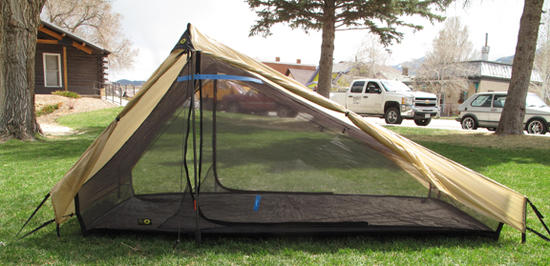
This is the first pitch, and with just a little futzing around, it went up pretty straight and true. Note that the ground here is compacted and rocky. The stakes were driven in with a softball-sized rock, until they would go no further. This is not the place for wimpy stakes.
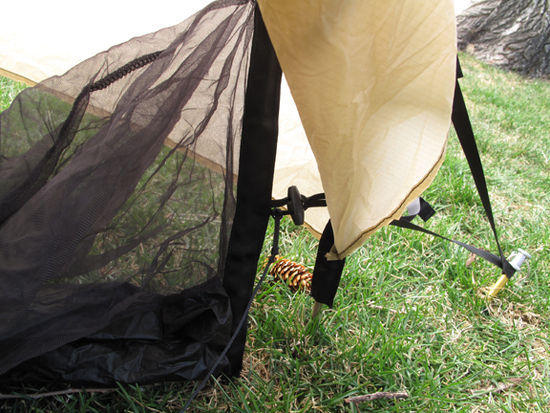
As a result, the corner webbing of the Haven didn't always end up at ground level. It depended on the angle of the stake, which depended on the sub-surface rocks. The adjustment buckles on the grosgrain help straighten things out.
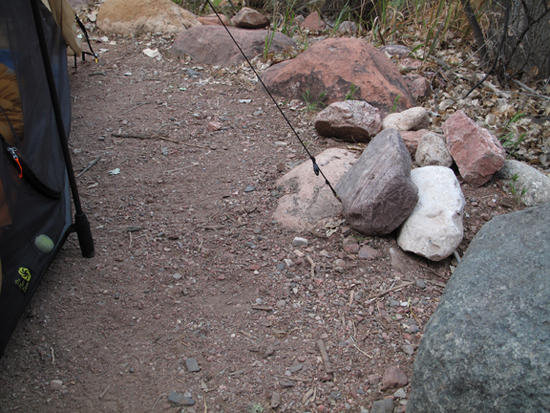
If you end up having to "rock" the tie downs, you need some tie-out cord to go through the webbing or the vestibule line, and then to your anchor. In this case I have a tent peg tied to the end of the extension line, rocked, and then a 2nd rock was placed to "snug" the vestibule line to the ground. If the vestibule lines are anchored beyond the intended distance, you won't get the vestibule to close.

A tight pitch is quickly defeated when you open and tie back the vestibules. Maybe in time I'll be able to get a tight pitch opened and closed. (Remember, this is pitch #1, and "operator error" should remain high in your awareness.)
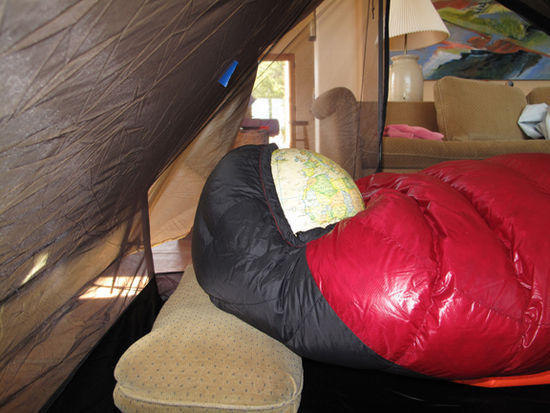
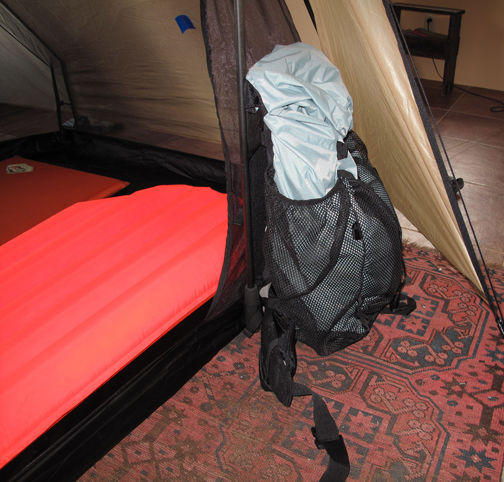
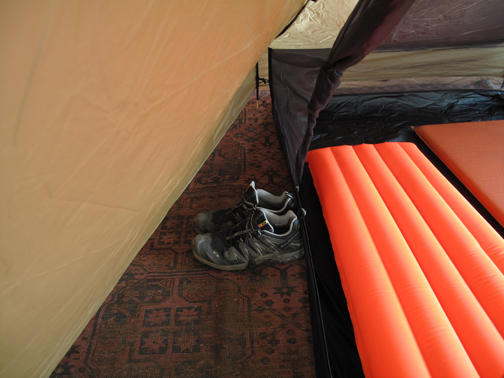
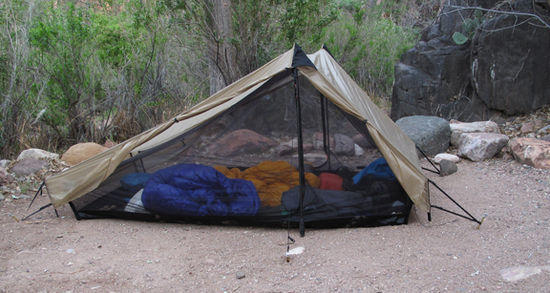
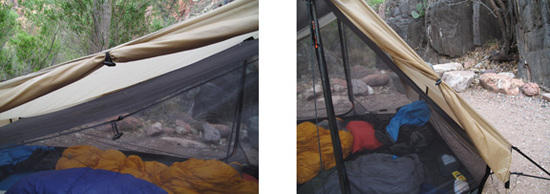
There is plenty of room in there for two people, gear, packs, trekking poles, tripods, etc. I'm 5'9" and my wife is 5'6", and we had a Lot of room at the head and foot ends, as well as across the floor. I was on a 2.5" air matt, and my wife on a Prolite.

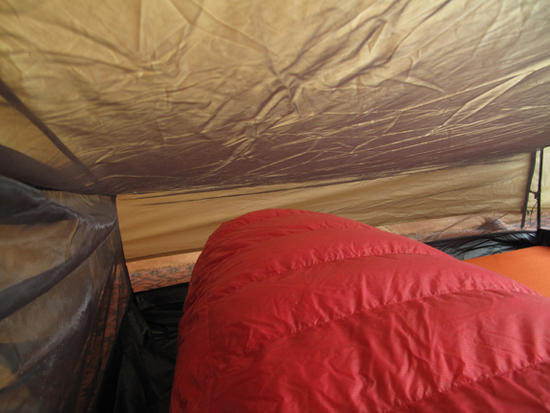
Once I got the pitch improved we started to see a pretty good standoff between fly and netting. In most places it was at least 4". When the tent was closed up, the netting was still a little loose, unlike something like a Hubba Hubba, where the tension of the netting would keep you from bumping a wet fly. Nonetheless, it did provide enough feedback to give us fair warning. My only concern is that in a condensing environment, the netting might blow into the wet fly. Again, "operator training" might improve that situation.
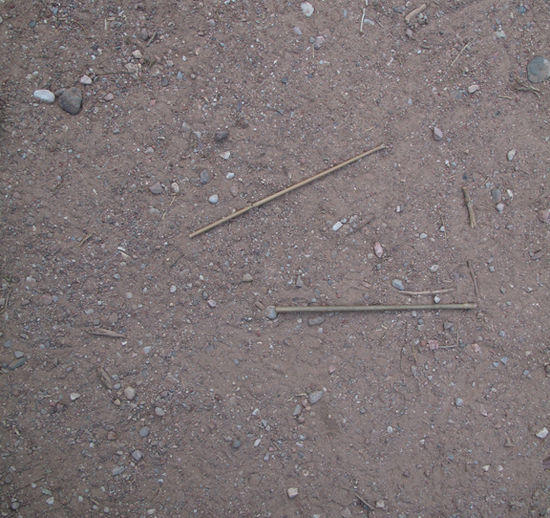
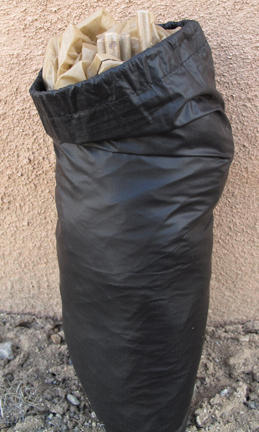
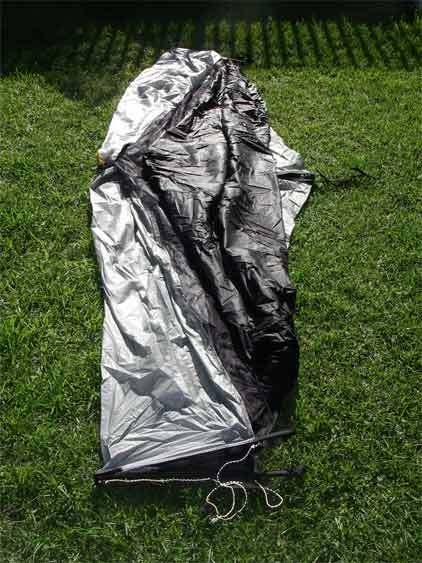
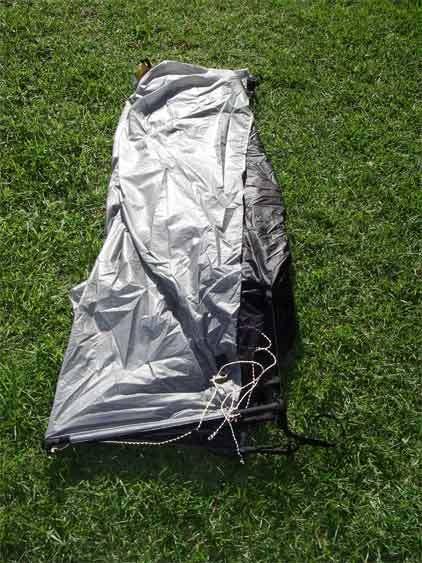
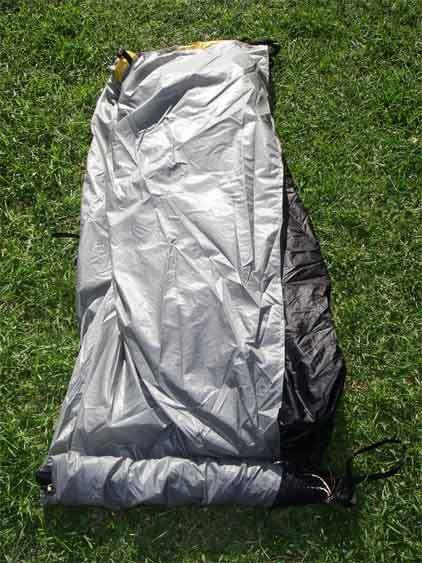
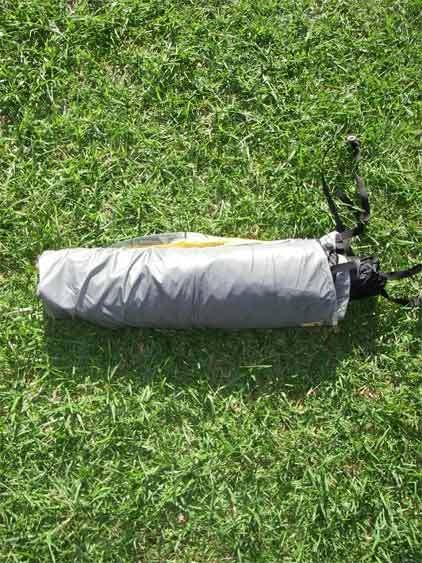
The stuff sacks provided, like so many out there, are great for marketing a tight small package, but useless unless you have a 8×10 folding table to roll things up on. And with the bamboo corner posts, it is a real PITA to attempt in the field. So I take the corner posts out and then stuff. The result is the typical semi-ridge lump, times Two – one for the shell and one for the netting. I'll make new stuff sacks that allow for easier stuffing, And for more efficient "lose packing".

And last, while the bamboo posts are a nice direction to take over carbon fiber, mine are going to get a wrap of orange tape or perhaps some orange spray paint. Losing one of these would be easy and, while not disastrous, problematical.
First impressions: I obviously have some learning to do. I need to do a little tweaking here and there. I still need to weather a good storm or two to see how it handles wind and splashing rain. But at 36 ounces, it is spacious, airy, has great air flow between fly and netting, and is simple to set up, so for us it's definitely a keeper. Nice job Ron Moaks!