Looking to purchase my first pack. I was originally looking at the Osprey Atmos series but wondered what would be a good pack for weekend trips only. I need to care a tent for two and and then my normal items for a 2 night stay. I am new to backpacking so I just now looking into getting some of my gear lighter from the start.
Topic
Backpack suggestions for weekends
Become a member to post in the forums.
- This topic is empty.
Six Moon Designs has a closeout on their Swift pack. 16 oz. and a nice size for a weekend pack for $75. Can't go wrong with SMD.
http://www.sixmoondesigns.com/shop/shopexd.asp?id=60
Or maybe a ULA Conduit. Also reasonably priced and great quality.
" I am new to backpacking so I just now looking into getting some of my gear lighter from the start."
So the OP is new to backpacking and is carrying a 2 person tent and you are recommended two frameless packs?
I would suggest the ULA Equipment Circuit as a great weekend pack. Framed with a carrying load of 30 plus pounds and just over 2 lbs in weight. Great quality and only $180.
I agree with David, in that you should get a framed pack as a beginner's pack. ULA circuit is very promising. If you think your gear will be over 30lbs, look into the Granite Gear Nimbus line. They weigh about 3 1/2 pounds, but make up for their weight in their ability to haul loads comfortably. I transitioned from a 6lb gregory palisade 80, to a granite gear nimbus meridian, and then finally to a frameless pack. Unless you're willing to shell out some mega bucks and get all the lightest gear from the very beginning, it may be difficult to jump right into a frameless pack and still enjoy your new found interest
The advantage of starting out with a frameless pack, IMO, is that you make the transition from framed to frameless easier by eliminating it. If you have never driven a Mercedes then a Ford doesn't seem so bad. A frameless pack will never be as comfortable for most, only lighter. Starting out with a framed pack isn't going to change that all it is going to do is give you the opportunity to compare the two which is pointless because they are so different. Starting out with lighter gear on weekend trips will probably put him under 20 lbs including the tent. If that is the case I personally would go with a frameless pack even to start. If in the 30 lb range I would agree that something like a circuit would be a good choice. YMMV
Watch out for this design. Very rigid curved metal frame with "airspace". Hard to get load close to body. Also, metal against bone might not feel so good. Clearly padding of straps and belt has been sacrificed to save weight. Difficult to pack the bottom due to rigid curved corners. Just a few things to consider. This design didn't work for me. Ordering a replacement pack mid-trek.
Matt can you be more specific as to what gear you already own? Do you plan on replacing your existing gear any time soon? I started off with a huge pack but as I began replacing things my packs got smaller and lighter. Now I have little use for my larger packs so I'm glad I didn't spend a fortune. Check out the gear swap!
I would look at a framed ULA or Granite Gear pack. A backpack is an unusual item. For almost every other piece of gear (boots being the other exception) there is a simple trade-off: comfort in camp vs. comfort on the trail. A single walled tent, closed cell foam or really tight sleeping bag might not be that comfortable in camp, but will feel much better on your back. On the other hand, a frameless pack (or simply a pack that doesn't fit you right) may weigh less, but be less comfortable when hiking. Of course, the ideal is a pack that weighs very little, but is still really comfortable (for the load you are carrying). I recommend packs that have very few unnecessary items (like zippers, extra pockets and straps). These items add weight but don't provide extra support. I personally like the Granite Gear, as it has a very nice waste belt and a decent frame.
I might also add that while extra straps and zippers add weight like any other piece of gear, a heavy waste belt or frame does not. A waste belt is carried as efficiently as possible. A frame is also really close to your back. That's why, in some ways, the weight of a pack should not be counted like your other items. Theoretically, you could come up with a complicated formula for measuring torque (distance from your center of gravity times the weight) but I prefer a simple halving of the pack weight when calculating the total weight. That doesn't do justice to those packs that have practically all of their weight in the frame and waste belt, but it is a good approximation (in my opinion).
These packs actually get the load as close to or closer to your back than many packs on the market. Yes, there's an airspace. But once the "trampoline mesh" on the back is compressed, the packbag is all of about 0.75 inch from your back, which is pretty comparable (if not thinner) than the foams that most companies use for their back panels. The older style Atmos/Aura had a bit more of a dramatic curve, but were also designed so that you could drop a hydration bladder or other stuff into that space, getting the weight closer to your back. (Those were harder to load.)
While I wish my waist would waste away a bit, the place a belt goes around me is my waist. Actually, a pack's belt should be buckled around the hips, which is why the belt on a pack is called a hip belt.
Sorry, couldn't resist…. :-)
Seriously, the advice of several folks above to use at least a semi-framed pack that has good weight transfer to the hip belt is a good one. The Six Moon Designs Starlight and Traveler are excellent packs and are currently on sale for 15% off. Be sure to get the "optional" (mandatory, IMHO) aluminum stays. This assumes your total pack weight will be under 35 lbs. If it's more, you'll need a heavier-framed pack such as the ULA Catalyst or Granite Gear Nimbus Ozone.
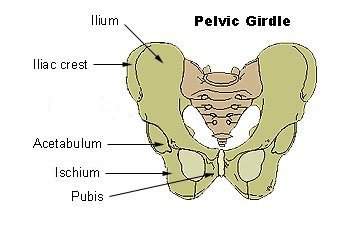
Belt on hip (iliac crest), not around hips — otherwise inhibits movement/stride. In many people, the top of the belt (depending on how wide it is) ends up pretty close to the natural waist. Suppose people find out where it's best for their physique.
Back to Aura/Atmos/Exos — seriously consider whether that rigid metal frame is going to bang agaisnt your ilium below the belt.

If you aren't bony in this area, this may not be a problem.
The airspace trampoline is very taught and doesn't seem to approximate the spine's S shape.
I was not able to tighten the lift loaders enough even for a very small load.
Waste belt, hip belt, tomato, tamahto. Plenty of people call it waste belt, even when it goes around the hip. Seriously, Google "backpack waste belt", you'll see plenty of examples. As for where it should go, there is a different thread for that.
Not to be a word nerd Ross, but waist is the narrow part in the middle of your body, and waste is something that you cannot use. Now if your pack is light enough then a waist belt is in fact a waste (at least according to Jardine)
And just because it comes up with plenty of internet examples doesn't mean it is correct usage, or correct. Google "birther conspiracy" for many pages of examples.
BTW Six moon starlight is a good choice for a new backpacker who is transitioning. Carries well.
The Atmos "Airspeed" suspension is cooler on the back but the load is placed further from the back, Which sucks!
You are probably best buying a internal frame pack in the 3 1/2 pound range with about 3500 to 4,000 cu. in.. You can probably find something used for under $100. Check on the Gear Swap Forum. I suggest a 3 1/2 pound, 3,500 cu. in internal frame because it will have enough hip belt and frame and is big enough to haul most likely a heavy two man tent, heavy sleeping bag and pad but still not be too heavy its self.
Golite Quest and Pursuit, Kelty Ilusion and Nimble and the Granite Gear Nimbus Meridian come to mind.
Save weight in clothing, cooking and other gear. After that look into lighter sleeping systems and shelter/tents options. You will discover how light a pack you will need and be comfortable with after some expeierence. Contrary to some others beliefs, not everyone will end up with a framelss pack, tarp and quilt.
Joseph
Matt,
In choosing a pack, it will really depend on desired comfort… for the volume and weight of your load. Choose fit over function, because you can adapt to not having features, but you can’t adapt to a poor fit.
If it were me, I’d buy the pack last… after you’ve developed a lightweight (or UL) kit and can bring it in the store to load up some options. Overloading a pack early on is a sure way to not stick with backpacking.
A frameless pack isn’t for everyone… even if your load can be carried well in a something like a Jam, it would probably be more comfortable in something like a Circuit… even being heavier. You can easily try both types and see for yourself.
You will, almost undoubtedly, want to carry more than you need when you start out. Personally, I find an 11-12lb base a very nice balance, but it is now real easy to get under 15lbs with off the shelf items and have nearly all the comfort one could get at twice that weight. Under 15lbs would be my minimum goal if I were in your position.
Most importantly, try on every option that you can find. I’m helping my wife (new to backpacking) go through this process right now and the pack we’ve found that fits her best was something I hadn’t considered until she put it on. She will be well under 20lbs, most of the time, but she prefers a frame, hands down, to the frameless options.
I suggest trying everything you can find in stores and picking a favorite, then try the cottage industry and compare further. An important thing to remember is that everybody will be different. A pack that I like may fit you poorly, and the opposite is true as well.
Personally, I’ve been using an Ohm for shorter trips, but my Circuit is more comfortable (actually, it’s the most comfortable pack I’ve worn). I haven’t tried it yet, but the Gorilla looks like another great option and I hear good things about the Starlite. I haven’t had good luck with fit and/or comfort with the Granite Gear, GoLite and Osprey options, but others love them.
Lots of good choices out there like the others have mentioned. Good luck.
Oh, I'm sorry Josh — I totally spaced out when I wrote that. I must be tired and didn't notice that you corrected my use of "waste" as opposed to "waist". You are absolutely correct about that. One of the problems with being too dependent on spell checkers and not checking what I posted. As for waist belts vs. hip belts though — I will stick to what I decided to right earlier — I mean write earlier. :)
As for Google, it is actually smart enough to correct my usage: if I type "backpack waste belt" it says "did you mean 'backpack waist belt'" to which I reply "of course, silly me, thank you Google".
No worries Ross, you are not alone in the use of "waste" belt, I see it all the time. I was just so happy when Mary chimed in that I had to back her up. (I'm an English teacher and I don't want to be too, you know, teachery all the time.)
Spell check can be a dangerous thing. The other day a student wrote "iamb" when she meant "I am." and of course, spell check was no help.
I agree that waist belt and hip belt are used interchangably.
I've done the same thing…"hip belt" is easier to remember :~)>
Why limit yourself to a pack deemed/sized weekend only? I'd agree the ULA Circuit would be a great choice, with enough room for a 2 person tent and your gear. If the tent poles are long, you will probably need to stash them in one of the external mesh side pockets. The Circuit will handle a week too, if you ditch the 2 person tent, unless its a real small 2 person tent?
You could still go larger and have a lightweight pack too though, Like a Granite Gear Nimbus Ozone, or well, I'll let you know more on Friday? :)
My tent is a Jack Wolf skin 2 person double wall (6lb). My sleeping bag is a coleman mummy 3(lbs)
I bought a aircore sleeping pad
no stove (made my own ) for a weekend trip mid summer in July.
I have been buying lightweight underarmor type layers for clothes, trail pants and shirts.
Shopping for hiking shoes over my 10 year old EMS full hiking boots. I will have to carry some of my sons gear he is 10 and will have his own pack with water bladder in it.
I am looking into getting ride of the Neogene for a playpus or similar water bottles collapsible type. I need a way to store food yet in the pack and need rain gear yet. I wrote Jason Klass and he stated Driduck was great for rain gear. I don't have alot of gear but trying to buy light from the get go so I don't have to replace down the road. I have to replace the sleeping bag with a good summer bag and looking into replacing the tent with somthing lighter too.
With the tent and bag your carrying, plus carrying some of your Son's gear/food as well, you probably want at least a 4000ci pack, probably even larger. A ULA Cicuit is not going to be large enough, IMHO anyway.
When my kid's were younger, and we did weekend trips, I carried a Gregory Shasta, which if memory serves, was 5000-5500 ci They carried their bags, pads,clothing, flashlights……etc. and snacks. I carried all the food, tent, and cooking gear.
So for a trip where I am carrying all my gear, tent,colthes, sleeping bags x2. I should stick with a traditional pack and not UL?
Back to the OP.
I would recommend that you pack up your intended kit, and make a trek to your local backpacking store like REI and see whether it fits in the Osprey Atmos 50 L pack and whether that pack fits and is comfortable.
For 3 season backpacking, I use a ULA Relay (frameless) or the older, orginal, lighter Golite Jam (frameless).
But for winter treks I take with the Boy Scouts where I need to carry my own kit plus a few extras, like 2 expedition stoves, snow shoes, snow shovel, ice axe, etc., I pull the Atmos 50L out of my garage. Some of the straps mentioned that do add weight can be used to attach things like the two person tent you mentioned or, heaven forbid, wag bags. Also, if you plan on hiking into areas that require hard-sided bear cannisters, your first pack should be able to accomodate a cannister. Of the packs mentioned above,AFAIK the Catalyst from ULA is big enough for a cannister but costs 2X what the Atmos does.
You can often find the Atmos on sale at REI or on the web at Prolite Gear. If the two sleeping bags you mention are not down, but synthetic, some of the packs mentioned in this thread might not be big enough.
As one of the posters above mentioned, pack fit is important and personal. And although the thread does not show consensus on this point, if you start the trail to ligher and lighter gear, you might want to buy the UL pack latter in the process after you have upgraded your sleeping bag, cook kit, and shelter.
To the question about whether the Atmos is suitable for longer trips, I have used the Atmos 50L on 50 miler trips where I have had to carry extra gear for Scouts. If your base kit is compact, the 50L central pocket, top pocket, 2 front pockets, and external shovel pocket, and two belt pockets are more than enough room for trips longer than 2 nights even without sneaking 2 or 3 liters of water into the meshed region behind the suspension.
"So for a trip where I am carrying all my gear, tent, clothes, sleeping bags x2. I should stick with a traditional pack and not UL?"
Yes. You have traditional gear, so you need a traditional pack. In your case, you are carrying traditional gear for two people, so this applies double, I think.
Putting traditional gear in an Ultralight pack is a recipe for discomfort.
When we hiked with our young child, I carried a Gregory Shasta. 5700 cubic inches, could easily handle 65+ pounds — and it did, on several occasions.
I think that if you carry a 6 pound tent, two 3 pound sleeping bags and the food & most of the water for 2 people – you probably need a 60L internal frame pack. Pick one without lots of extra pockets, zippers, straps, etc – and with a light weight (but durable "enough" fabric (ie: 210-410 denier pack cloth not 100 denier cordora) and you'll be as light as you can. There are lots of choices in the 3.5 pound range. The older "bombproof" (1000 denier cordora) packs were 6-7 pounds…
ps: Be sure to check out how many extra layers of fabric, etc the "adjustable to fit everyone" types of shoulder strap attatchments add. Some are heavier than others. Also, the lid that converts to a fanny pack doesn't work well in practice, so you can save some weight by picking a pack without the extra hardware & straps.
Become a member to post in the forums.