Hello all –
I was fortunate enough to thru-hike the PCT this year, fulfilling a long-standing dream. I am deeply indebted to many people, including the members of this forum, for their feedback, advice and encouragement. Thank you.
I am oft-asked about gear, and since this forum is geared toward gear, I humbly submit my reviews…
Sleeping Bag….Feathered Friends Lark w/overfill (rated 10 degrees – down fill)
Feathered Friends is based out of Seattle, and thus, I am biased toward the home team. The 10 degree bag was overkill for much of California. On the other hand, it was great to have in the Sierra when the temperatures dipped into the teens. And it was an deeply appreciated when the weather turned nasty near Sisters/Mt. Jefferson in Oregon and absolutely necessary when we enjoyed lows of 9-10 degrees in the North Cascades in the first weeks of October. It has a full length zip and I could use like a quilt on the warm nights. On cold nights I appreciated the draft collar and extra down. Bag performance is dependent on so many factors, I cannot give the definitive answer to its status compared to other bags. I will attest to the number of people I met along the trail who wound up purchasing replacement bags because theirs weren't up to the cold/dampness of northern climes. Personally, I slept much colder (due to considerable weight loss along the trail) than I ever had previous to this trip, and was glad to carry a much heavier bag (39 ounces).
Bag Liner – I didn't carry one for most of the trip. I did have my bag laundered along the trail (the easiest place to do this is in Mammoth, California). I generally don't use bag liners, but I did try the Thermolite Reactor, which has, at mixed reviews. In the cold weather of Washington I found the Reactor to help considerably in keeping the warmth and cutting down on heat loss when I tossed and turned at night.
Sleeping pad: Thermarest Nero – full length. My favorite piece of gear on the trail, the Nero was 14 ounces of joy. I am a side-sleeper and the Nero offered the greatest stability/comfort in any air mattress I've used. My hips did not ache. It did fairly good job of keeping me warm at night. Only in the Northern-most stretch did the cold from the ground become a factor, but even then it was marginal. It's performance was tremendous, I punctured a hole on the top being careless with a knife, but easily patched it in the field with the repair kit offered by Thermarest.
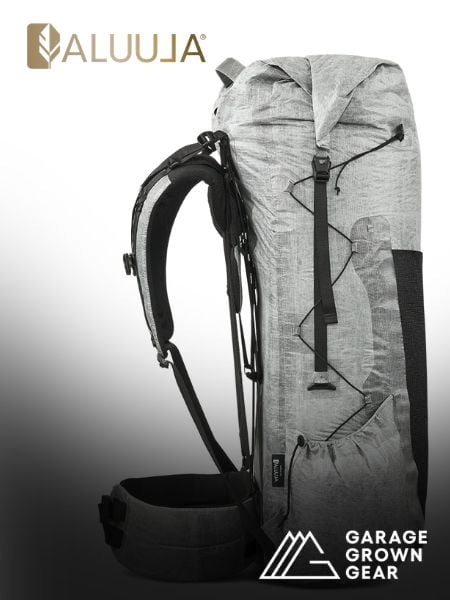
Pack: ULA Catalyst
Workhorse of the PCT…roomy, comfortable, held loads for me (fully loaded with a bear cannister) of up to 42 pounds. No complaints. I beat the heck out of it, and the stays are coming through the bottom of the pack but it's a lightweight pack and I was not too careful with it. I'd buy this again.
Headlamp: Various models, I would make this generalization: If you want to read or just setup camp, those UL LED-based headlamps work fine. If you want to hike at night, buy a substantial headlamp. They throw out enough light to allow one to keep a good pace and not be struggling with depth-perception. I ended up having a bad case of Petzl TIKKA XP envy as I carried my tiny lights, none of which were worth much on a night hike.
Shelter – Lunar Solo by Six Moon Designs. When not cowboy camping, I slept in this tent until I reached Washington. Staking out tight is always a bit of a challenge (I've found the same with most single-wall, tarp tents). But I really enjoyed this tent because it's fairly compact, light, has enough space to stow gear inside (including your pack) and most importantly, it's a side-entry system. It's performance in windy conditions was less than ideal, but some of these issues were addressed in more recent models. Mine is three years old. And I did meet people who were better than I at setting it up so it was remained taut.
I switched out in Washington to the MSR Hubba for its ability to shed snow. This turned out to be a wise decision. (Although it should be noted that I loaned the Six Moon Designs shelter to another hiker, who hiked through the snow with nary a complaint). The Hubba is much heavier and sturdier, but by the time I reached Washington, weight wasn't an issue anymore. I'd lost more body weight by that juncture than my pack weighed with the Hubba. I've had several incarnations of the Hubba over the years and it's a really solid, well-built tent. Even though the snow loads never approached critical levels, I never worried that Hubba would let me down, either. And that peace of mind was worth the extra pound, especially once the weather turned.
Rainpants – OR PacLite rain pants. Had a problem with the first pair, OR stood by their product and gave me new pants. Worked great. I'd recommend bringing substantial pants, as there are rocks and branches looking to shred DriDucks at every turn.
RainJacket – North Face Men's Venture Jacket (HyVent). PitZips are a plus. Didn't really need it most of the trip, but it did a good job when pressed into service. Not as breathable as some eVent jackets, but a fraction of the price. I'd bring it again.
Other clothing observations – The best choice on the trail as far as clothing was to go with convertible pants…The long pants saved my legs from many stretch of overgrown trail….I also wore long sleeves, even in the heat, as this reduced the chances of sunburn and dehydration. I switched to short sleeves later in the hike when weather cooled…The Icebreaker Merino 200 BodyFit is the world's greatest cold-weather hiking shirt…It was 24 degrees and I hiked with just that until the wind kicked up.
Gloves – I carried simple wool gloves, more technical gloves and even snow mittens. I didn't use gloves much except for Oregon and Washington, and then I was glad for a spare pair when one pair wetted out. Yeah, it was extra weight, but I dislike cold hands. I'd carry glove liners in the future for additional warmth.
Cooking – The old titanium pot with the Caldera Cone. Works great, very stable, just treat your Cone with love and respect. By the end of my trip mine was beat up pretty good and on its last legs due to owner abuse. But it did the job and I will buy again.
Water treatment – I filtered using an MSR MiniWorks. This subject draws just about every possible opinion. I chose to filter my water for the simple fact this was my one shot to hike the trail. I took a sabbatical from work and I had a six-month window to finish this hike. The MiniWorks is heavier and slower than other filters, but its carbon element does a good job of making the water taste, well, like water (no odor or aftertaste). The filter needs to be cleaned fairly frequently (easy to do) and the filter holds up for a very long time (I did change it in Washington, but did so earlier than necessary). The removable float on the end of the intake line was useless and was too easily detached from the line (strong current finally took it away to my chagrin). The MSR threads onto a nalgene bottle (I carried a Nalgene-made collapsable canteen) but most of the time, I just held the filter above an old Gatorade bottle and filled it up. I like the MiniWorks, but the frequent cleaning does get somewhat tiresome. However, it's a small price for clean water. All that said, I met people who didn't treat their water, used chemicals, used steripens (with mixed results) and other filters. I really did like the gravity fed models out there, and would strongly consider going with that model. The Platypus gravity fed filters worked well, although I'd be tempted to rig one myself and add a carbon filter.
Bear Canister – I brought along a Bearikade that is custom-sized between the Weekender and Expedition models. I received this tip from this forum a couple of years ago and dropped Wild Ideas a note and they had no problem meeting my request.
The Bearikade is an extremely easy canister to deal with, well built, light and considerably more expensive than other brands. Mine holds around 725 cubic inches worth of food. In my ULA Catalyst, it had to be loaded horizontally in the pack. The only downside is that the backpack collar did snag along the lip of the canister, causing a small tear in the pack. I taped this up. I didn't mind carrying the canister through the Sierras, as it made food storage in bear territory a snap. The canister had the advantage of being able to hold slightly more food (725 vs. 700 cubic inches) than the BV500 at a lighter weight (6 ounces fewer). However, the cost of the Bear Vault 500 is around $75 while the Bearikade was $260.
Camera – I elected for compact rather than SLR-cameras for the simple reason that I was more likely to pull out a compact than dig into my back to pull out an SLR.