I have made 3 packrafts, named from now on one, two, three.
All are self bailing, you sit above waterlevel. Next project will be more like Alpackas. They probably know best what works well.
Number one is 2 pound oversized swimming matress made for adventure races. Shell is sewn of tent fabric, with polyethylene inner tubes. (and computer fan inflation, extra half pound)
This is really fragile solution of course. Thin polyethylene is luckily easy to repair with duct tape. And it is available in tubular form in various diameters, which makes things so easy. However, for repair you need to deflate, remove inner tube, patch and inflate. If I had Bender's skill and equipment I'd try single wall.
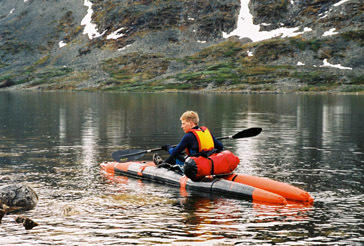
Two and three are glued together of 250g/sq.m. PVC coated nylon bringing weight to 3-4 kilos. Material is already tough enough to paddle over river rocks, as long as they are not too sharp. Repair requires soft PVC specific glue and some cure time. Or lots of duct tape (the black stuff in the photo). I'd love to have some better material.
Both were long and built with little down curvature (anti rocker) in frame, which would then under my weight straighten. This worked well.
Number two was 4m long trimaran with 1,5 foot thick central tube you sit on, and small pontoons about 1 meter left and right. Reasonably fast, dry sit position, but horrible for any small river running. The pontoons would stuck often and turn raft suddenly left or right. Sidewinds on lakes did suck.
Second try was narrow cataraft (photo). 4,5meters with 1 foot diameter tubes. I have enjoyed riding down rivers with this but there are downsides. Pontoons close together form quite a wave between them cancelling any speed advantage of long frame and definitely getting you wet.

Some thoughts:
I would be cautious with rivers and 2 layer fabric solutions. If you get water between layers the raft will be heavy and difficult to control. Water probably must be removed on shore.
One idea for bottom protection is to fix a 3/4" plastic tube running along the keel line under the raft. It would take lots of rubbing and give some directional stability too.
Small rear fin is great to have
Inflatable will hit rocks 'softer' and be less prone to puncture, but must have zero leaks in order to work well. Skin on frame is maybe tolerable with minor leaks. In Alpacka style boat I'd expect most damage to be on middle bottom which is good.
For bonding together different sides of heat sealable nylon: couldn't you use a narrow strip of same fabric, in a way you would tape the edges together.
I think if you want packraft buy Alpacka, but that ain't the point of MYOG projects…