


I'm looking for a good pair of warm sleeping socks that I can also use as gloves or as a pot holder. What type of material should I be looking at for keeping warm but also durable enough to handle some heat and wont melt? any specific suggestions?
Topic
Become a member to post in the forums.
I'm looking for a good pair of warm sleeping socks that I can also use as gloves or as a pot holder. What type of material should I be looking at for keeping warm but also durable enough to handle some heat and wont melt? any specific suggestions?
Gotta love those possum-down socks from this web site!
Stargazer
Yeah I saw those…what do you think about their durability if they were to get pretty close to a fire? I've got a Ti-Tri stove that I use in woodburning mode so I'm a little worried that they could get damaged pretty easily…and they are a little more than I want to spend!
They are truly a great product and offer quite a bit of warmth for very little weight. With that said though, I don't put them near a fire or wear them for anything other than sleeping as I worry about their long term durability and exposure to elements not really intended for their use.
I use mine as potholders all the time with no ill-effect, but I'm working with a Caldera Keg system, not a wood fire, which is far less controlled.
Still, as sleeping socks, they can't be beat. They aren't as durable as synthetics, but then again, you're not making the same demands on sleeping socks as you are on hiking socks.
Stargazer

If only they'd get them back in stock! I got lucky and picked up the gloves from another member here, used those as potholders last weekend with my Ti-Tri in woodburning mode and they worked great. One hint, make sure you don't have the pot/cup handle over the opening! The wood fire comes blasting out of there.

From my experience, I would highly recommend going with 100% wool. Any other fabric mixed in there does not do well with fire. I would also recommend separating your mittens/Pot Holder from your socks. They get pretty dirty and sooty and if it's raining, wet. All of this does not mix well with the inside of your sleeping bag.
Also, I've found 100% wool gloves are hard too find. Seems like everyone wants to mix something else in there. I think this is primarily to add some durability which leads me to my next point.
I haven't tried this yet, but I've read that boiled wool is the way to go to add durability and better water resistance. Buy a pair of globes the next size bigger than you normally wear. Put them in boiling water for bit, take them out and when they are just cool enough, put them on and let them shrink to fit your hand by letting them dry on your hands.
Cheers!
You’re right Jeremy: wool blends are more durable than 100% wool.
Also, boiling wool is an ancient process whose result is a fabric that is windproof, more water resistant and warmer. Here you can read how to boil wool.
I have observed boiled wool to be quite a bit heavier and a little less warm than loftier virgin wool. The wind resistance is ok, but they would have to be rather thick in gloves to work well for this. Another consideration is the "hand" of the fabric – boiled wool often ends up being rather stiff compared to virgin.
The possumdown does work well and is a mixture of 2 natural fibers: Merino + bushy-tail possum fur. I like combining them with a water/wind-proof outer mitt for versatility.
Okay….I am ready for the assualt after this is read. I have always used the G.I. issue 100% wool glove liners. They keep my hands warm, are durable, and are very cheap to buy. I pay $1.50 on base for them. I am sure they are very cheap at surplus stores as well. They weight in at about 2oz a pair.
Regards,
John
Actually the best thing about those gloves is the fact they are uni-hand so if you wear a hole in one you can keep recycling the good gloves. Everytime I get in a surplus store I buy a couple of pairs. Thanks fo the tip.

I'm currently using some 3oz wool gloves as both gloves and my pot handling method. I've recently been seeing some merino wool gloves around that are much thinner and lighter (ie. 1 to 1.5oz). Does anyone know if merino wool stands up to heat like regular wool does? Or does it burn easier since it's finer?
Become a member to post in the forums.
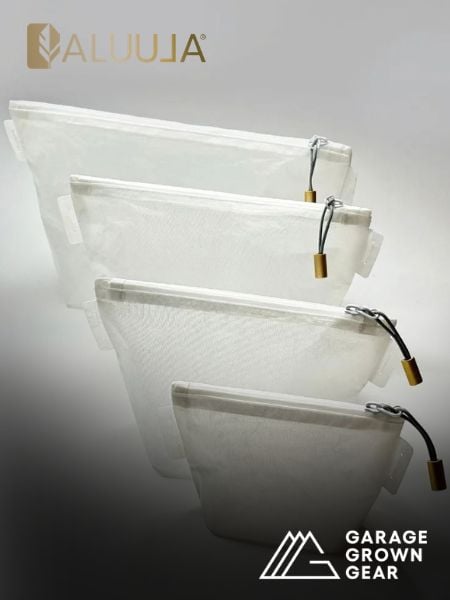 New Gear with Aluula FabricsLighter, stronger, more abrasion-resistant, and highly water-resistant - explore ultralight backpacking gear made with ALUULA Graflyte fabrics. Engineered for exceptional strength, durability, and lightweight performance, ALUULA Graflyte helps reduce pack weight without sacrificing reliability, making it ideal for demanding backcountry adventures.
 © Beartooth Media Group Inc.
 Loading...