Topic

Trail Maintenance Tools

  • This topic is empty.
Viewing 15 posts - 1 through 15 (of 15 total)
PostedSep 6, 2009 at 4:20 am

Hi all,

I am interested to hear from those of you that are involved in trail maintenace and how you integrate light weight hiking into that.

I have recently been allocated a section of trail to maintain along Western Australias Bibbulum Track and started to think about the tools that I will need to carry.

Any one found a light weight pair of cutters, perhaps a rake a hoe or even a saw?

Cheers

PostedSep 6, 2009 at 7:41 am

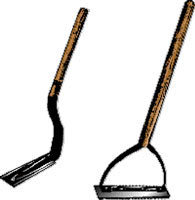
I use a shortened Pulaski,McLeod, and army trenching tool sometimes a railroad pick that the head slides off the handle. A mattock can be handy along with a bow saw. These are used for working on mountain bike trails that almost always are used by horses too so you need to move quite a bit of material to repair damage and build water bars.
I usually pull a BOB trailer behind my mountain bike and occasionally carry a chain saw for downed trees.
For deep wilderness a folding pruning saw or packable back saw and army trenching tool is about all can carry.
I think you've stumbled across a new product line; titanium head carbon fiber handled packable tail tools.

Tom Caldwell BPL Member
PostedSep 6, 2009 at 8:24 am

I wish there were more online resources covering this topic.

I have a Fiskars brand small folding saw (8 oz) =and short loppers (18 oz) that will fit into a daypack. They are not good for serious trail maintenance, but if there a a few areas to trim up you can enjoy a dayhike/maintenance outing.

I occasionally use a backpack blower on trails with lots of leaf cover. I have rigged up a fanny pack and a Camelback Unbottle onto the blower. I have plenty of water, can carry a lunch, spare sparkplug, the folding saw, small loppers, and can also tie fuel bottles on. Talk about a load!

When I use a weed trimmer, I have a shoulder harness to help carry the trimmer, then put all the extra line, tools, spark plugs, tick spray, and fuel I need into an old daypack.

PostedSep 6, 2009 at 8:29 am

Giving it some more thought and walking outside looking in the trailer I realized I also carry a large file and a pair of garden lopper [pruners].
I tried collapsable avalanche shovels once, the lexan kind,they might work if you were moving sand.
I've also hauled an 18 volt DeWalt sawzall with a couple of batteries and rough wood blades for working on a trail covered with wind downed limbs.
http://www.americantrails.org/resources/info/tools1.html
You might look at this link for more information.

Bob Bankhead BPL Member
PostedSep 6, 2009 at 9:13 am

Don't forget a machete for trimming overhanging brush as you walk along the trail. Keeps you from reaching for the pruning shears all the time – or using your hiking poles as a weed wacker.

The machete also works well if the Dingos or B'rer 'Roo jump ugly, or you run into Franco and associates. Homeland Security is supposedly deporting them back to Oz later today. :D

PostedSep 6, 2009 at 9:57 am

The I.M.B.A uses the MaxAxe with some success, they also offer trail building seminars for anyone in the states that are worth the couple of hours.brush cutters
I have a brush cutter with a steel rod handle versus wood but it really isn't applicable around here.
Another item that helps with big washouts is a clinometer and/or a peep level. A roll of survey string can help establish pitch between two points.

PostedSep 6, 2009 at 7:46 pm

I appreciate this thread. I see trail maintenance as a sort of two-tier (or maybe multi-tier) affair. There's all-out trail maintenance crews with hard hats, heavy tools, dedicating trips exclusively to trail maintenance.
Many people have also dabbled with the idea of bringing along a very light tool (folding saw, or clippers/loppers) on hikes they're on to focus just on brush and small branches, where perhaps the emphasis isn't entirely on trail maintenance.

In this latter category, I'm interested in identifying the lightest weight yet reasonably "serious" two-handed loppers that are available. Not one-handed clippers, but something lightweight yet with two hands a person can cut through a decently thick piece of, say, vine maple.

I've got something like this with plastic handles that are a bit shorter than normal lopper handles, and it has a sort of ratchet mechanism that I think adds some mechanical advantage. Unfortunately I don't store this at home so don't know the weight or brand. If anyone has pointers (URLs) and true weights of effective yet lightweight loppers, it would be great to see those.

Tom Caldwell BPL Member
PostedSep 6, 2009 at 9:32 pm

Good question. I can't imagine a pair being very light and durable. Just for reference, here is a pair that I can stick in a daypack. They weigh 18 oz and are tough. You can snap right through stuff of 1.5" diameter, and if you work around it the limb it's not that difficult to take out something 3" in diameter.

http://www.fiskars.com/webapp/wcs/stores/servlet/ProductDisplay?storeId=10001&langId=-1&catalogId=10101&categoryId=10258&productId=10484&page=products

If you aren't hiking very far to do your lopping and that is your mission, I don't recommend them. I see several people using them and they are just too short to be efficient and effective for a dedicated lopping outing.

Mary D BPL Member
PostedSep 6, 2009 at 10:35 pm

Advice on trail maintenance from our local chapter of the PCTA:

"Fiskars has a "Power Gear" 15 inch Anvil Lopper. We in the PCTA maintenance circle absolutely love 'em and most of us carry them even when we aren't officially doing trail maintenance. We throw one in each pack… they are light weight as well as powerful. I think we do as much with these as we do with the heavier long-handled loppers because of the gearing – more perhaps because these are lighter to carry. These are bigger than pruners but a lot smaller than your average lopper.

"If you're going to do more than just making it easy for the hiker to stay on the trail, it's important to cut to the actual clearing limits – at least 6 foot wide at knee high. It's so disheartening to come in as a trail crew and have to make more cuts where someone has already cut just because they cut to about one foot wide, and of course the trail clearance is far wider. I've had this experience as a trail crew more than once and it really is frustrating and sad."

http://www.portlandhikers.org/forum/viewtopic.php?f=7&t=822&p=4743&hilit=loppers#p4743

PostedSep 7, 2009 at 7:12 am

I actually do more trail maintenance/building than hiking these days, what a great thread!

Those Fiskars PowerGears are really great, you can cut through limbs with much more ease than a comparable sized regular lopper. They come in just about any length you could want too, including pruners. Right now I just have a long pair of Corona loppers (32" I think). I don't really like to bend over when I'm carrying a pack and the longer length keeps me from having to bend over to lop things off at ground level. I have no idea what the weight of the things are.

As for saws, I just have a little Fiskars folding saw I got at Home Depot. I don't know the model or how much it weighs, but it works ok. I bent the blade a little shortly after getting it and now it cuts with a slight curve. Maybe its time to replace it…

Personally I would rather carry a longer pair of loppers than a machete. You can do a better job of cutting the limbs off where you're supposed to with loppers. If your section of trail has lots of small plants/weeds that grow up around it, though a weed whip is a better choice. http://tinyurl.com/weedwhip Most of them will cut through saplings even. A word of caution, if you have a lot of whipping to do wear a pair of gloves because it will give you blisters in a heartbeat. Other advantages include being much lighter and easier to pack than a gas powered Weed Eater and you can actually use them in Wilderness Areas.

Keep up the good work. Let everyone else think the trails are just made by lots of people walking in the same place. We'll keep all the real fun to ourselves :P.

Adam

Edit: Just saw your comment about a hoe. It probably varies depending on the organization your adoption is through, but on the Ozark Trail adopters are not responsible for tread work, so no hoes are needed. Tread work is really a whole different ball game than lopping and trimming. I would check and see if fixing the tread is part of your duties before you start dragging a McLeod with you.

Mike M BPL Member
PostedSep 7, 2009 at 3:05 pm

I worked three season as a wilderness ranger in the Great Bear and Bob Marshal and nothing too light about the tools I had to pack- pulaski was ~ 7 lbs, single buck saw ~ 6 lbs, a couple of small wedges and a file ~ 1 lb (it should be duly noted that I was MUCH younger at the time)- it was wilderness so no chain saws or other mechanized/motorized tools allowed

it is amazing how much work you can accomplish w/ those simple tools – the single buck saw you could clear downed trees up to 3-4' in diameter (you could fell trees that diameter as well if you needed to re-route a portion of trail), cut trees for water bars- the pulaski is the real workhorse though- you could rebuild trail if needed (or build new), skin logs, put water bars in, remove brush, chop small downed trees and on and on- it's got to be one of the handiest tools for trail maintenance around- but it ain't light.

PostedSep 7, 2009 at 5:30 pm

+1 on the Pulaski. Its far and away my favorite tool for trail building. Hacking roots, cutting backslope, digging up rocks, the pulaski will do all of it and more. Soooo handy.

Adam

PostedSep 8, 2009 at 4:04 am

The way it works here, might be slightly different to the US.

We have a governing body known as DEC (Dept environment and conservation) who look after all the national parks, and CALM (Conservation and Land Management). These two bodys look after policy, procedure and in this particular case the 'big' work on the trail maintenance side. For example they will build the shelters, water tanks toilets, and move any large obstructions on the trails. The volunteer crew will do the smaller things like pruning, rubbish removal (dont we all?), shelter maintenace. Last weekend we went out and installed water bars.

Power tools are a big no no on the trail unless DEC and CALM are out there.

Some good suggestions on tools so far.

Cheers

PostedMay 26, 2011 at 12:29 pm

I thought that this would be a great thread to bring back (obviously for us who do trail maintenance)

What types of saws do you bring? Anyone ever mess with The Silky Big Boy 2000?

http://www.silkysaws.com/Silky_Saws/Curved_2/Bigboy-2000-XL-Teeth

I have some of the Fiskars loppers that are like 14" and weigh less than a pound but they aren't to hot on dead/burnt branches so I was thinking of just bringing a saw which would pretty much cut through anything that needs to be taken off the trail.

-Kevin

Viewing 15 posts - 1 through 15 (of 15 total)
Loading...