Topic

Do I need a better compass?

  • This topic is empty.
Viewing 25 posts - 1 through 25 (of 27 total)
Sanad Toukhly BPL Member
PostedSep 3, 2009 at 8:28 am

Well, I'm going to be doing a couple of bushwhacking trips in the upcoming months and I was thinking that my little Silva Forecaster compass might not cut it for that kind of navigation. Most people seem to use a baseplate compass. I'm not sure which ones I should be looking at. I would prefer if the compass does not weigh more than an ounce. The Silva Explorer Pro looks like it might be a good choice. Let me know your recommendations guys. Thanks.

-Sid

PostedSep 3, 2009 at 8:47 am

The Silva Pro has adjustable declination which is really convenient, you can save a little weight by doing without it:
Suunto A-10

or you can get a sighting compass with mirror for a little more weight:
Silva Landmark

Roger Caffin BPL Member
PostedSep 3, 2009 at 4:10 pm

Hi Sid

Most people use a baseplate compass because it is very hard to get one without the baseplate.
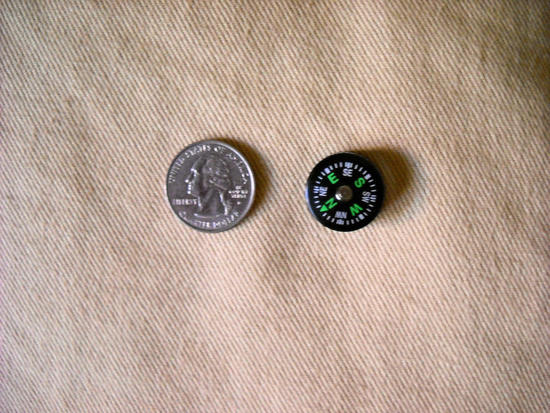
I currently use a cheap small round compass which I bought in a newsagent in France to replace the one I had lost (ahem). I've been using it for years now, off-track, bushwacking, snow, …

But DO insist on the oil-filled versions.

Cheers

Jay Wilkerson BPL Member
PostedSep 3, 2009 at 4:59 pm

I have used this very tiny liquid compass for a many years now..You can find it in the Adventure Medical Survival packs at REI…

012
It comes in at 2 grams.

Sanad Toukhly BPL Member
PostedSep 3, 2009 at 5:14 pm

http://www.tech4o.com/p-56-forecaster-610.aspx

The Silva Forecaster 610 in the link above is the compass I currently use. I thought that I might need a baseplate and/or sighting compass if I was going off trail. Truth be told, I don't even know what a sighting compass is used for or how it is used. I'm a little familiar with a baseplate compass, however. From the recommendations you guys just gave me, it seems that I may be fine with the little compass I currently have, which weighs in at under half an ounce. So you guys think my current compass is fine for off trail navigation?

-Sid

Sanad Toukhly BPL Member
PostedSep 3, 2009 at 5:18 pm

Hey Roger,

I presume you recommend oil filled because they are the most accurate?
Can you recommend a lightweight oil filled compass for me to look at?

-Sid

PostedSep 3, 2009 at 5:20 pm

>I presume you recommend oil filled because they are the most accurate?

I think it's so it doesn't freeze.

Jay Wilkerson BPL Member
PostedSep 3, 2009 at 5:25 pm

As long as you have a GOOD topo map you should be able to just read the lay of the land…I still do not really no how to read a compass correctly…Just N-S E-W…I have never got lost–a little off track at times but never lost. I really enjoy topo maps plus reading and watching the land on the map.

PostedSep 3, 2009 at 10:34 pm

I use a Silva Expedition 4. A compass (and map) is a vital part of my safety gear. Most of my hiking is in mountainous areas. If the cloud or fog is down, or it's a winter white-out, i need to know where the safe descent routes are. Do you need a better compass? Depends where you hike i suppose. I wouldn't like to use a small button compass wearing bulky winter mitts.

Roger Caffin BPL Member
PostedSep 3, 2009 at 10:53 pm

Hi Sid

The Forecaster is about as small as I would go myself. Some of the very small compasses with disks instead of needles don't swing very freely, but they *are* cheap. Ihave them, but don't trust the ones I have.

I use my compass to line the map up within 5-10 degrees. Then I read the map and relate it to my surrounds. I have not needed to use a compass for a bearing for … 10 – 20 years. In our Australian bush you often can't see anything useful to take a bearing off anyhow! We use saddles and ridges and so on instead. And almost ALL our navigation is off-trail.

Cheers

Roger Caffin BPL Member
PostedSep 3, 2009 at 11:17 pm

Why oil-filled?

The oil does several things:
* Lubricates the needle bearing
* Damps the spinning of the needle
* Absorbs shock so the needle does not get damaged

Why oil? Better than water for all of the above. Not freezing is a bonus.

Cheers

Sanad Toukhly BPL Member
PostedSep 4, 2009 at 8:55 am

Ok, so when I e-mailed Silva and asked them whether or not the Forecaster was oil filled, this was the reply:

"This is a liquid filled compass with oil, Thanks for asking Sandy"

A bit of a confusing answer but I think she means to say it is, in fact, filled with oil. Both the Silva Explorer Pro I was looking at and my forecaster are oil filled.

So basically, what I can gain from switching to something bigger, like the Explorer Pro, is more accuracy? Since they are both oil filled, that is the only advantage I can think of. I'm not sure whether I should make the switch. There would be a weight penalty if I was to switch, and I'm not sure if I would get enough improvement in performance to justify it. What do you guys think? To switch, or not to switch?

-Sid

PostedSep 4, 2009 at 9:18 am

Do you need to micro-navigate off a map, in poor or non-existant visability, with no ground features to help? If you do, then you'll need a compass with a baseplate.

Sanad Toukhly BPL Member
PostedSep 4, 2009 at 9:29 am

Mike,
actually, yes. My off trail hikes will be in Florida. The terrain is constantly flat and EVERYTHING looks the same. Visibility is poor to none due to heavy vegetation when you are off trail. The only land marks I can use to help are lakes and rivers. Although, I suppose we have plenty of those everywhere.

PostedSep 4, 2009 at 9:49 am

Navigating accutately in heavy vegetation is very difficult! You are constantly 'leap-frogging' from tree to tree on a bearing.
Most of my hiking is in tree-less terrain. Scotlands maritime climate means the weather can close in very quickly. White-out conditions happen frequently in winter. The compass usually comes out to find a safe descent route off a high mountain plataeu that is surrounded by vertical ground. I rely on pace counting and timing on a bearing in poor visability.
It's much harder to do this in the type of ground you are hiking in. :)

PostedSep 4, 2009 at 11:33 am

Like many of the posts I also align my map north and sight features while keeping a baseline, then I took a wilderness navigation course with the Tacoma Branch of the Mountaineers and my eyes were opened. By far the most favored compass for the class was the Suunto MC-2 World Compass, I and a few others had the Brunton (Silva) 15 TDCL, and there were also a couple of students with the older model Silva Rangers.

I have since upgraded to the Suunto MC-2 World Compass and could not be more pleased as it is very easy to read, an extremely smooth rotating housing, a very steady needle, dead on sighting, accurate declination adjustment, and a big clear mirror to box the needle, signal, or just look at yourself.

Having said that there will probably only be a few instances when I will need such accurate sightings or the need to use my compass as a protractor and meridian lines to transfer a bearing. The Suunto A-10 that was previously recommended would be a good choice for general navigation.

Zack Karas BPL Member
PostedSep 4, 2009 at 11:51 am

lots of good stuff has been said. I'll add my thoughts:

–if you ever need to follow a bearing, get a baseplate
–if you ever need to triangulate to figure out where the hell you are, get a baseplate
–if you only need to know what direction n-s-e-w is, get the button compass
–if you are commonly hiking in featureless terrain, but have good access to the sky, consider a gps

edit: Jay, your system works well until you are in terrain that has no features or too many common features to accurately ascertain your location. I'd rather be sure than guess and force the map to my surroundings. There are some places I've been to (Iceland mainly) and thought "glad I'm not lost here!" because the topography would be virtually impossible to figure out my position even with a baseplate compass. I imagine if I had a button compass in that situation, I'd probably just lay down and wait for death:)

Hikin’ Jim BPL Member
PostedSep 4, 2009 at 12:34 pm

–if you ever need to follow a bearing, get a baseplate
–if you ever need to triangulate to figure out where the hell you are, get a baseplate
–if you only need to know what direction n-s-e-w is, get the button compass
–if you are commonly hiking in featureless terrain, but have good access to the sky, consider a gps

Excellent summary.

One nice thing about a sighting compass is that it has a mirror which can be used for signalling when in distress, but if you don't know how to do intersection and resection using compass bearings it wouldn't be otherwise more useful. I think a decent baseplate compass is a nice compromise between a button compass and a sighting compass.

PostedSep 4, 2009 at 1:31 pm

One thing about having a compass out all the time (like a button compass on a lanyard or the clip-on Silva Landmark) is that it can help you avoid the ‘walking in circles’ problem if you see the compass constantly changing in the same direction.

Evidently, humans can’t help doing this if there are no distant landmarks:
New Scientist Article

Sanad Toukhly BPL Member
PostedSep 4, 2009 at 3:02 pm

Ok so I think I am going to go with a baseplate compass and try it out on my next off trail trip. Here are the possible choices that I came up with after some research:

-Silva Explorer Pro (1 oz)
– Brunton 54LU (1.4 oz)
– Brunton 7DNL (0.91 oz)
– Suunto M-2 (1.2 oz)
– K & R K1-L (1.4 oz) or K1 (1.1 oz)

The Brunton 54LU is pretty cool… it looks like an ordinary baseplate compass, but can also be used as a sighting compass. However, it is pricey. The Brunton 7DNL is the lightest and cheapest option, and is also sold right here at BPL. The other compasses seem pretty decent. Not sure which one to go with. Anyone have experience with any of these?

-Sid

Dale Wambaugh BPL Member
PostedSep 4, 2009 at 3:16 pm

I use a Suunto MC-2 and back it up with a Brunton 28NL on my survival lanyard. The little Brunton is about as small and light as you could ask for and it is *technically* a baseplate. http://www.brunton.com/product.php?id=96

Compasses aren't heavy and there's little excuse for not having one and knowing how to use it if you are wandering around the woods, particularly going solo and areas new to you. There are other places to save weight and 2-3 ounces put towards reliable navigation is a good investment. I actually think it is fun and a good mental challenge to use map and compass well.

Roger Caffin BPL Member
PostedSep 4, 2009 at 3:19 pm

> –if you ever need to follow a bearing, get a baseplate

Why? I follow bearings without a baseplate. What matter is the needle, not the shell, of the compass.

> –if you are commonly hiking in featureless terrain, but have good access to the sky, consider a gps

Or just navigate off the sun. Works well.

Cheers

Zack Karas BPL Member
PostedSep 4, 2009 at 3:39 pm

I guess you are right about the bearing, however I have never seen a compass w/o a baseplate that has the degrees on it.

As far as using the sun, well, the sun isn't always going to be there when you need it.

PostedSep 4, 2009 at 4:11 pm

Save yer money. The Science Channel says we're overdue for a flip-flop of the magnetic poles and compasses will be usless for several hundred years. Get that GPS unit you've been coveting.

Also Yellowstone is overdue for a super volcano eruption. Git upwind Pardner.

And then there's a possible meteor strike that may have us all living in tents – or dead.

Just a few thoughts to cheer you up.

Eric
Oh yeah, there's always "nucular" war as a possibility. The EMPs will wipe the magnetism from yer compass needle.

PostedSep 4, 2009 at 5:12 pm

Silva bought Brunton and there's some problem with using the Silva name in the US, so the Brunton 7dnl is basically the same as the old Silva type 7.

I've used the old Silva 3, 7 and Suunto m3. I've had the Silvas develop bubbles and cracks in the capsule (maybe from being sat on) but the Suuntos are ok. K&R claim to have a somewhat elastic capsule to prevent bubbles/cracking…

Viewing 25 posts - 1 through 25 (of 27 total)
Loading...