The editors did not suggest that a person should blindly drink untreated water. From what i recall, they referenced articles that gave advice on how to better judge untreated water for its drinkability. If somebody suggested that i could potentially live off of the vegitation in a certain area, im not going to go out and munch on stinging nettles :).
Topic
Lightest water treatment/filtration
Become a member to post in the forums.
- This topic is empty.
In my opinion, weight is only one variable in the water treatment issue. Others are convenience, time, taste, volume and effectivness.
I like the Steripen because it is quick, effective, reasonably light and does not affect the taste of the water. I also take some tablets as backup.
On our last trip we also took a hanging filter, mostly because I wanted my son to gain experience using multiple methods of water treatment. I'm glad we had it, since my normally reliable Steripen stopped working halfway through our trip.
I have a Steripen that I have yet to use – but reading all of the endorsements for it in this thread got me wondering: what is the status of good pre-filters to use with the Steripen?
I'm mostly thinking of something to remove large particulates (the stuff that causes "coudiness") and foul ordors and tastes. Seems like most times you wouldn't need it, but that it might be nice to have around if you cannot find a clear running stream (we've all heard about the time so-and-so could only find a muddy puddle to get water from)…
Sharon,
I routinely use a pre-filter when I hike in SE Arizona. I spent five days in the Rincon Mountains about a week ago and the only water I could find would hit you back if you touched it. I was able to locate several water pockets but these were only a few inches deep and crawling with wildlife ranging from water boatmen to paramecium. I strained the water through a coffee filter which promptly plugged and then refiltered it through a MSR Sweetwater. The MSR filter also plugged and had to be cleaned about two times per liter even after the prefiltering.
I seldom use my Steripen when I'm hiking here. Except for springs, most of the water is tannin colored, cloudy and full of bugs. I mostly prefilter, use the pump filter, and then finish off with a Micropur tablet just to get rid of the lousy smell and taste.
I generally use my Steripen for my trips into mountains with clear running streams such as the Sierra, the Rockies and the North Cascades. It has no effect on flavor and is quick and effective on virus, bacteria and protozoa. Few other water treatments can make that claim. I always take Micropur as backup though.
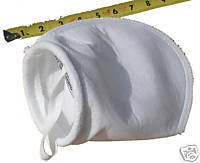
A good pre-filter to use with either Micropur/Katadyn/Aqua Mira tablets or with the SteriPen is the 1.3 oz 1 micron filters that only cost $2.37 apiece in qty 5. See http://tinyurl.com/m4e7s6
These also work great as a pre-filter for ordinary water filters as it reduces the junk that a filter has to eliminate then. They're so cheap, you can easily dispose of them at the end of a hike or flush them out and dry them and reuse them.
To get them to 1.3 oz, use a vice-grip and cut the steel ring that makes a rigid circular top to the filter, and once cut, you can remove the ring just like you would remove a key from a keyring.
We used this on the Superior Hiking Trail as a pre-filter for our gravity water filter after which we used the Micropur tablets. We only had to wait 20 minutes for the tablets to do their stuff then. (The gravity water filter was the AntigravityGear Water filter with a substituted 2 oz Sawyer Inline Water Filter instead of the AquaMira Frontier Pro). The 1 gallon bag by AntiGravityGear weighs 1/2 oz.
The filter can also be used in conjunction with the 3-4 drops of bleach or MSR Viruscide too (something I have as said below is fallback to my fallback — remember, I use Steripen primarily, if that fails, I have Micropur/Aqua Mira tablets, if I run out of those tablets, then I have the bleach — but with all 3, I can use the pre-filter.
Hi,
the 1 micron prefilter sounds good. I might try this type of prefilter as well. Just now I have set up my water system as follows:
– 1 "dirty" 2 litre Platypus bottle to get the water
– approx. 10 cm tube to connect the bottle to …
– … MSR Sweetwater Siltstopper (26 g = 0.9 oz) removes everything > 5 micron (can be reflushed)
– MSR 0.9 litre titanium pot
– Steripen adventurer (used in pot)
– 1 "clean" 2 litre Platypus bottle (poured into from pot)
This enables me to clean 2 litres of water on the spot at the water source and take another 2 litres of untreated water to the tent (can be cleaned there).
The whole system weihgs in at about 105 g for the two Platypus bottles plus siltstopper plus the steripen (another 100g) = 205 g
If I only count the steripen and the siltstopper (I take the bottles and the pot with me anyway) I end up with approx. 135g. That is pretty good. And with that I have a system that takes care of all the baddies including the dirt and the eggs that a steripen normally cannot cope with.
Filters are heavy and freeze in cold weather. Some of the Gravity filters and the inline filters are damaged/ruined if they freeze. Steripens will not work when wet and when the batteries die.
Iodine tablets are the lightest but the most expensive water treatment in the long run. The bottle has 50 tablets that will only treat 25 quarts in warm weather. That wouldn't last 10 days on the trail. Once the bottle is open the iodine will only be affective to treat water for 1 year and 4 if unopened.
I have been using Polar Pur. I have the same bottle I was using three years ago. As long as you can see the iodine crystals it will continue to work. Another plus it has over tablets is a little temperature sensor on the side of the bottle that tells you exactly how much iodine solution is needed to treat the water.
Carry no water treatment???????????? You don't know how expierenced people on this forum are at identifying clean water sources! If anyone really could be? Now a fool who thinks he is some *** outdoorsmen is going to be backpacking in the mounatins and see a clear pool of water and start drinking in some viruses and bacteria. Then the SARs are going to have to drag him out on a stretcher. Comments like that are wasting SARs time and putting men in the hospital. Irresponsible!!!!!!!!
You can only go without water treatment if you plan on boiling water. Using a stove would require more fuel so the only real way to save weight that way would be to boil water over a fire. Even the very best outdoorsmen can have trouble starting a fire in wet weather so that would require more firestarting equipment. Its best just to have some kind of water treatment with you IMO.
You can make your point without swearing.
…….
SAR stand for search and rescue. Whats are you talking about?
S.A.R.S. as in Search And Rescue.
But that's besides the point. I never treat my water and have never been ill. To treat or not to treat depends on so many factors, but so far in NZ (30 years of drinking) I haven't had any problems. By far the lightest water treatment is knowledge.
I use Micropur chlorine tablets and I highly advise them. You drop a tablet in your water and 30 minutes later, it is safe to drink. They weigh practically nothing. I don't see a reason to use anything else. You do not need to use a filter with the Micropur tablets, the tablets alone are sufficient to make the water safe for drinking. I'm not really sure why so many people seem to use Steripens, they are heavy IMO, require batteries (one more thing to worry about running out of juice), and I don't believe they are any easier or faster to use than the chlorine tablets.
A steripen takes ~ 90 secs for 1 liter. How is that not faster than 30 mins?
The other thing people fail to consider is when you are treating with chemicals or the like you have to carry a fair amount of water while it's being treated and before it's safe to drink. Water is HEAVY! Far heavier than most treatment methods. If a faster treatment time means you carry less water, then in all likelihood it's going to be lighter overall. Because water is consumable it's left out of the equation but weight is weight.
Ex. With a steripen you pull up to water source,purify a liter, and start chugging in less than 2 mins. If planned properly that can mean you don't need to carry any water while trekking. With the tablets you need to carry the water for 30 mins before you can start drinking. Or wait 30 mins at the water source. That's either carrying 2 lbs of water versus a 4 oz steripen or burning 30 mins of trail time. 30 mins of trail time could mean 2-3 miles for a lot of us.
I don't understand. Wouldn't it just mean you will have the water 30 minutes longer.
It depends on if you're carrying the water or not. If I have to wait on my water to be drinkable I'm going to be carrying more of it.
I typically don't carry more than 1/2 liter or so at any given time since it's immediately drinkable. With chemicals I'd likely be carrying at least a liter if not more.
Just for reference, I have a pump, gravity filter, chlorine dioxide tablets, and a steripen. I use what's appropriate for the trip and occasionally drink unfiltered if the source warrants it. While I can't be 100% certain a source is clean, I can make a very educated guess and be 99% certain based on the source and it's surroundings.
I like to keep only a liter but that doesn't always work. Sometimes in the higher elevation there just isn't any water. You have to take as much as you can get when you can get it. Thats why I always keep a extra bottle with me.
You probably would have died one day on a AT trip I did last summer in the Smokies. Especially with only half a liter. Mid 90's, high humidity no drinkable water sources for about 16 miles. The marked water sources were nothing but black stinky, slimey mud.
…
I've survived 20+ mile stretches on a liter so, no, I wouldn't have died. Proper water management is necessary no matter what treatment method you use.
"S.A.R.S. as in Search And Rescue."
I thought SARS stood for sudden acute respiratory syndrome.
SAR stands for Search and Rescue, at least in the US of A.
Yes, the post that got laughed at abbreviated it correctly as SARs. The little *s* just makes it easier to say, but it can also be abbreviated as SARS for "search and rescue squadron".
"but it can also be abbreviated as SARS for "search and rescue squadron"."
In New Zealand?
"In New Zealand?"
I dunno about human SARs in NZ, but the doggie variety are called SARS here for "search and rescue specialists".
In the navy they are called "search and rescue swimmers", etc…
Anyway, the intended meaning of the post re: being carried out with SARs, in the context of not treating one's water, should have been self-evident to mean "search and rescue" rather than "sudden acute repiratory syndrome".
"Anyway, the intended meaning of the post re: being carried out with SARs, in the context of not treating one's water, should have been self-evident to mean "search and rescue" rather than "sudden acute repiratory syndrome"."
Except for Stefan's post about being carried out and treated for sars. But enough of seriousness, Lynn. My original post was a lame attempt at tongue-in-cheekishness. Obviously, I missed the mark. :)
Give me a break joseph. I haven't treated clean looking water in over 10 years. Lots of times I just bend down and drink out of the stream like a dog would. I've never had any kind of problems.
The issue with bacteria in water has been WAY over hyped by backpacker mag and others who I assume get ad revenue from water treatment ads. It's kind of like how they want you to believe that if you don't have a 3 layer Gortex jacket and a 4 season tent you'll freeze to death if it gets below 60∘
And needing SAR for drinking bad water? You must be kidding, by the time SAR would even be mobilized you would be over whatever sickness you got. And besides if you can't hike out to your car with the runs maybe you shouldn't be out there at all.
And as for dying in the smokeys on the AT get a grip it's out there but it ain't Montana. There were no side trails out to a trail head where one could bail out? Have you ever thought about hiking at night and resting during the hot part of the day in a situation like that?
If you are that scared maybe you should stay home?
"Except for Stefan's post about being carried out and treated for sars"
But for clarity for new readers, it should be pointed out that Stefan had now deleted his infamous quote!
Now back to the topic at hand. The lightest water treatment is that which will prevent you from either being infected with, or rescued by, SARs :0
For me so far that has been *no treatment*
Edit:
Serious cases of gastroenteritis are not to be taken lightly, and forcing yourself to walk with a bad case of vomiting and the runs is asking for life-threatening dehydration at the very least, and spreading your illness becomes much more likely (hey, when you gotta go you don't always have enough warning to go 200m upstream). So best advice if you DO get really sick is to wait it out or get help. I have had food poisoning in the back country that made it impossible for me to crawl from my tent to somewhere decent enough to foul myself. Hiking anywhere, with or without a pack, was not an option.
Become a member to post in the forums.