Raymond,
I am quite confident you are referring to the Fox River X-Static liner socks at 19%. They are a phenomenal product for odor control and blister prevention!
Some vendors don't even list the X-Static content in their products; they just advertise the product as using X-Static for odor control. Two 1% X-Static nylon examples are the Wigwam Silver Liner Pro socks and the camo fabric sold by Lucy Fabrics. An example of 2% X-Static is the Medalist Silvermax socks. An example of 3% X-Static includes the Medalist Silvermax T. An example of 4% X-Static is the Medalist Silvermax briefs.
Although Merino wool has a lot of advocates for bacteria related odor control, it is not used for that function in any medical environment. By contrast, X-Static based gowns and dressings are common place due to their lab proven effectiveness.
I have used the19% Fox River X-Static liner socks, and now discontinued Medalist 5% X-static silk weight long underwear on expeditions along the coast of Alaska with no perceptible odor after 1 ½ months of constant use.
The lab tests I have reviewed show that 5% class X-Static reduces all bacteria by ~10^2. This seems to be the most cost effective solution for expedition wear. For burn patients and people with large open wounds 8% class reduces all bacteria by ~10^3. There is about a 10^6 improvement at ~ 25% (the realm of the Fox River X-Static liner socks).
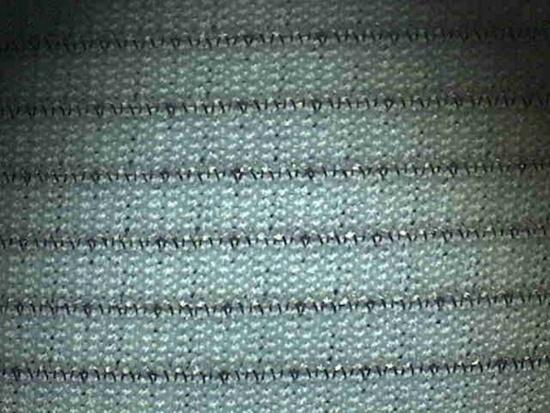
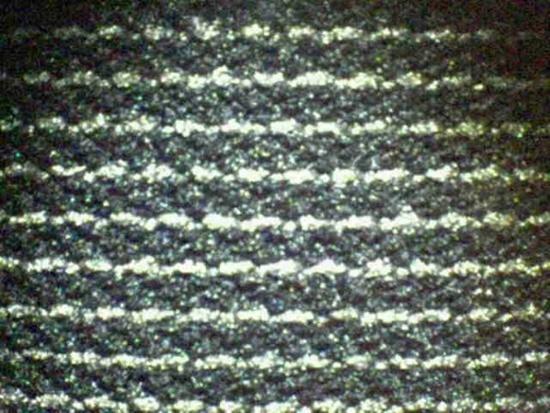
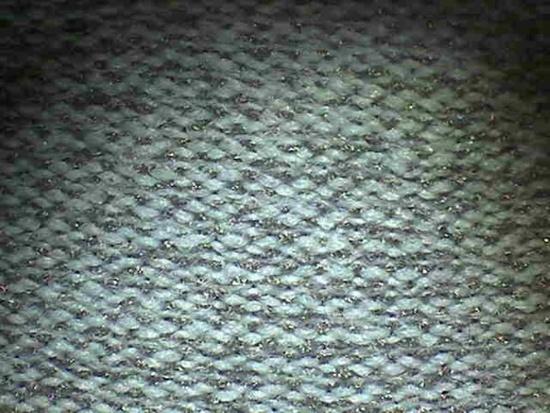
Based on some lab tests I did, I find that you can just eyeball a garment and very closely approximate its X-Static content. I am not going to mention any vendors, but the X-Static content claims don’t always match what my tests showed. The ratio of silver weft yarns to normal fabric weft yarns gives you the X-Static %. The warp yarns have never been coated in any garment I looked at.
The following are 10x photos I took of a 3% fabric, a 5% fabric and a 19% fabric to illustrate how you can easily visually ascertain the approximate X-Static content of a fabric.