G'Day
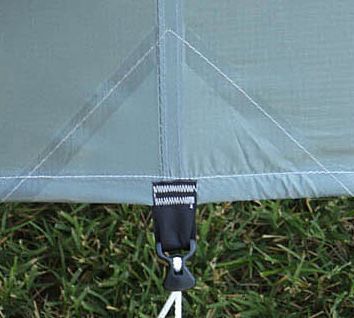
I have a question to those who are using their scarp in windy conditions. One thing I have noticed with manufacturers like SMD and tarp tent is there use of simple bar tacks on the tie out points while tents made by European and NZ manufacturers will have reinforcement panels and cross stitching. While the bar tacks seem to survive storms after a while of use in these conditions the silnylon seems to open up around the tacks.
I am currently looking for a tent to use in Tassie and the problems there is not just the consistent wet and windy weather but the fact that you quite often have very little campsite opportunities. You are often forced to camp on a rough pad on a knoll or saddle so you cop constant a multi directional wind.
I guess my ultimate tent would be a scarp with reinforcement under the tie out points and cross stitching on the loops. Also the option of a 1.8 oz floor would be great. This would have a small weight gain but I think would mean I have a tent for many more years.
I would like to hear about any other experiences of using this tent in these conditions especially from the UK .
Thanks
Darren
Topic
Scarp Durability
Become a member to post in the forums.
- This topic is empty.
email Henry at Tarptnet. He will let you know the construction details of his product. Might even customize a Scarp if needed. Henry really gives you superior service. You can't go wrong with a Tarptent. info@tarptent.com
On reading this post, took a look at my Scarp, which is on the work table for modifications. Checked all possible attachment points, and could not find a bar tack anywhere.
Just reinforced stitching, and multiple stitching with box and zigzag patterns at stress points. There is also a heavier rubberized material sewn on to reinforce stress/attachment points. The silnylon itself may go before the sewing, and while I get off the ridgelines to find sheltered camp sites, and have yet to beat a Tarptent to death, many of the posts and reviews on this site have given Tarptent's silnylon high marks for durability, especially the floors. Hope this is helpful.
> use of simple bar tacks on the tie out points while tents made by European and NZ manufacturers will have reinforcement panels and cross stitching.
I am going to stick my neck out here and make some generalisations. Feel free to shout me down. You know my biases.
I have found that the use of bar tacks at anchor points seems really to be associated with tents and gear made in China and Asia. I say this because I have recently been looking at some prototypes of gear made in China, and I have been comparing their construction methods with New Zealand and European gear. All the Chinese factories seem to love single bar tacks.
I can understand that, as a single bar tack is very easy and very fast to do, while a full box reinforcement sewing is slow and expensive. So if you are a contracting factory solely concerned with throughput and cost, you will use a bar tack. After all, it LOOKS strong.
But companies which are dedicated to GEAR seem generally to be more concerned with quality and reputation, and reliability in the field. So they have a completely different mind-set. This usually shows in how they make their gear.
Now, before you pour scorn on what I am saying, ask yourself who drives all this? Is it really the factory's fault? Or is it because the average consumer will put cheap price ahead of quality and reliability? Even if they b*tch like mad later when it turns out the cheap price means lower quality? Yep: the fault lies with the consumer.
Fortunately, we still have some cottage industries who are staffed and driven by enthusiasts rather than accountants and investors. So if you want really high-quality gear, talk to those small companies and tell them what you want. Yes, it may cost a little extra compared to the made-in-China stuff, although the difference is not that great in practice. Something to do with the difference between buying direct from the cottage industry vs buying from way down the chain of manufacturer-exporter-shipper-importer-distributor-retailer.
My 2c worth of hang-up.
Cheers
re: Roger's commentary on bar tacks.
A notable exception is MLD. Ron has defended use the use of double bar tacks thru many layers of fabric (shelter panel plus reinforcing patch, both folded over twice) here on BPL sometime in the past year or so.
Albeit, looking at his product's detail photos, it is more of a close stitched zig-zag than your typical bar tack.
Hi Jim
> Ron has defended use the use of double bar tacks thru many layers of fabric
.

(photo courtesy MLD web site of course)
That is a much better attachment than some Asian ones I have seen. Yes, two rows of bar tacking, through a double seam with reinforcing behind. I will assume the ends are secured? They were not on the Asian bar tacks I was referring to!
Mind you, longer webbing overlap and three rows of bar tacks would make me happier.
Cheers
G’Day Samuel
Thanks for the info, this is re assuring. I didn’t mean to criticize. My comments were more of a general nature. It is very difficult for us over here as gear like this is very rare so you have to scour the net trying to pick up detail from pictures. I myself have a single wall shelter from another cottage manufacturer and it uses bar tacks and is showing signs off stress.
The use of a reinforcement panel under the tie out point also would greatly help as it not only provides a thicker material to attach to but provides a more progressive stress transition into the fabric. As an engineer perhaps I am over analyzing it but there seems to be more of an emphasis on stress failure rather than fatigue. This was shown in the BPL report a few years back
Roger
I totally agree. We constantly complain about price then we complain about the quality. This is true in all aspects of life. We are lucky in our pastime as we still have manufacturers operating extremely close to the consumers. Oh and by the way. You weren’t talking to these manufacturers about producing single wall tunnel tents by any chance were you???
I am still interested in any other reports on the scarp in windy conditions (id say I’m not alone) Also any detailed pics of the stress points next time your out would be greatly appreciated
Thanks
Darren
Hi Darren
> You weren’t talking to these manufacturers about producing single wall tunnel tents by any chance were you???
I was flirting with the idea, but I didn't like the quality I was shown. Discussions with some intermediaries showed that the QC management hassles were very serious.
Sigh
Sigh again…..
Darren
Wow, step away from BPL for a couple of days and a frenzy erupts.
Just to echo Sam's observations, no bar tacks in the Scarp. However, we tried hard to reinforce at the stress points and I have done lots of snow load testing (with Sierra cement) with no failures. At this point, I'm satisfied with it. As for the fabric, Roger mentioned something about marketing hype and I agree. It's strong enough.
-H
G’Day Henry
Thanks for replying. As I mentioned before it’s good to have manufacturers so close to the consumers. For some of us the reason for taking a double wall tent is because the weather is bad. Putting it up in the wind, sheltering all night with it flexing and flapping ten putting it down in the wind. While the loading is not as strong as 2 foot of snow, when its day after day there is a possibility of sewn tie out points moving on the fabric in a similar fashion to being simply overloaded. I am happy with the strength of the fabric, its just the attachment points
I know there has been a constant evolution of tarp tents over the years but this is the first venture into the 4 season category (I think).
I like the look of it better than the laser and atko because of the weight, size and ventilation but I am wondering how the durability is compared to the atko.
Your views would be greatly appreciated.
Darren
Become a member to post in the forums.