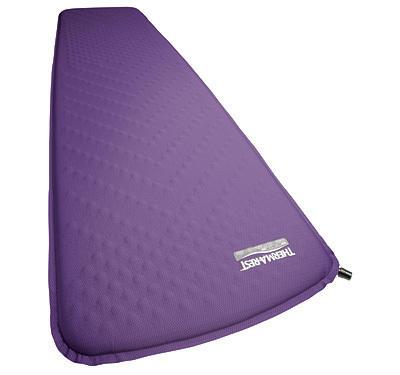
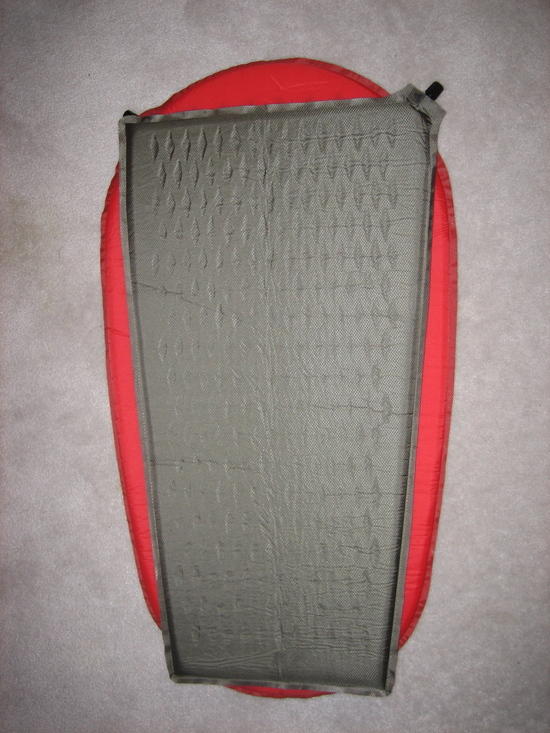
Richard, I appreciate your thoughts and contributions to this thread as always. So given that R-value, the Torsolite actually does look closer to the Prolite 3 in warmth…
>could you do the thermal resistance again but this time with an overinflated or fully inflated pad?
What I've always wondered when reading the R-values of inflatable pads is how does the ideal R-value, measured from just the inflated pad, change when a body lays down on it? Obviously there will be pressure points and the pad under the body will be thinner, but air displacement would mean that in the non-pressure points, the pad is perhaps thicker and closer to the over-inflated thickness (so the pressure points are colder, but the non-pressure points are warmer). But you'd still have that thinner pad under the pressure points to deal with, and I guess heat loss is heat loss.
On a related note, this might be why I could never stay warm enough with my old Downmat 7. I always wanted a soft, cushy mattress, but with my torso sinking 1.5-2" into the mattress, I only had 0.5-1" of down underneath me. Don't know why I never thought of it this way before I sold the thing.
>It would also be usefull to know if the moisture that gets in by inflating by the mouth has an influence over time. So perhaps doing a test while just inflated and a test, let's say, 8 hours later to see if the R-value remains constant.
Keep in mind that with the valve closed, that moisture isn't going anywhere. Might want to look at a factory-new pad vs. a 2-year-old, highly used pad, though, to see if the foam is degrading with lots of use.