Topic

Epic breathability

  • This topic is empty.
Viewing 22 posts - 1 through 22 (of 22 total)
Brad Groves BPL Member
PostedJan 27, 2009 at 10:22 am

I was just re-reading Alan Dixon's article on waterproof breathable technology, and came across something that surprised me. I'm wondering if there's a variation on the material, or if it was a misprint, or what.

Table 1 shows Epic with a dessicant inverted cup measurement of ~6,900. Event is ~28,000. Goretex is ~17,000. By those numbers (and the other tests reflected similar differences), Goretex is more breathable than Epic. Is this accurate? Is it the same Epic we all know today? I mean, if it's that much less breathable it wouldn't make any sense to use on sleeping bag shells, etc. Anyone have some info?

Thanks,
Brad

Roger Caffin BPL Member
PostedJan 27, 2009 at 1:37 pm

Part of the problem here is that the many different methods used to assess breathability actually focus on different aspects of performance, and you can get weird results like this by using the 'wrong' (or inappropriate) method.

In practice you find that each manufacturer selects the measurement method which is best for his product…

Cheers

Brad Groves BPL Member
PostedJan 28, 2009 at 9:25 am

Hi, Roger-
Yeah, manufacturers typically present a skewed view of breathability (and other) options. But these numbers were from Natick, completely independent.

Alan Dixon, Richard Nisley, anybody else have some insight on this? Thanks!

PostedJan 28, 2009 at 9:39 am

There are many types of Goretex, many
different types fabrics Epic, Goretex and eVent are
applied to, all of which effect waterproof-ness and
breath-ability.

I know in wearing two different types of gaiters while
cross country skiing hard, the Epic applied to a knit
is wayyyy more breathable than either Goretex or eVent
in their 3 layer hard shell versions.

However, tho water beads up
on the Epic knit, and does a great job of keeping out
snow, under any pressure water will go
through, while that is not the case for the teflon
laminates.

You have to measure apples to apples.

Brad Groves BPL Member
PostedJan 28, 2009 at 10:39 am

David, I know you know that Epic isn't applied to a fabric, that it's a treatment and weave, not a laminate or coating. And we both know that Epic isn't fully waterproof like eVent or GTX (in any of its variations). Take your experience skiing; you find that Epic gaiters breath much better than other alternatives. This seems to be the broad experience with Epic fabrics. However, that is precisely why I found the data from the article intriguing. The data from the table shows Epic as less breathable in all tests. Perhaps in a sense it isn't an apples:apples comparison, but in that case Epic should blow GTXs away in breathability testing. I'm familiar with the CW of these fabrics and their myriad of traits and functions; what I'm wondering is if anyone can explain that data, or has any data that can refute those findings… because it doesn't seem to jive with experience. Cheers-

Here's the link to the article in question:

http://www.backpackinglight.com/cgi-bin/backpackinglight/00316.html

Excerpts from Table 1- (Broad generalization, higher number = more breathable. Numbers in order of tests as on table)

High Density Woven Fabrics with DWR Finish
Epic
800.8 3113.6 6,852.0 14.9 3238.5

Fabrics with Microporous Coating or Laminate
eVent
(Nylon Fabric)
984.8 7265.6 27,825.6 5.9 6162.5

eVent
(Polyester Fabric)
942.8 6201.6 20,716.0 6.5 6039.2

Fabrics with Bicomponent Treatments
Gore-Tex XCR
864.4 7513.2 21,193.6 4.9 3193.3

Gore-Tex
758.8 5674.8 16,612.8 6.2 2865.6

PostedJan 28, 2009 at 11:34 am

What Rodger said. Different tests show different results.

Different mechanisms of vapor transfer.

I can blow through the epic gaiters & air pumps in and out as
I ski. This is due to the fabric the treatment is applied
to.

This doesn't happen with the glued teflon laminates.
No venting through the fabric. They are films and even
if applied to a looser knit, still do not allow air
to pass to any degree.

If the same Epic treatment was applied to a very tight
layer of woven nylon or polyester, then I would
expect the breathability to drop. If the fabric was to remain
still, I would expect the breath-ability to drop.

Richard Nisley BPL Member
PostedJan 28, 2009 at 11:57 am

Brad,

My field experience jives with yours and David’s. I also have Natick Lab’s data that substantiates our subjective experience. Epic is a fiber encapsulation process that can be incorporated into a wide range of fabrics with different breathability characteristics. Allan’s table is not valid for EPIC fabrics currently in wide use.

I wear PCU EPIC L4 pants and a EPIC L5 windshirt when I will be bushwhacking in variable weather conditions. The fluorocarbon DWR on my eVENT garments wears off after about 60 miles of bush whacking. I can’t rejuvenate it when I am in the field. By contrast, my EPIC doesn’t loose its water repellency on long trips. All I need to do is field wash it and the water repellency is restored. For me, this is the type of application where EPIC is clearly superior to other alternatives.

I created the following table with the fabric air flow values shown for a range of fabrics, including the three you enquired about. The air flow data came from a Natick Labs report I have.

Breathability

Of particular note, there is an approximate 10X difference in air flow resistance between the two EPIC nylons in the table.

Richard Nisley BPL Member
PostedJan 28, 2009 at 2:13 pm

David,

It is the same first generation Gore-Tex as is Wind Stopper… just a different market target trademark.

PostedJan 29, 2009 at 9:12 am

To say that EPIC isn't a coating is as close to false advertising as you can get. EPIC also uses a polymer that is not as breathable as many coatings and laminates. To make matters worse, the coating is inconsistent and not waterproof.

To summarize in the simplest terms how EPIC is made, it is a coating applied to a piece of fabric in a unique way. A blade stretches the fabric as it runs along it and presses into the fabric a polymer. The polymer coats the threads and partially fills the interstices between the threads. Once the blade passes, the fabric snaps back. The snapping back causes the polymer to partially or completely fill the interstices between the threads. Really the only difference between a coating and "encapsulation" is the viscosity of the polymer and the stretching of the fabric.

Now the theory is that some interstices will be left partially unfilled, allowing the fabric to breathe–because honestly, the polymer Nextec uses is inferior to even the cheapest coatings. However, all you have for the fabric to breathe are these partially open holes which may be nearly full. The polymer, which essentially creates a barrier, is not going to breathe. This barrier is also very thin and will not stand up to nominal water pressure.

The problem is you have a thin barrier that doesn't breathe and doesn't stop water. The small holes account for such a small percentage of surface area that it won't breathe well.

Brad Groves BPL Member
PostedJan 29, 2009 at 9:55 am

Richard,
Thank you for your time and consideration in your responses! There are some particulars I haven't quite grasped, maybe you can help. I don't think I understand the relationship between air flow resistance and water diffusion. If Gen II GTX has infinite air flow resistance, I take that to mean that it is completely impermeable to air. eVent, however, does seem to have some air permeability, though not as readily air permeable as ripstop nylon. Do I have this right?

If so, I can understand why eVent has a greater water diffusion rate than Gen II GTX. However, it seems like the Epics, with greater air permeability, would have an even greater water diffusion rate…

I'm intrigued by your explanation of WS/DL as 1st gen GTX, ie w/o the PU coat. I had always had WS/DL explained to me as a "thinner" version of "standard," or gen II GTX. Yours makes more sense at the moment. With this understanding, I would expect 1st gen GTX/WS/DL to have a breathability/water diffusion rate similar to that of eVent. (Think I saw a ref. to Gen 1 somewhere, I'll have to find that.)

Thanks!

Brad Groves BPL Member
PostedJan 29, 2009 at 10:00 am

Peter-
I haven't seen the actual manufacturing process. I've just had the info available to the public, and have been led to believe that the individual fibers were encapsulated. The inference I had from that was that the fibers were encapsulated before being woven. From what you say, I (and most others, probably) have had a mistaken impression. Thanks for filling us in. Many of us have, however, experienced greater breathability with Epic compared to other fabrics–as stated above, realizing it's not fully H20-proof and therefore should be more breathable. So on the one hand, what you say makes sense and corroborates the original data I referenced, but on the other hand it doesn't jive with field experience many people have had. Great! More confusion… :P

PostedJan 29, 2009 at 12:26 pm

Like you guys have said, how much a fabric breathes is different in the lab and in the real world. When outdoors, the fastest way you'll transport moisture is moving air–which is why EPIC is a great outdoors fabric. I find a goretex or equivalent with a loose hem and pit zips open breathes better than a pertex windshirt because your body movement pushes and pulls outside air through the jacket.

While I meant to harp on Nextec phrasing their process as superior "encapsulation," I didn't mean to say EPIC is a bad fabric. How breathable a piece of EPIC is depends on what process Nextec used and the fabric being coated; Nextec can impregnate a wider barrier in the fabric or next to none. From what I understand, the "Deluge" DWR that is in the popular and very breathable Patagonia Houdini–often regarded as the best combination of breathability and wind/water resistance–has next to no barrier and is very close to just encapsulated fibers. EPIC is also very durable and has a permanent DWR.

A lot is personal preference as well. Many people here prefer their windshirts to have a PU kiss coat for extra wind and rain protection. A light EPIC is superior in every way–including breathability.

Roger Caffin BPL Member
PostedJan 29, 2009 at 12:47 pm

Hi Peter

Your description of the EPIC process is not entirely accurate.

>Once the blade passes, the fabric snaps back. The snapping back causes the polymer to partially
> or completely fill the interstices between the threads. Really the only difference between
> a coating and "encapsulation" is the viscosity of the polymer and the stretching of the fabric.

The process uses a polymer solution which has curious rheological properties: it uses shear thinning to help the solution go into the fabric (US Patent 5,876,792 ). It does not rely just on any fabric snap-back – which is not going to be very significant anyhow. There is not going to be much snapping around a doctor blade.

> the polymer Nextec uses is inferior to even the cheapest coatings.
I think you need to substantiate this claim with some good facts and references. I have found EPIC fabrics perform very well in their chosen area, both in breathability and snow repellency.

Are you in any way affiliated with any company in the fabric arena? Your comments suggest you may be. If so, you should disclose that very clearly; if not then no worries.

Cheers

Richard Nisley BPL Member
PostedJan 29, 2009 at 1:13 pm

Peter and Brad,

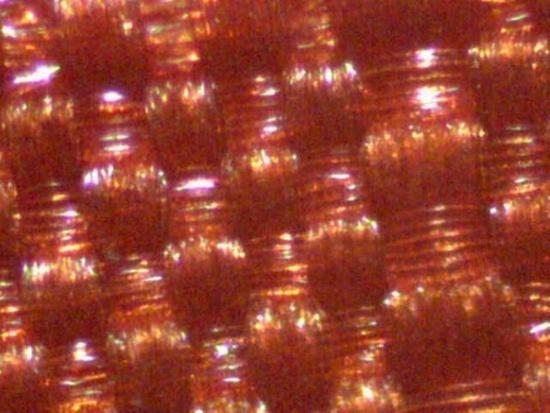
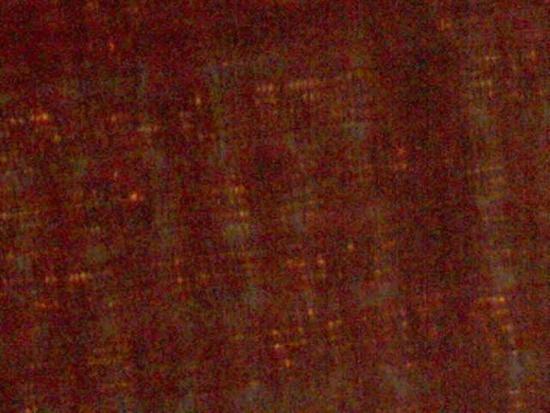
Peter: Thank you for augmenting our understanding of EPIC’s pluses and minuses. Your prior post of 9/15/08 is also valuable relative to understanding the trade-offs. As you pointed out, the EPIC process appears to have been used to create the very breathable Patagonia Houdini wind shirt. I took a 200x magnified picture of the fabric showing the coated fibers and also a picture showing the uneven, yet effective, pore distribution at the same magnification.

Fabric

Pores

Brad: Your summary conclusions are all valid. In the prior table, I used the Natick Labs air flow data (in black), the three water diffusion values from Alan’s report (in red). I expanded the prior table below to more clearly illustrate your conclusions. I started by adding an Air Permeability column (in blue). This is just the reciprocal of the original Air Flow Resistance values that were known. I next assumed that with pore based water vapor transport fabrics; there should be a positive correlation constant between air permeability and water diffusion through the pores. I calculated this constant (in purple) by dividing eVENT’s Air Permeability by its Water Diffusion. I then used this constant to calculate the missing Water Diffusion values (in brown). The formula is Air Permeability / Constant. I then calculated the missing table values (in green) for the mystery version of EPIC that Alan referenced. The missing Air Permeability is its known breathability multiplied by the constant. The unknown air flow resistance is the reciprocal of the Air Permeability.

Expand

PostedJan 29, 2009 at 1:26 pm

> Your description of the EPIC process is not entirely accurate.

I tried to explain the process in the simplest manner; I didn't mean to suggest Nextec just stretches the fabric.

> I think you need to substantiate this claim with some good facts and references.

Nextec uses silicone which does not effectively transfer moisture. PU–in terms of water diffusion–is superior.

> I have found EPIC fabrics perform very well in their chosen area, both in breathability and snow repellency.

I agree. EPIC just doesn't test very well. Tests also don't show its durability and no need for reproofing. There's a reason why the U.S. military trusts EPIC for the protection of millions of soldiers.

> Are you in any way affiliated with any company in the fabric arena?

Nope. I'm a Paramo guy anyway–no need for coatings, laminates or encapsulation.

Brad Groves BPL Member
PostedJan 30, 2009 at 9:00 am

Holy cow! Thanks again for your time investment, Richard. It's interesting to see just how eVent stacks up against a standard ripstop nylon and the Epics… I wouldn't have ever guessed that the RS would be so much more exponentially breathable.

I've cruised around online to find products that use the Schoeller Dynamic Extreme (Mammut seems to like it, mostly in pants and gaiters…?) and the Epics 3 & 4. I haven't seen references to the "3" or "4," or for that matter to the "Tuckermans" or "Summit." It's not a big deal, but it would be a nice point of reference to put a product with the material. I would imagine that something like BD's Epic tents/bivy would be the Epic Summit, whereas the Tuckermans would be more what FF uses in their bags. Seem fair? Now if I could just find a shirt of some sort out of that Schoeller Extreme…

PostedJan 30, 2009 at 9:41 am

I think the REI Mistral Gaiters are made from Schoeller Dynamic and the OR Flex-Tex from a different Schoeller fabric (Schoeller WB).

PostedJan 30, 2009 at 9:58 am

>Now if I could just find a shirt of some sort out of that Schoeller Extreme…

Hi Brad, schoeller extreme material isnt ideal. This is because it contains lycra so the material absorbs a lot of water. What you should look for is denier gradient nylon or polyester shirt. They are more breathable then calendered windshirts and have inherent 2 way mechanical stretch. If you dont care about stretch then look at supplex shirts.

PostedJan 30, 2009 at 10:37 am

I have never heard of "schoeller dynamic extreme" although that is not to say it doesn't exist. There is "schoeller dryskin extreme" which is the heavier version of dryskin (contains cordura I believe) and there is dynamic, which is the lightest summer weight version and is really just a stretchy woven nylon. There is also WB400, which is a winter weight laminate.

I have something out of all three and use them alot. I don't really buy the tests for breathability based on machines on these materials, and think there must be some flaw in the methodology.

WB400 is way more breathable then goretex. I have worn both 100s of times in a variety of conditions. There is simply no comparison in terms of breathability. WB400 is also warmer and much more comfortable (except in rain). Dryskin would be orders of magnitude more breathable then either WB400 or goretex.

Dynamic is light and comfortable and much more breathable than typical nylon like supplex, although there is such a wide variation in nylon that this gap can vary.

That is all IMO based on actual use, and no actual testing.

PostedJan 30, 2009 at 10:41 am

The most breathable pants I own are the Mojave Shock Pants from Beyondclothing.com. The "Mojave" name is their label for the very breathable stretch fabric. I don't know if it is Schoeller, but it is pretty amazing stuff.

The weight isn't super light (about 16 oz), but they dry quickly, breathe well and seem to actually shed dried mud/dirt with a little hand brushing. Heck, even the price isn't too bad…AND…you can have them custom tailored with features to suit your taste.

Viewing 22 posts - 1 through 22 (of 22 total)
Loading...