


*deleted*
Topic
Become a member to post in the forums.
*deleted*
Epic.
Nice. Now if I can only translate the products you used for adhesives into US products…….
Have you tried welding the Tyvec together using a heat press or heat gun? You may be able to avoid glue all together.
About the glue you are using, can you list the ingredients and or manufacture so we can find a U.S. product that is the same?
Dunno guys, but you could consider Gorilla Glue – it's a powerful PU adhesive.
Cheers
Hi Tegyn
Impressive stuff, and thanks for posting this.
Now, sewing. I would not rule this out as there are so many places where sewing is almost the only way to get the result you want. What would be really interesting now is to try sewing a simple seam and then to laminate a 'seam seal strip' over the seam. Hopefully the sewing would define the join but the seam seal strip would take the load off the stitching. I do this sometimes with silnylon, and it works well.
If you try this, the next question is what width of seam seal strip is needed. Hours of fun!
Cheers
Ya, I don't have the equipment either. It may not be hard to fabricate something. I saw a roller tool for sealing plastic. It looked like a soldering iron with a wheel at the tip. Maybe a soldering iron with a thich flat chunck of copper fashoined at the end could be worked along the seam like ironing clothes.
Anyhow, just a suggestion. Glue is likely a more "real world" solution. Thanks for the post!
Tegyn, this was great, this piece should go into the BPL Wiki.
Hi Tegyn
> I would be ideal to apply the adhesive and then put a couple of sewn seams straight
> down through the adhesive before it set, but i'm sure that would cause most sewing machines grief…
Been there, done that, and the result was pretty bad!
The needle gummed up badly, and maybe worse the eye of the needle and the thread gummed up badly. Thread breakage was inevitable. Pity!
Cheers
Heat bonding works really well. Very strong when done correctly.
Take a look at this:
http://www.harborfreight.com/cpi/ctaf/displayitem.taf?Itemnumber=43477
I have one of these and it comes with a spare heat strip and teflon cover. Very cheap. An creative person could modify one of these with an extended arm for the top piece very easily On the top it's just a silicone strip to apply pressure. Trim down the front a little and you would be able to feed large pieces through it and seal sections at a time.
A food vacuum sealer has none of the power that an impulse sealer has… You can literally cut tyvek with the impulse sealer above on the highest setting.
has some good info on heat sealing and gluing.
Edit: where’s my manners: Great work, thank you!
Heat sealing – tricky, they prefer certain un-corona’d styles of tyvek and/or a ‘branched polyethylene’ coating first.
Glueing – they have a list of glues. They mention that low-molecular weight glues can infiltrate and wrinkle the tyvek in high temps. No mention of strength being affected.
Quote from Dupont Industrial Packaging:”
…Please contact us for a list of solvents that are preferred for use with Tyvek® (ask for the “Product Properties & End-uses Handbook”).
Natural-product adhesives based on starch, dextrin, casein or animal by-products are preferred to synthetic-based adhesives. Synthetic adhesives often contain low-molecular-weight materials that can act as solvents at elevated temperatures and cause swelling and wrinkling. Hot animal glue is an excellent adhesive for adhering Tyvek® to paperboard. Water-based synthetic lattices also bond Tyvek® to itself and a variety of substrates. Ethylene/vinyl acetate adhesives are especially useful, as are the acrylic pressure-sensitive adhesives. Solvent-based single-component polyurethane adhesives provide optimum adhesion (lap and shear), flexibility and water-resistance for adhering Tyvek® to itself and a variety of substrates.
Hot-melt adhesive technology has been amply demonstrated in a number of applications involving Tyvek®, in…………..”
Yes, this is why I posted. I was the one that posted regarding the continuous roller wheel in the other topic.
The heat strip under the Teflon is 3/16". You can buy many different widths if needed.
No idea. The unit I have has a dial with numbers. The strip only heats when you close the unit. It shuts off on a timer relative to the number on the dial. So, basically you use trial and error to find your setting on the dial.
Become a member to post in the forums.
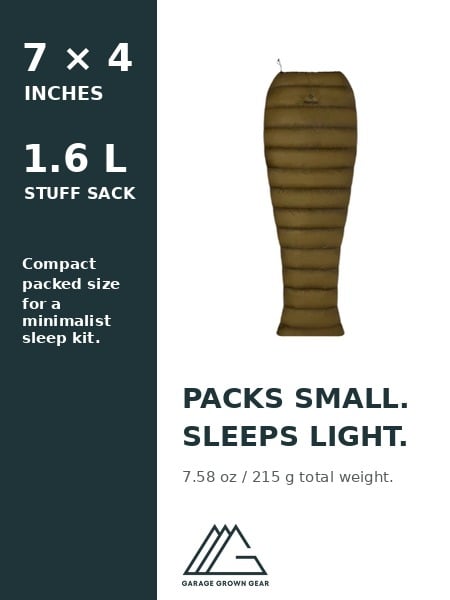 Magic 100 Sleeping BagMinimalist 900-fill-power down sleeping bag with a 55°F | 13°C comfort rating. Weighs 8.46oz | 240g
 © Beartooth Media Group Inc.
 Loading...