Topic

Long winded Tarp questions

  • This topic is empty.
Viewing 25 posts - 1 through 25 (of 29 total)
PostedDec 18, 2008 at 11:46 am

Hi Everyone,

I have been thinking about shelters for some time now and I've pretty much considered them all. At first I wanted a shelter that I could use on solo trips, but also with my girlfriend since she often comes along. Lately I've decided that if I get a solo shelter I want it to just be a solo shelter.

I was thinking about getting The One, but lately I've really been loving the idea of a tarp. The reason for this is that I think the tarp would make me feel more enveloped by nature. I like the idea of pitching a roof over my head and cooking under it while the rain falls around me. I like the idea of sleeping out in the open on clear nights. Overall, I like the freedom and the versatility that I feel a tarp setup can provide.

These things, and more, are all in my head, but I want to make sure the functional aspect of a tarp makes these things enjoyable. I live in Boston and hike three seasons in NH, VT, and northern NY. Can tarp users in this, or other similar areas, tell me what I need to think about?

Also, I've been reading and people say how tarps are more finicky than tents. I assumed this wasn't the case. Why is it more difficult to pitch a tarp than it is a tarp tent? I can imagine there is added difficulty in windy or rainy conditions, but is it really that hard?

Lastly, if money was no issue, what material is best for a first time tarp user. I think I know the merits of all the materials and I'm having a tough time deciding.

I mean Sil offers good stretch which is good for a first time user like me as I can avoid fabric failure due to stress. I imagine that misting is largely eliminated since there shouldn't be any condensation to speak of. Sure, in a long rain the material could sag and create a puddle, but since I wake up a few times a night it shouldn't be a big deal tightening everything up. Also, it's pretty cheap.

I don't really see a reason to get a tarp in spinnaker. I mean, it's lighter and cheaper than Sil, but otherwise it seems like if I could afford to that using cuben would better all around.

The only thing that worries me about Cuben is me pitching the tarp too tight in gusty winds and blowing out a corner tie out. I imagine I could use tippets or something, but it still worries me. Is this justified?

I guess that is all. Any reason I shouldn't get a tarp? I know weights of a bivy/tarp setup are equal to tarptents like The One, but I just want a tarp for the freedom it affords me. Does this make sense?

Thanks everyone for reading another of my really long winded questions!

EndoftheTrail BPL Member
PostedDec 18, 2008 at 12:06 pm

My two cents: If you are not unduly concerned about creepy crawlies — then why not go with a tarp? More space, more options, more everything — almost.

My understanding is that tarps can be both easier and harder to pitch than tents. But that's the thing: you have all kinds of options/configurations to choose from — depending on terrain, winds, etc.

Sadly, I have a pretty intense phobia with bugs and creepy crawlies — so I won't tarp and I can't ever be an SUL hiker either. But if I didn't have the phobia, I would opt for a tarp over a tent for any 3-season hike.

Ross Bleakney BPL Member
PostedDec 18, 2008 at 12:34 pm

I think you gave a pretty good assessment. My main concern is not crawling bugs, but flying, biting ones. That's the only reason I haven't tried the tarp approach. I think your assessment of materials makes sense as well. The only argument that I've heard against Cuben (other than the price) that makes much sense to me is that it doesn't stretch. It is obviously tough enough to use on a sail, but having a material that stretches does reduce the chance of a seam failure. I was thinking of adding a bit of bungy elastic to the end of the cord, perhaps. In general though, I think people have been very happy with Cuben, when bought from someone like MLD.

PostedDec 18, 2008 at 12:45 pm

Yeah, I've thought about flying bugs also.

I have checked out all the solutions and none of them seem ideal to me.

In my head I think the perfect solution would be a 4 sheets of noseeum netting that could be clipped to the edges of the tarp. Each sheet would reach the ground and could be kept there simply by placing gear around. This would create walls of netting without confining you to any sort of shelter. It would also be cheap. Not only this, but it is my understanding that noseeum netting does a good job deflecting wind and even rain so it could add an extra layer of protection without the user having to be confined to a bivy. The netting couldn't be used without setting up the tarp, but that is the only downside I really see.

If I get a tarp I would experiment with something like this.

Joe Clement BPL Member
PostedDec 18, 2008 at 12:54 pm

The thing to remember about Cuben, when applied to sails, is that the guys who can afford it are really not worried about longevity. Those sails are sometimes replaced after every regatta, or sooner.

EndoftheTrail BPL Member
PostedDec 18, 2008 at 1:25 pm

Maybe just complement with an A16 type bug net? Now, if you are so concerned about insects that you will go through the trouble of sewing on perimeter netting — which will limit ventilation as well as set up configurations (unless a very generous quantity of netting is used) — then at what point do you draw the line and simply go for a tarptent (or a floorless tarptent) instead?

A tarptent will have the added weight of a floor — but then a tarp user will usually lay down a groundsheet anyway… so once the groundsheet and perimeter netting are factored in — have you essentially morphed from tarptent to tarp and back to tarptent again?

PostedDec 18, 2008 at 1:29 pm

Ben,
I'm with you. I don't have any phobia but I've had ants in my bivy and it's not fun. The little buggers like sweat and started biting.

PostedDec 18, 2008 at 1:33 pm

No no…no bug netting would NOT be sewn on. I agree with you completely. Sewing on netting would essentially create a tarptent. I'm talking about being able to clip on netting IF you want to. If it was raining, no need. If it wasn't buggy, (yeah right) then no need. It would only be an option. If the weather was good and you could safely say there wasn't going to be rain, then you could skip a bivy and bring only some bug netting.

What I'm talking about would simply allow you freedom to move around, spread out, whatever, while avoiding flying insects.

PostedDec 18, 2008 at 1:39 pm

Go with a very light tarp (like a monk tarp from MLD). Add a very light bivy when it is cold and/or going to rain. Otherwise take a Gossamer Gear polycro groundsheet which weighs 1.5 ounces and a bug net from gossamer gear (Which weighs 3 oz). These 4 items give you the maximum flexibility, and even if you take all of them together you're still only at 15 oz or so.

EndoftheTrail BPL Member
PostedDec 18, 2008 at 1:40 pm

I see. But considering the teeny tiny apertures of noseeum mesh — how are you ever going to clip on a sufficiently 'gapless' and protective netting worthy of the name? Methinks it's either going to be sewn on or zippered on — both of which will be cumbersome and purpose defeating.

I imagine that a satisfied tarper is simply one who is at ease and happy with a simple tarp — maybe complemented with an "area netting" like the A16. I wonder for those who are ill at ease with that concept — maybe tarptents are just a better choice?

Of course, the only way to know is to try it out. Maybe get an el cheapo Wal Mart tarp and try it out at your local car camping campsite — before you buy a fancy / expensive tarp?

PostedDec 18, 2008 at 1:48 pm

Nate: Pretty awesome idea. I had not thought of that configuration before. This is something to think about.

Benjamin: I agree with the gap aspect of clipping it on. However, I don't mind some bugs around, just not so many that they drive me nuts. I would prefer to just have a simple tarp and nothing else, but the bugs can be plain nasty and there is no reason I should deal with them just to keep things simple. I mean…I guess that is a reason to deal with them, but like I said, I would go crazy.

PostedDec 18, 2008 at 1:49 pm

Bugs have never bothered me. Not that I'm tough and don't mind, they just generally leave me alone, while my partner gets eaten alive. If it's just me, I take the minimum amount of bug protection, just in case, but if he's coming along, he needs not just bug protection during sleep, but a fully enclosed net to retreat from the bugs at dusk. Sweet blood? I don't know.

PostedDec 18, 2008 at 1:49 pm

If you're new to tarps, not sure what your next ultralight shelter is going to be, or what have you, I can offer a bit of long winded advice.

Firstly if you want to find out whether you'll like tarping or not, or if you've just never used a tarp before, I'd suggest getting one of the very, very cheap blue tarps from Walmart. They have them in the camping section and they typically run well under $10. Super-ultralight backpacking gear can be quite expensive, so dropping $7-8 on something like this is a good idea if you've never used a tarp on a camping trip before. The idea is to get an idea of how much coverage a tarp of some given size can actually offer you, and to give you a much clearer idea of what a tarp shelter can actually do by itself.

Just sitting under a tarp in your back yard should make the basic benefits and disadvantages a lot more obvious than any product page on a manufacturer's website can hope to do. Aside from the obvious disadvantages of being more exposed to blown rain and animals than in a tent, you're also more exposed to dew and the chilling effects of prolonged exposure to wind (both of these would depend on the specific conditions of course). Most people who use tarps also use a bivy in conjunction with them to keep dew off their sleeping bag, keep bugs out, and to be able to escape from the wind. Bivies aren't a necessity for tarping, but a basic one, even something like the Equinox bivy, is worth its weight in gold on a multi-day trip if you happen to run into some wet weather on one of the first nights.

There are a lot of opinions out there about which material is the favorite or the best, but at the end of the day each choice is just a set of compromises. My own opinion is that silnylon is a great fabric for tarps because of its compromises. It's quiet, will last pretty much forever if you don't abuse it, but is durable enough that you don't need to baby it, and even though it stretches and loses its taughtness when wet, it has the advantage of stretching in the wind, so less stress is put on the seams of a silnylon tarp than is the case with a tarp made of a stiffer fabric.

A couple solutions for bugs: if you're inside your sleeping bag under the tarp and just want to keep mosquitoes off your face, consider some sort of headnet. If you're worried about creepy crawlies, consider some sort of bug bivy or a standard bivy with bug netting built-in to the head area. Or, you could just do all your backpacking in late fall, winter, and early spring when there are no bugs.

PostedDec 18, 2008 at 1:50 pm

Meteor bivy!
I dont for the life of me know why Ron doesnt sell these . Its nice that he makes the plans available but not everyone can or has the time to sew it up.
Get a cuben tarp if you can afford it and really want to count ounces. Other wise a silnylon is a whole lot cheaper and still real light. Spinnaker is lighter than silnylon but not by THAT much and its a lot more money and a lot more fragile.
I live in the Boston area and almost exclusively use a tarp in New England (*3-season)

PostedDec 18, 2008 at 1:56 pm

Art: Thanks for the advice. A kind gentleman also sent me a PM recommending the same advice you and Ben advocated, that being the walmart tarp. You opened my eyes to one element of tarping that I never though of – Dew. I guess the truth is that to really understand tarps I have to get under one and I might as well get a cheap one to find out what it's like. I will head this advice as three people have no offered it to me. Thanks for the great reply!

Nate: Yeah, it's the same when I go out with my girlfriend. She gets eaten alive, and I'm usually left alone. In fact, it is rare for me to EVER have a mosquito bite, even if they bite me. I'm just not very allergic to them I guess, I dunno. I have only had a few times where they were so bad that I had to escape them. It is during these times that I would love me some mesh. I would even take it down once it got cool enough at night for the bugs to go away. I'm like you in that the bugs generally seem to leave me alone. I guess if I get a cheap tarp I can try things without mesh to see how bad it is. Maybe it isn't as bad as I think.

PostedDec 18, 2008 at 1:58 pm

Glad to hear you use a tarp in New England Brian! Can you tell me about things you have learned? Your thoughts on tarping in New England? Advice for me as far as our locale? Anything would be awesome!

PostedDec 18, 2008 at 2:05 pm

I would LOVE to have a Meteor Bivy, but really don't want the hassle of sewing it up. Sigh….maybe someone from BPL will sell theirs one day.

EndoftheTrail BPL Member
PostedDec 18, 2008 at 2:07 pm

Andrew:

Given what you wrote — that you are not a bug magnet and have no big emotional aversion to bugs — may I suggest that you try out your Wal Mart blue tarp with maybe just a head net on stand by — but without adding any fancy netting? Considering the gazillion happy tarpers out there — there is a very good chance that you will find the whole insect thing way overblown. And I bet if you confirm that to be true, then you won't ever look back and worry about nettings and such again. Add the stuff only when you have confirmed a true need for it.

PostedDec 18, 2008 at 2:18 pm

To tarp in New England you just follow the same basic guide lines as tarping anywhere.
I dont set up in a windy place. Like above treeline for instance. Since most of the north east is thickly forested this is real easy to do. Plus setting up near some bushes/trees means the trees suck up more moister in the air and lessen condensation. Compared to tarping in an open field especially near water.
Condensation is kinda moot anyways with a tarp. So what if the tarp is wet? It isnt gonna touch you and since its usually in some triangular set up the water runns down the sides away from you.
Make sure, and this is the trickiest one, to set up on slightly higher ground with good drainage so that you arnt in a puddle when it rains. This goes for tents too so its not just a tarp thing.
You either want a tarp with good coverage or a bivy with real good water Resistance (or waterproof).
You can choose between a bivy with built in bug netting or get a separate bug net to hang from under the tarp like the GG one or simblissity BPL one. Like I said the Meteor SMD is ideal for 3 season use if you can sew.
I somtimes just throw the bivy down and crawl in if I feel confident it wont rain that night -but I always have the tarp close by in my packs outer pocket just in case!

Brad Groves BPL Member
PostedDec 18, 2008 at 2:18 pm

Go for it, try out the cheap plastic tarp. (Maybe support your local hardware store?) One thought to add to the others: Try your el cheapo tarp in a solid storm or two, serious rains, etc, before upgrading and getting the super-light one…

PostedDec 18, 2008 at 2:25 pm

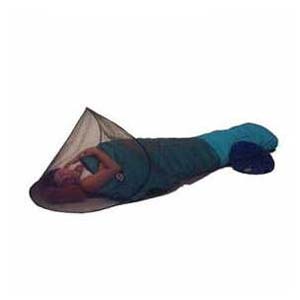
I used to hike in North GA. Summers could be very hot, humid and buggy plus other small rodents. I used a Silk Sleeping bag liner (4 oz) with a A16 Bug Bivy (6 oz) under a tarp and do not remember a problem at all. You still heard them buz around but they did not get in.

Bug Bivy

Pic not me – it's off some website.
In cooler nights I would drape bag over me like a quilt.

Chuck

PostedDec 18, 2008 at 2:28 pm

I almost forgot one of the best benefits of the tarp/bivy set up in the northeast- finding room somewhere to set up!
One of the big reasons I keept going back to my tarp is that when I had a tarptent or tent I needed a much bigger clear spot to set up and that usually means hiking to an 'official" camping spot cleared away for you.
Not so with a tarp/bivy. If you can find space to lay down you can camp there. Even if a rock is on one side of you and a small bush is on the other a tarp can be setup ABOVE and OVER them.

PostedDec 18, 2008 at 3:16 pm

I reasoned that when I'd slept in AT shelters that I had not worried about bugs, etc. Also, I slept under the stars on a nice, clear night. These experiences were enjoyable.

In real buggy and/or wet situations I use a bivy sack.

My beginning attempts at tarp set were just enough to get by, but you'll improve with experience.

Don't let fear keep you from trying it out.

Nick! BPL Member
PostedJan 16, 2009 at 7:30 am

I noticed that the MLD 2009 Silnylon Mid and Spinntex EXP MID come with an optional 18" perimeter net. How is MLD attaching this net to the tarp ?

Andrew: have you settled on a shelter system yet?

Thanks,

Nick

Viewing 25 posts - 1 through 25 (of 29 total)
Loading...