Do I really need a bivy for snow caving?
I will be using a Slumberjack 20 degree bag, two closed cell foam pads, wearing three season clothing to bed, with several other people. Will it be more humid with more people, and if so will I still need a bivy? I am afraid to make one out of Tyvek, becuase i've heard bad things about its breathability…
Topic
Do I really need a bivy for snow camping?
Become a member to post in the forums.
- This topic is empty.
Can't answer you Q but I noticed you are using a 20 slumberjack. Have you used below 32 yet. I have a buddy who had a cold weekend with a 20 degree slumberjack. He is the one who talked me out of buying it. The temp rating was atleast 15 degrees off.
The bag is in very good condition, and I could always use a liner bag too and put on more layers.
And plus, I like to wear a 200 count fleece balaclava to bed, during the colder campouts…
Evan, I think the important question is- not is it warm enough, but without it, will you get wet?
The first two times as an adult making igloos with the scouts my sleeping bag got wet at the foot box, making for an uncomfortable night each time. The problem was created by not smoothing/rounding the area my feet were at so that the moisture from the heat created ran down the walls and dripped directly on my feet! It didn't take much. (change into dry socks before bed)
I have always brought a Bivy ever since and have never had a problem- I doesn't have to be a waterproof Bivy, just have a good DWR finish.
The extra warmth created by the Bivy is a bonus. If you are making the caves with the scouts, it is a guarantee it won't be perfect, just functional.
How long do you plan on sleeping in the cave? If it is only one night, the Tyvek will be adequate and not cause any problems, just dry out your bag in the morning or when you get home.
Thanks Tad, Just one night.
What type of Tyvek would you recommend?
I've done 12 day winter camping with no groundsheet or bivy, and one full length air pad. It works, but for multidays it would be best to see if you can get a couple days drying in it. It helped that I had an overkill sleeping bag, but the main thing is to be careful with your moisture, not spilling a pot of water, rewarming a cracked frozen water bottle, sweating in your insulation, I have done all of these. So I would say you don't need a bivy at all.
Evan, I'm not fond of Tyvek (I'm a builder and I don't use it because of the problems it creates outweigh the cost, there is nothing like go old tar paper! But I wouldn't want to make a bivy out of it).
You can make a good bivy out of nylon with a DWR top and waterproof bottom that is UL also.
If your sleeping bag has a good DWR finish on it, Jonathan is right, you could probably get away without it. You can test it tonight by laying your bag out and dropping some water on it and see if it beads up and runs off or does the bag soak it up. You can dry it out overnight.
A large garbage bag draped over the bag works in a pinch.
I would also suggest using a cheap felt backed table cloth(from Target) as a ground cloth. The felt sticks to the snow and doesn't slide around like plastic will. THe slightest incline and you will constantly slide to bottom of it.
I get one and cut it down the middle lengthwise, one for me and one for my son. In the morning you just peel it off the snow and keep it for next year.
Good luck.
Hi All-
A couple of miscellaneous notes:
1) For one night, you can get away with anything. In your position, I'd skip the bivy.
2) Snow shelter design is an art. If you can keep it just below freezing, drips won't be a problem.
3) I spent 10 nights in an Igloo in YNP last February in a 15 degree synthetic bag and a 3/4 length Ridgerest Deluxe pad — no bivy and no ground sheet. I weighed my bag each morning to check for moisture accumulation and had less than one ounce total…even after 10 nights with no drying. Note that this was an exercise in moisture management — I wore a VB shirt, we kept the igloo below freezing, I avoided excess sweating, I had no spills, the igloo was expertly built, etc. YMMV ;)
Cheers,
-Mike
Ok, But since this will be my first time I would'nt be surprised if our group makes a lousy snowcave, even though we are going to be taught by some experts. For some security against snowballs falling on me should I bring a plastic sheet to go over me and my groundcloth? (It will be car-camping for our first year so weight isn't much of a problem)
If you were out for multiple nights, a bivy might be a good insurance policy. And, even for one night, bring one along and try it for the experience. :)
But for one night, unless you're clothing is wet and/or it's raining inside your snowshelter, it's unlikely that your bag will accumulate enough moisture to be a problem. I'm assuming your bag has a DWR finish. And…a Synthetic bag can take more moisture than a Down one before the insulation collapses.
Good Luck and Have Fun! :)
Tyvek is a DuPont brand comprising 16 different products.
You would not want to use Home Wrap for a bivy, but Soft Structure Tyvek , maybe 1422R, the type that builders don't use …. but used for clothing and kytes , may do the job.
Franco
I just saw your note about car camping. In that case, yes, bring something — a mylar space bag, a bivy, a couple of hefty bags, whatever.
It's not like your sleeping bag is going to suddenly become soaked. If you notice any wet spots on your bag, try to cover it with something.
Again, have fun!
I teach winter camping. I've spent many hundreds of nights in snow shelters, and taught and supervised the building of snow shelters for 14 years.
The moisture in the bag is from the person on the inside, NOT the ambient moisture of the shelter.
Bivies work poorly because they trap moisture IN the same warm area as the person. Best to let the bag breath as much as you can. I've tried and I don't like the frost on the inside in the morning.
That said, The Best bivi I've used in winter is a true gore-tex bivy. THose are usually close to a pound, and expensive, but they work pretty well.
My advice, you don't NEED a bivy sack.
Don't use a tyvec bivy in the winter. You'll get wetter with it than without it.
The best thing I've found for staying dryer in snow camping situations is a super lightweight synthetic sleeping bag (like, so light it;'s useless in the summer) and I put this inside my down bag. Don't ask me why, but it solves the moisture and frost build up on the outside, especilly my foot box.
I tried it OVER my down bag, but it would slide off by morning.
A 20 degree sleeping bag should be fine, two pads is perfect. Don't bother with a ground cloth, but maybe use a few stuff sacks (as mini-protection) around your elbows. That's the spot you end up rolling off.
Wear warm insulating breathable clothes to bed (take off the rain layer, leave on the puffy ones).
The foot box is the normal place to see moisture (usually frost) in the morning. I've never heard a good explanation why. The best I've gotten is that your feet aren't warm enough to "pump" the moisture out of the bag. THe torso is usually NOT frosty. THe mouth area around the face gets frosty, from respirations. A little frost is totally normal, just brush it off in the morning. It forms on the outside of the bag, you'll stay dry inside.
Hang the bag up in the morning, brush off the frost, if there is sun, try and dry it out, 20 minutes a day helps a LOT.
I've used down bags in snow caves exclusivly. I've stayed in snow shelters for 19 nights in a row.
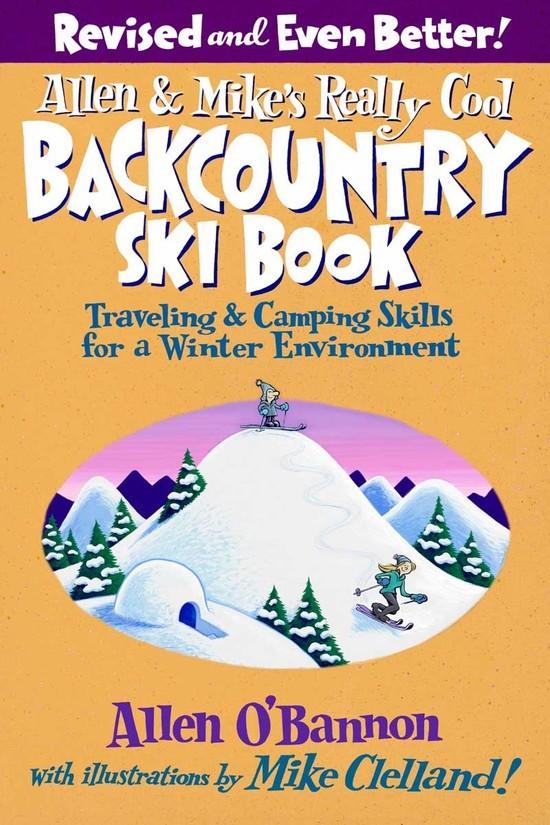
and – READ this book!
It will answer a lot of your questions, it has a great chapter on snow shelter building.
I think the footbox moisture could be due to several reasons:
1. Damp feet that are not dried out completely before retiring. The feet have the dampest skin on the body IMO because they are in the shoes all day long.
2. Some bivies may promote condensation at footbox.
3. Footbox nearest to tent fabric thereby have less ventilation. (maybe)
Great info Mike! Having very little snow cave or igloo experience, I am wondering how tough it is to regulate the temperature inside? Seems snow is a pretty good insulator, and aren't igloos typically constructed to trap warm air (i.e. low entrance and all that?)?
Hey Mike, what do you think about DWR on a winter bag? My Versalite is like a sponge.
1. My feet are dry at bed time, dry wool socks and the Integral design HOT SOCKS (the perfect sleeping set up!).
2. It's not just when using the bivy, even without there is frost on the foot area of the sleeping bag.
3. Snow is always below zero degree Celsius. So, the snow cave really won't get much above zero. Snow is an excellent insulator, so if it's 30 below zero outside, it may be near zero inside.
The true heat trap is hard to achieve perfectly, it's tricky to dig, but it helps. Regulating temp is easy (though rarely an issue). If it get too warm feeling inside, just poke a hole in the roof, (or a few holes) that helps a lot.
I'll add that I have never seen a snow shelter drip. Little bits of snow may trickle down, but not liquid water.
4. A DWR on the bag helps a LOT. So does a specific fabric designed to shed water. I can't keep track of the modern fabrics, but the new bags are amazing.
(all this info is in that really cool book)
I have posted on a few forums about my using a super light synthetic bag inside a down bag and have had a number of persons strongly admonish me for my "error". Funny thing is that it WORKS and after using this setup, I seldom used my various bivies in most snow camping.
I have snow camped since 1964 and never once had a problem using a down bag, except when I once forgot my bivy and got my bag wet. I actually prefer snow camping as it is cleaner and there are NO bugs!
Mike, any suggestions on actual brands of syn. sacks as my elderly Chouinard Thermolite has gone to my nephew and my other four syn. bags are too bulky for this.
Chouinard? Really – My perfect "inner" bag was this funny thing called a chouinard zero point. It works perfect! (are we talkin' the same thing? Black with an electric pink interior?
Tell me, what kind of bivy do you use, the only true success I've ever had is a real GORE-TEX bivy, but it weighs – like – 17 ounces. ANd if I don't have it – I'm fine. So I don't take it.
I think that The lightest weight coccooon quilt would b perfect.
>> Mike, any suggestions on actual brands of syn. sack
I realize this was probably directed at the other Mike (!), but I've had good luck with the Mountain Hardwear Ultralamina 15. Both Don Wilson and I used one on the Wilderness Trekking III course last fall.
Just speculation, but a synth bag inside a down bag *may* be working to reduce the moisture transfer rate as the moisture would have to pass through two additional shell materials. A greater percentage of moisture would then vent through the bag opening rather than migrate through the insulation. It's sort of the same general idea as a partial vapor barrier liner.
Cheers,
Mike(M)
EDIT: I just re-read your post and realized you were asking for a light synth liner bag, not a 15 degree one. Sorry. In that case, The North Face Propel is a good candidate — the older ones without zippers are the best IMO. Oh, and a quilt *might* not work so well if my guess about the moisture escaping through the opening is on target — I dunno, haven't tested it…
Hi, There is a reportedly HORRIBLE Sea To Summit Reactor "Thermolite" Mummy Bag Liner at REI. Probably a different material!
Edited to remove link to HORRIBLE gear!
Sorry, I didn't read all the posts above to find out what you intend to use the S-T-S Thermolite Reactor liner for. Just be warned that the 15F temp boost is a complete farce!
The liner is good for helping to keep your bag cleaner (like with all other liners). Other than that, you can expect a 3-5F temp boost (5F being tops). I say this both from my own personal experience (after foolishly believing S-T-S hype and spending one truly uncomfortably cold night) — and also from reading the experiences of other users.
I seem to recall that my Chouinard WAS called a "Thermolite" and was bought by me in 198something, for carry as an emerg. bag in my hunting day packs. I found out about it's use as an inner to down bags quite by accident in an un-planned overnight far into the South Chilcotin and on a night when it went down to about 0*F.
I was on a five day Cali. Bighorn solo hunt and got my truck mired in a real bog; I ended up camping there o/nite as it took me about eight hours with a small Swede saw and hand cable puller to extricate it from the seat-deep mud.
I had my Feathered Friends "Overbag" U/L sleeping bag with me and it suddenly got real cold for Sept., even in that icebox of a region. So, I just combo'ed my emerg. bag plus my FF and my T-rest over my Evazote pad. I had one of the finest sleeps I have ever experienced in the bush and was so refreshed I got the truck out next ayem in very short order.
After this, I used this combo more and found it very good in typical damp BC cold.
My favourite bivies are my I.D. eVent ones and my I.D. Gore-Tex ones next, I have two of each. I had Early Winters G/T bivies for years and one of their tents and liked them very much, but, they wore out. I also had a Black's of Scotland bivy, but, it was not waterproof on the top and I eventually chucked it.
I never go anywhere without a bivy, some insulation for inside it and a light tarp, but, this is for solo use in emerg. situations and has worked well for me for many moons. I wouldn't buy another bivy that was not eVent as it works better than anything else I have had, Exped makes an eVent bivy with a full side zip….someday….as they are serious coin and I have enough gear now.
I took my chouinard bag, which was a zipper-less "condom" and had a seamstress cut it at about belly button area, so now it's a half-bag. I use it to keep my legs warm, my torso isn't a problem.
Why the synthetic on inside seems to work? I could make a few guesses, but it works great to minimize getting the down wet.
THe BPL COCOON would be the perfect inner bag.
an innerbag below:
.
http://www.backpackinglight.com/cgi-bin/backpackinglight/cocoon_ul_60_quilt.html
The MEC overbag has been well recieved by fellow winter campers. There is a more expensive gore-tex version available too.
An overbag:
.
http://www.mec.ca/Products/product_detail.jsp?PRODUCT%3C%3Eprd_id=845524442507321&FOLDER%3C%3Efolder_id=2534374302865705&bmUID=1229441960967
.
I'll second Ben on the Reactor. The material is thinner than the long underwear many of us would wear to bed anyway. No point in carrying the extra weight and bulk.
Become a member to post in the forums.