Topic

Lightweight winter footwear solution

  • This topic is empty.
Viewing 19 posts - 1 through 19 (of 19 total)
PostedNov 18, 2008 at 8:57 pm

I'm curious what your solutions are for fall/winter backpacking. For summer, I've concluded that breathable, non-waterproof trail shoes are best. For fall/winter, however, cold wet feet is not good when temps approach freezing. It seems like gore-tex wins here. Also, a slightly more sturdy shoe/boot would help to offset slightly heavier pack loads. And finally, it seems like you need a dedicated pair of footwear for fall/winter given that you are probably wearing thicker socks (I use mid or heavy Smartwool).

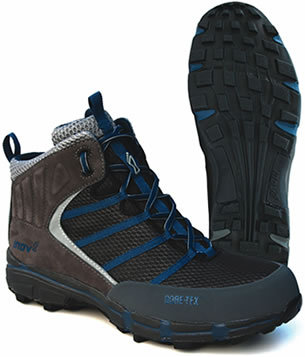
Am I on target? I'm curious to hear your thoughts on this. I picked up a pair of these the other day and am considering trying these out for an upcoming winter trip:

http://www.campmor.com/outdoor/gear/Product___10457?CS_003=2477120&CS_010=10457

They have EVA midsoles, not polyurethane like heavier boots. They seem to fit my wide feet reasonably well. They don't seem as sturdy as my trusty old LL Bean Cresta all-leather boots, but they are nearly a pound lighter–a 9 1/2 pair weighs 2 lbs, 9.8 oz.

I'd also like to hear about solutions for keeping your feet warm whether on the trail or in camp. Last year, I did a winter trip here in Texas, and although it wasn't snowing, the temps were in the low 20s and my feet felt numb unless I was moving.

David

Mark Verber BPL Member
PostedNov 18, 2008 at 9:28 pm

Until the temps are getting down to freezing I continue to wear trail runners with light socks. While I am moving my feet are fine. At night my feet would chill… except I pretty quickly take socks off, dry feet, put dry socks on, get under quilt.

In colder conditions I have tried a number of things. What I have been most happy with are rocky goretex oversocks with a lightweight Injinji liners around freezing, or rbh vapor barrier socks when it's getting really cold. I mostly continue to use my Inov-8 Flyroc 310, though last season I used a pair of Inov-8 Roclite 390 GTX on a number of outings.

–mark

Roger Caffin BPL Member
PostedNov 19, 2008 at 12:56 am

Hi David

Check out Will's articles on wearing joggers in the snow. He (and you) are right on the ball: slightly heavier/higher joggers, WP membrane, a larger size and thicker socks.
I will add (and Will does too) that some Goretex gaiters are a necessary addition.

Cheers

PostedNov 29, 2008 at 8:28 pm

Hi Roger

Sorry for the delayed response. Do you have a link to these articles?

Also, I'm interested in hearing from forumites more about the vapor-barrier sock idea and how to keep your feet warm whilst in camp. When you're feet aren't moving, how do you keep them warm? My wife complaint of cold feet last year and I want to convince her that she shouldn't have cold feet this winter (no pun intended).

Our winters here in Texas aren't very bad, so I anticipate lows won't drop below 20 F. Nevertheless, we're not used to cold weather.

David

PostedNov 29, 2008 at 11:21 pm

I wear plastic bags over my feet, as a vbl, when active. Keeps the feet noticeably warmer, better with wool sox over top, not neoprene, which seems to conduct the heat away. I wear thin polypro sox inside the plastic bags.

Results in no blistering, BUT will lead to trench foot if you don't dry the feet out each night. And my feet and sox smell real bad, so bad I am not allowed into the tent until I sprinkle gold bond powder on them.

Because vbl inside my boots, boots can be gore-tex or plastic – keeps wool sox totally dry, as long as the plastic bags don't split.

Because my feet drown during the day, they need to breathe at night, so all I use is synthetic booties over a dry pair of thin polypro sox. In snow, the padding under the bootie is more important than the insulation. Consider throwing a heat pack in each bootie.

Gear list:

2 pairs thin polypro sox (one always worn, one always being dried against skin)

1 pair plastic bags

1 pair wool sox (none if suing Intuition liners in plastic boots)

1 pair boots, either gore-tex membrane or plastic with Intuition liners)

1 pair synthetic booties with extra 5mm or 10mm evazote pad placed inside

a bottle of gold bond

PostedNov 30, 2008 at 6:09 am

David,

For spring and fall conditions you describe, I have not found a need for insulated boots but I do believe it's critical to stay dry. I have started using a system of a heavy wool sock (next to skin) followed by Rocky Gore-tex socks, with Montrail Hardrocks (sized up for the extra volume).

If there is any chance of slushing around, paclite or event gaiters are lightweight insurance.

PostedNov 30, 2008 at 8:26 am

I have just finished reading the 3 part winter footwear article by Will. One thing that confused me was that he initially states that goretex socks are much more versatile, but later in the recommended setups for heavy snow, he always recommended goretex shoes. Any thoughts on this? I'm trying to decide what to do for the heavy, but dry, snow that we get here in Colorado. I'd like to keep my mesh trail runners, and maybe just use a VBR sock for staying waterproof and a bit warmer.

PostedNov 30, 2008 at 9:48 am

We use a similar setup: thin socks, and a spare for while the first dry, then plastic bags (VPB), insulating socks to suit, goretex socks, upsized inov8 shoes with extra insole, event gaiters if needed, homemade foam insulation umder the gaiters if very cold, Kahtoolah crampons if needed. That's versatile and it works whenever we have used the system.

PostedDec 1, 2008 at 3:59 pm

I use the same setup as John for snowshoeing in the PNW, with Injinji socks and a Cool-max liner over them next to skin. Never had a problem with either cold or wet feet. The 390's are a great boot for snowshoeing/winter hiking.

PostedDec 1, 2008 at 4:19 pm

I found Will's articles and have yet to read through them all but they look very insightful. From my initial skimmming, it appears that vapor barriers are not necessary (nor desirable?) for temperatures above 25 F. So…does that mean for me since I do most backpacking when temps are at least 20 F that I shouldn't even give them a thought? As far as liner socks go, is synthetic or wool best? I think he said both could work but the article tended to emphasize synthetics.

I already own a pair of Smartwool liner socks
http://www.rei.com/product/659684

and Smartwool Expedition Trekking socks
http://www.rei.com/product/604590

Do you think this is a good combination?

Also, I am still torn on whether Gore-tex or non Gore-tex is best for winter hiking. It seems from my reading that Gore-tex prevents moisture escape so your feet get clammy and hence cold? However, it also seems that the Gore-tex might act as a mild vapor barrier which could be a good thing. I really dread having a pair of mesh trail shoes turning into blocks of ice! I figure that I need a separate pair of shoes anyway for winter hiking due to the extra room required for thick socks, so why not get Gore-tex?

PostedDec 1, 2008 at 5:22 pm

Dave,
I'd give serious consideration to using the synthetic liners, as they will wick moisture away from your feet and out to the wool socks. Wool, OTOH, tends to retain moisture-not what you want next to your skin, especially in cold temperatures. VBL's are definitely not necessary in temperatures above 20 degrees in my experience, IF you are using Gore-Tex lined boots. If you go with a pair of regular mesh hiking shoes, you would probably want to consider VBL's or, even better, Gore-Tex socks in 20 degree plus temperatures. I think Will has quite a bit to say on this subject, if I remember correctly.

PostedDec 2, 2008 at 10:50 am

I looked around at REI's website and can't find any substantial liners other than the polypro or coolmax liners which are as thin as pantyhose. Where do get the ones that Will mentions in his article? The Smartwool ones I have seem a bit thicker–wouldn't they provide more warmth than synthetics? Synthetic liners in the past have made my feet feel clammy–at least in warmer temps.

I'm still debating if I should wear lightweight Gore-tex boots or simply breathable trail shoes.

John S. BPL Member
PostedDec 19, 2008 at 8:52 am

Winter Setup I will try this year:

Shelter: Golite Utopia 1

Footwear: Neos Villager overshoe with croc knock-offs inside; wear crocs to bed for extra insulation

Sleep system: Golite Ultra inside RAB quantum top bag; pads will be POE uberlite and GossamerGear thinlight

Brett Peugh BPL Member
PostedDec 19, 2008 at 10:18 am

I know Columbia makes some Trail Dawg liner socks out of Coolmax that are pretty thick, at least twice the thickness of dress socks. I think Patagonia has some on their web sale also.

PostedDec 19, 2008 at 11:14 am

I, too am contemplating wearing NEOS Villagers over the lightest mesh shoe I can find for winter snow travel.
I never thought about using Crocs instead. I shall try them.

Another use for the NEOS (assuming I wear a plastic bag over a liner sock to keep foot moisture from getting the inside of the NEOS wet) is to put a synthetic bootie inside for camp wear, then use that relatively dry and clean bootie in my sleeping bag for foot insulation.

But Crocs for insulation? The Crocs with holes in them?

Marty

John S. BPL Member
PostedDec 19, 2008 at 12:30 pm

haha…Last March I was in Utah and the temps were into the low 20s. I was using only a GG nightlight torso length with no leg insulation. Needless to say my feet froze the first night. After that I slept with sock > croc type shoe > subway sandwich bag over all of it to keep sleeping bag clean from crocs which was wearing around camp. It worked at keeping my feet off the ground and as insulation from the ground.

PostedDec 19, 2008 at 12:56 pm

Make your own sandals out of closed cell foam (think Walmart blue pad) and triptease. Mine weigh in around 1 oz for the pair.

James Waechter BPL Member
PostedMar 6, 2009 at 10:10 am

I'm planning a winter hike next weekend and think it could be useful to incorporate a VB sock/liner into my footwear system. My current plan from the outside->in is:
REI merino sock liner
vapor barrier sock
Smartwool hiking sock
Merrell waterproof hiking boots
Outdoor Research Rocky Mountain High gaiters

I've tried using some Subway sandwich bags as the vapor barrier because I like how thin they are, but they split open while walking my dog. Newspaper bags or the bags for a loaf of bread seem like they'd be more durable.

Does anyone have experience with one of these MYOG ideas, or is it worth it to just buy true vapor barrier socks from RBH or Integral Designs? Which of those two manufacturers has the thinner sock?

I looked at SealSkins too, but those are way too thick to fit comfortably in the system I described.

Viewing 19 posts - 1 through 19 (of 19 total)
Loading...