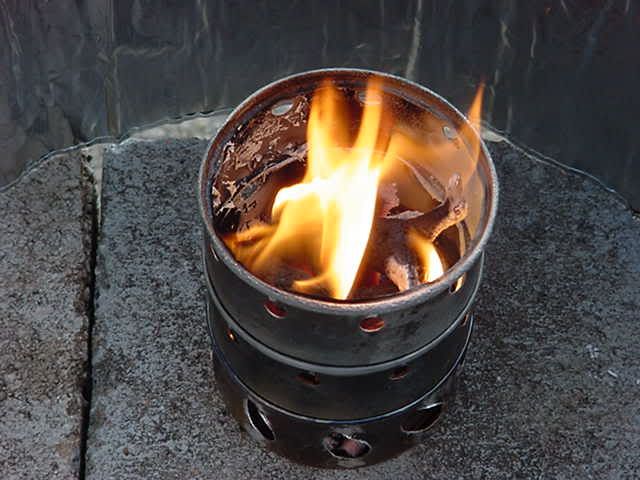
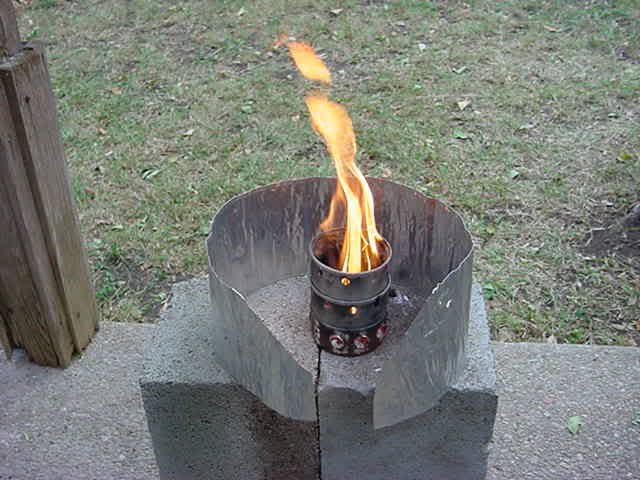
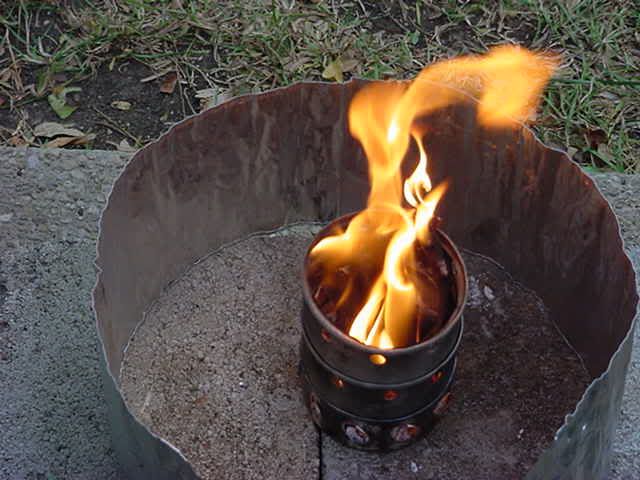
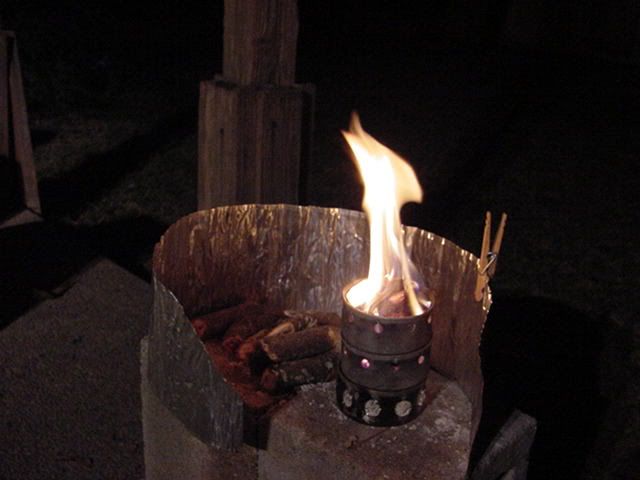
I’ve been following the threads about wood stoves and getting more and more confused about design criteria. Many people seem to have followed the Garlington Wood Stove idea, which itself is based on the ideas of the inverted downdraft gasifier wood stove ( http://www.repp.org/discussiongroups/resources/stoves/Reed/Turbo2.htm ). As Ray Garlington indicated in his site ( http://www.garlington.biz/Ray/WoodGasStove/ ), one of his goals was to achieve a blue flame, which is indicative of the burning wood having reached wood gas output, which burns hotter, longer, and cleaner, with very little waste left over, than yellow flames (I think… I don’t really understand these concepts yet).
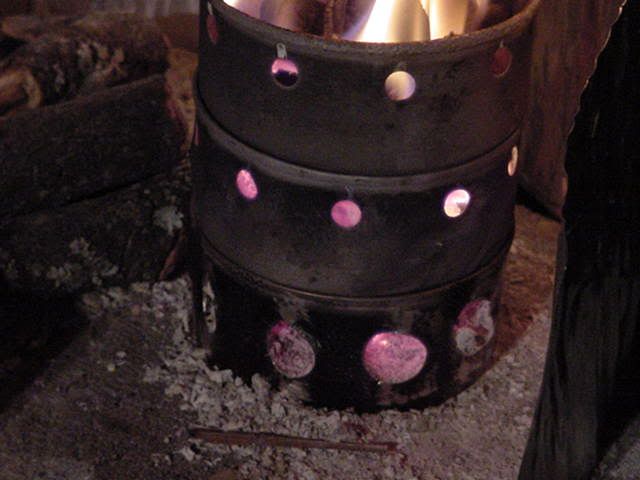
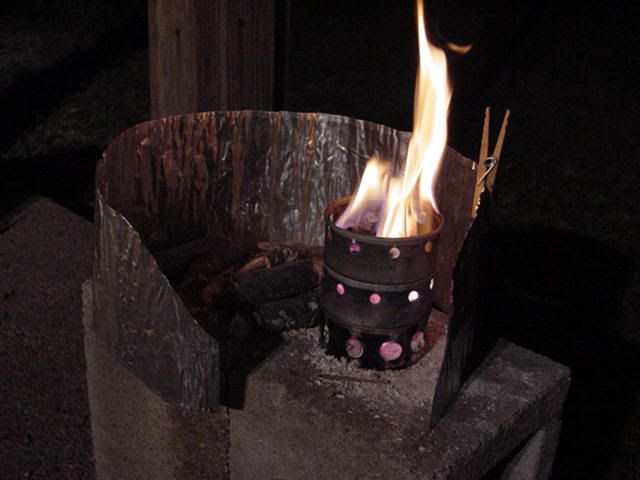
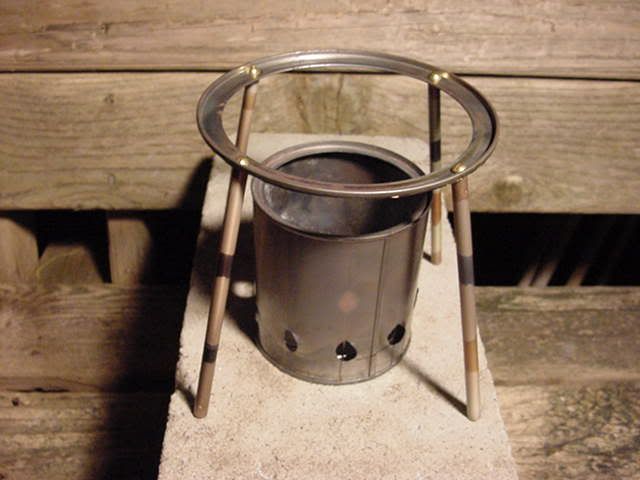
Yet the stoves being promoted here are simply cylindrical metal containers with holes in the sides, that don’t seem all that much different from a circle of rocks (which would retain a lot of heat a lot longer). I’m curious as to what advantage there might be with these simple stoves… Is there something about the diameter of the cans or the materials or the height that makes them different from any alleyway homeless person’s oil can wood stove?
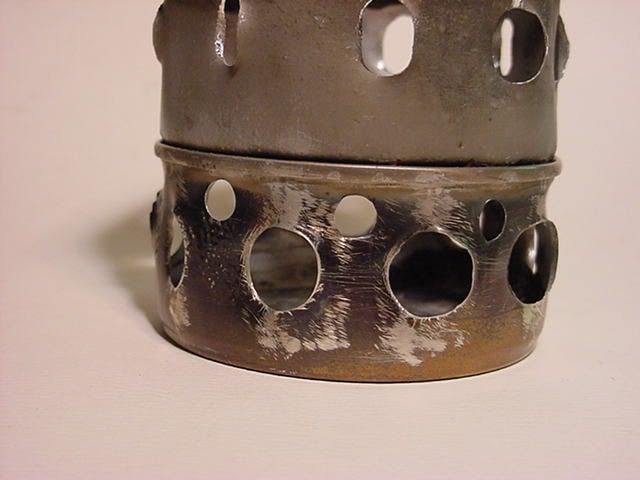
I’ve also been following the idea for the cyclone holes and think maybe there is something to it, especially in an alcohol stove. It must work pretty well in a Brasslite. I just wonder how the beveled holes would work in a can filled with wood, where there is no space for the free circling of air. Somehow if there was a way to keep the area where the wood gas burns free of solid fuel perhaps the cyclone effect might work.
There are some ideas here that might be of use to people looking around for ways to improve and use wood stove technology: http://journeytoforever.org/at_woodfire.html
I’ve been looking at inverted downdraft wood stoves for a long time and perhaps because the idea is counter-intuitive have still not quite grasped how to go about implementing it in a lightweight camping stove. My home-made stoves work, but all produce a lot of smoke before properly igniting. There was a stove made several years ago, designed by a guy named John Hall, called the BushBuddy ( http://web.archive.org/web/20001025101657/www.bushbuddy.com/about.html ), now unfortunately no longer manufactured (and the stove was reputedly very heavy) which comes the closest to what I am looking to achieve with an inverted downdraft gasifier camping wood stove.
I’m also considering the possibility of using a material other than metal for the outside of the stove, something that is porous, retains heat, and is very light. Perhaps ceramic tile or so?
Anyone have any ideas?