


back to the "better" compacts, take a look at the recent report at DPReview
http://www.dpreview.com/reviews/Q408enthusiastgroup/
Note that some of my choices are covered here
Topic
Become a member to post in the forums.
back to the "better" compacts, take a look at the recent report at DPReview
http://www.dpreview.com/reviews/Q408enthusiastgroup/
Note that some of my choices are covered here
Mike, to answer some of your questions. Typical battery life on a dSLR is typically 500-1000 shots depending on the battery and how you use the camera.
If you're interested in a dSLR that takes standard AA batteries check out the Pentax k200d and k2000 models. They are good cameras. Also the k100d which is an older model which you could buy very cheaply second hand now.
Most compact cameras recharge by directly plugging a cable into the camera and then plugging the other end into the power socket.
I am a bit of photo enthusiast and have always carried my dSLR on previous trips. But with the new quality compacts that are coming along (eg. LX3) and a desire to not have to carry 2 pounds or more of camera stuff with me, I'm moving towards the compact dark-side for backpacking trips. If I was going to a really spectacular destination (eg. Nepal) however I would be unable to resist the dSLR I think.
> If I was going to a really spectacular destination (eg. Nepal) however I would be unable to resist the dSLR I think.
I understand, but can I suggest it is not the DSLR itself but the range of lenses available which is the lure here? Especially wide angle…
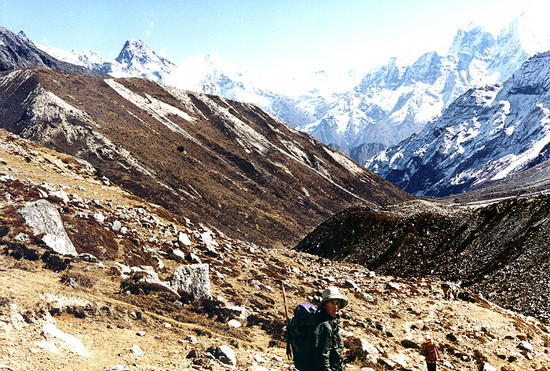
Taschi Lapcha valley
Cheers
Yup,
Wide angle is a must, and a scattering of compacts now produce images of surprising quality. That said, it IS a difficult choice for expedition-length trips as to which way to go. I usually choose my camera after the pack's filled with everything else. Sometimes there's just no room, so a compact, say, an LX3, goes outside with no extra fuss.
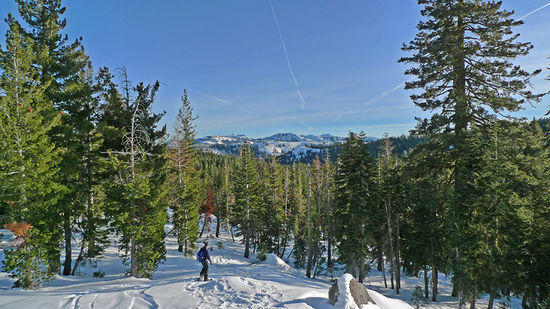
From my first day trip with the thing:
I too have got to disagree with Roger on the extra dslr battery costs. I've got a half dozen from Amazon for my D60 for around $10 each and they last 500-1000 shots each. Each lithium ion battery is far lighter than the AA counter part option for my camera and they seem to last well in the cold.
For those who want to use AA's, The D40, D40x and D60 all accept a vertical hand grip that allows you to use AA's or lets you double up on your lithium batteries for on-board flash intensive usage.
Recharging options for dslr batteries is usually limited to outlets or using a converter in addition to a solar charger unless you can find a special solar option for your camera. For the D60 you can use rechargable AA's in a hand grip and use solar chargers for those if necessary but frankly for almost all trips it's cheaper and lighter just to toss in a few of the stock style batteries.
My trip with my D60:
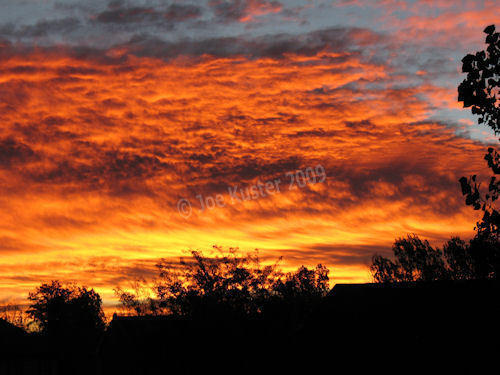
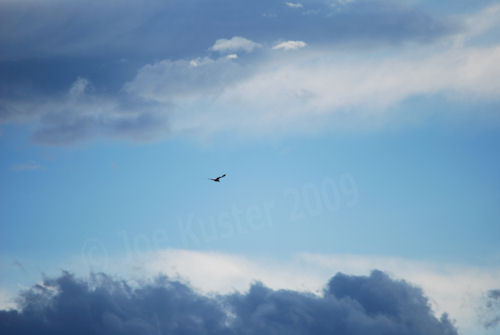
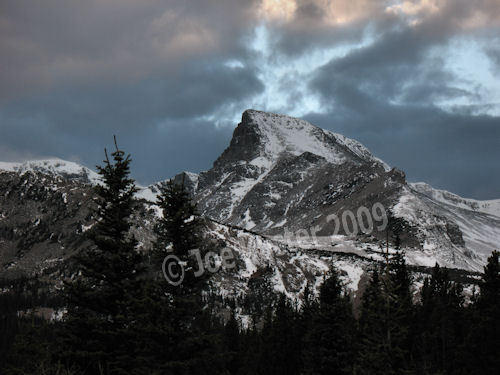
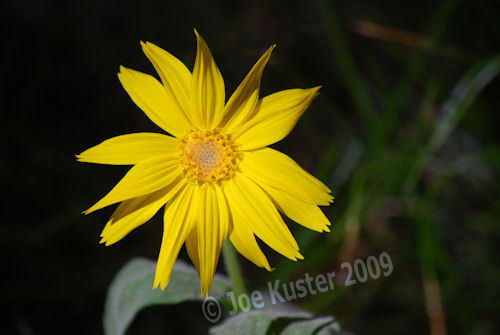
Unfortunately resizing and compressing them for here doesn't do them justice.
> I too have got to disagree with Roger on the extra dslr battery costs.
Hum … OK, OK.
My Canon is not healthy any more – but it is way beyond the expected 18 month life all things electronic seem to enjoy these days (mumble gripe winge).
So Rick D has been advising me, and I may have to abandon the AA route… Sigh.
Cheers
Yes, back to compacts.
Ok, I have come full circle and now have decided to go with a compact because I think I'll use it more often. Then, down the road I may buy a second-hand DSLR, such as the k100d that Ashley recommends. I'm now deciding between the LX3 or the G10. From what I've read, the LX3 has great reviews, is lighter (approx. 9 oz.), takes better pics than the G10 at higher ISO, but it doesn't have an optical viewfinder (can be purchased as an option but for about $180.00). The G10 is heavier at approx. 12.5 oz, has better ergonomics, and has an optical viewfinder built in, which can be used without screen to save battery life.
Can anyone offer advice about choosing one over the other? Mike
> Can anyone offer advice about choosing one over the other?
Company reps and existing owners please line up to the left … :-)
After going through dpreview and luminous-landscape, I got the impression that both reviewers favoured the G10.
The LX3 may have less noise at high ISO – but who uses high ISO?
The G10 has an OVF: very nice.
Dunno.
Cheers
I don't have either but it looks a very difficult call between the two.
The difference in focal length is also significant. 24mm equiv (LX3) is an awful lot more useful than 28mm for landscapes. OTOH 60mm is not quite long enough, but then you can go longer by cropping, at least up to a point. Although on the third hand you will, eventually, be able to buy a wide-angle converter for the G10, but making a teleconverter for the LX3 seems almost impossible.
On the whole, if I were going to make a serious photographic kit around a compact then I'd get the G10, a small tripod – which negates the low-light advantage of the LX3 – and eventually a wide-angle converter. That's going to be a lot of weight, however. If I just wanted to take a camera then I'd get the LX3.
I've spent time considering this, as has a friend of mine who is heavily into photography. He just bought the LX3.
With the LX3 you get an f2.0 lens. That's a whole stop brighter than the G10.
The G10 has an advantage in resolution but that advantage is mostly gone by ISO 200 and certainly by ISO 400 due to noise.
The LX3 is lighter, and the better sensor plus faster lens gives you a couple of extra stops of light when you need it, plus you get 24mm wide-angle. The main trade-off is that you lose the long end. Not such a big deal for hiking and scenery. I would miss it, but I think the other benefits outweigh this negative.
Bottom line though is that they are both great cameras and you are unlikely to be unhappy with either.
More grist for the mill. Here's Thom Hogan's take:
http://www.bythom.com/compactchallenge.htm
I got the choice down to the GX200 versus LX3 before picking the latter, but the G10 is still a very competent contender. 28 vs. 24mm carried the day (along with the size and weight) and you can get a WA converter for either the GX or LX to take it even wider, should you so choose.
I'll know whether I made the right choice by next summer, probably around the time Oly unveils their µ4/3 system and changes the equation yet again.
Having used both a G9 and a Leica DLux 3 (Panasonic LX2), I also thought long and hard on this. I have ended up with a G10, for three reasons:
1. Optical viewfinder. Not really very good, but far easier than trying to use the LCD – especially as the LCDs can't be seen with sunglasses on. The add-on viewfinder for the LX2/Dlux 4 adds to the bulk and is 24mm only.
2. Size. The LX3 is not that easy to use with gloves on.
3. Telephoto end – the LX3 60mm is too short for me.
I had a WA adaptor for the G9, but never used it – it is large, heavy and a fiddle to fit.

I ended up with the LX3. I actually find it a good size and have had no problem using it wearing liner gloves.
It was a hard decision. Part of what fueled my decision was the around town were the LX3’s extra 3/4 stop advantage can be useful. For even more fodder you can find reports and pointer to good reviews on this class of camera on seriouscompacts.com/.
Become a member to post in the forums.
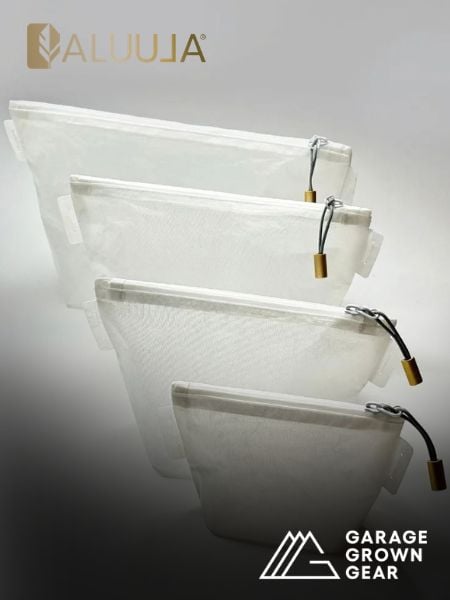 New Gear with Aluula FabricsLighter, stronger, more abrasion-resistant, and highly water-resistant - explore ultralight backpacking gear made with ALUULA Graflyte fabrics. Engineered for exceptional strength, durability, and lightweight performance, ALUULA Graflyte helps reduce pack weight without sacrificing reliability, making it ideal for demanding backcountry adventures.
 © Beartooth Media Group Inc.
 Loading...