My interest in stove testing were inspired by these two quotes from BPL:
(quote)Thomas DeSisto
( vinovampire )
preheating air on 02/14/2008 12:52:43 MST
I think Derek hit the nail on the head, there’s no wood gas going up the side walls, but the preheated air seems to create much less smoke and offer a tighter flame pattern.
Is the second wall worth any extra weight? I don’t know yet. One could ask if any “wood stove” is much more than a glorifed pot stand and wind screen. I guess we need to see some head-to-head numbers using the same amount of wood material.
best,
vino vampire
Derek Goffin
( Derekoak – M)
Locale:
North of England
stove efficiency on 02/14/2008 14:17:00 MST
I wqould swear my stove with preheated secondary air will boil more water from the same fuel than a hobo stove. If fuel is free some people would say that fuel efficiency is not an important crieria.(end quote)
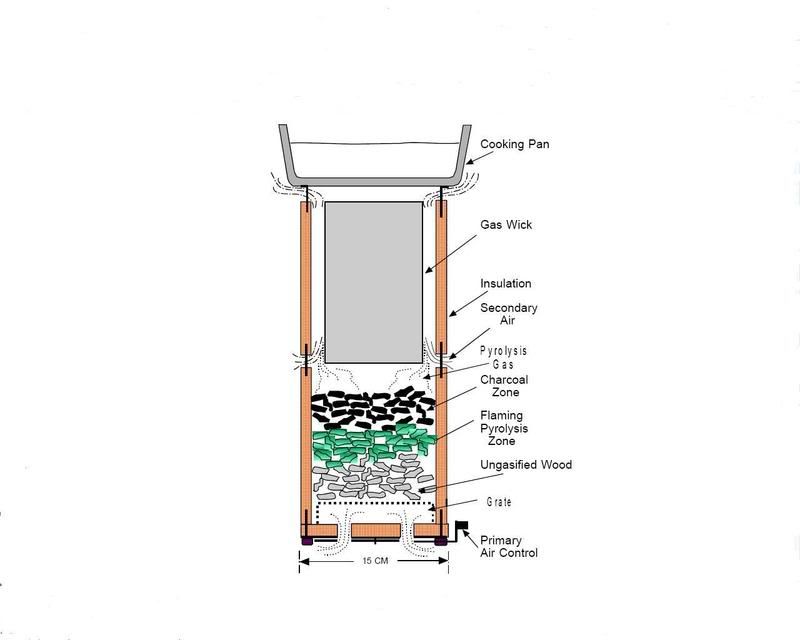
The stove I used was based on the design by Brian Barnes ( brianjbarnes – M)
http://www.backpackinglight.com/cgi-bin/backpackinglight/forums/thread_display.html?forum_thread_id=14765
I insulated the stove because of what was said by :
(quote) Herman Finster ( herman666 )
Re: double jacket on 09/11/2008 18:15:38 MDT
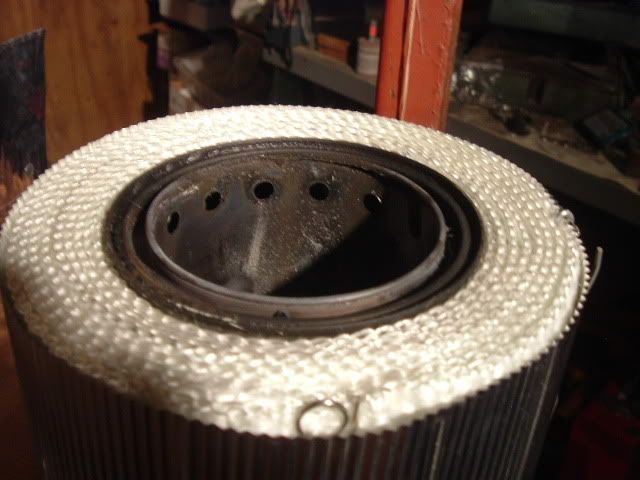
A double wall offers some advantage, but mostly if you fill the space with insulation. That keeps the heat inside the stove from whence it moves to the pot.
There is a lot of academic research out there on small cook stoves. I think people would benefit from reading it and building on it rather than starting from scratch. Here’s the conclusions I extracted from one paper: 9end quote)
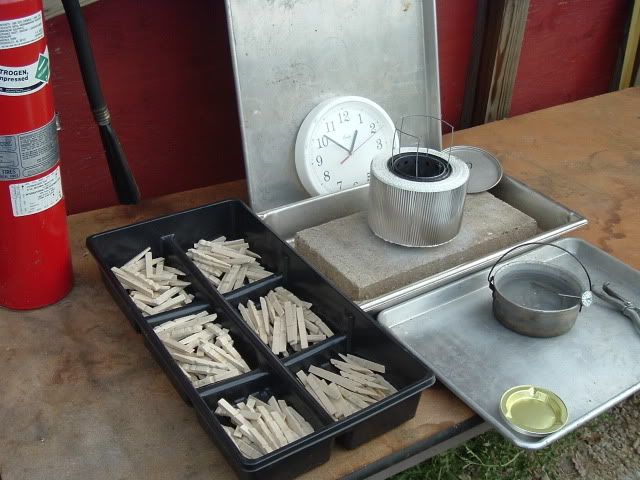
Here is a recap of the tests performed:
I tried to make everything equal as possible. As the tests proceeded I was able to see how I could improve the lay of the fuel in the stove. The last 5 test had the fuel standing straight up with the narrow end of the clothes pins facing down for ease of ignition by the flaming alcohol tinder under the stove.
Clothes pins of the same size and quantity were used as fuel except where noted. 35 pins per batch, per test. No fuel was added while test was in process. What was in the stove was ignited and consumed.
The first series of tests show the temperature rise of 2 cups of water after 9 min.
In the second series the temperature was taken at 8 min.
On average the flames would go out after 4.5 min using chinese made (new) clothes pins
1/4 ounce denatured alcohol was used as tinder.(in shallow pan under stove)
The entire thread devoted to the tests with lots more information can be seen at bplite.comwoodburner
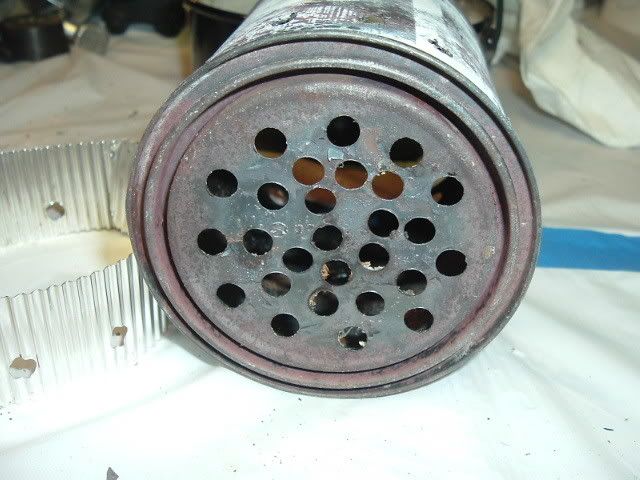
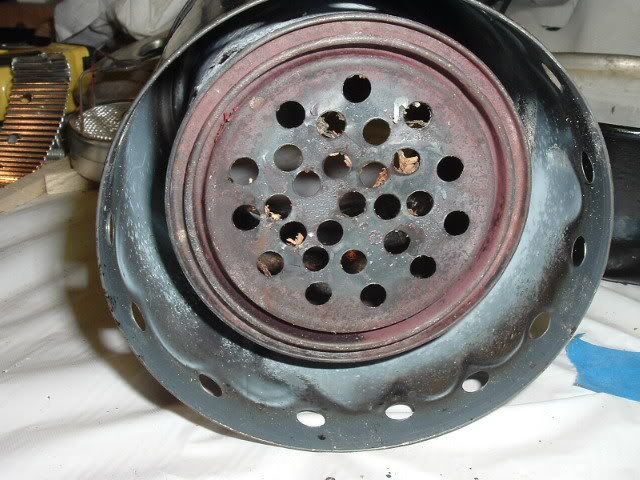
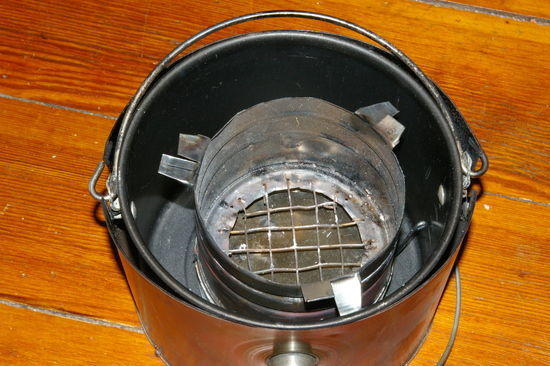
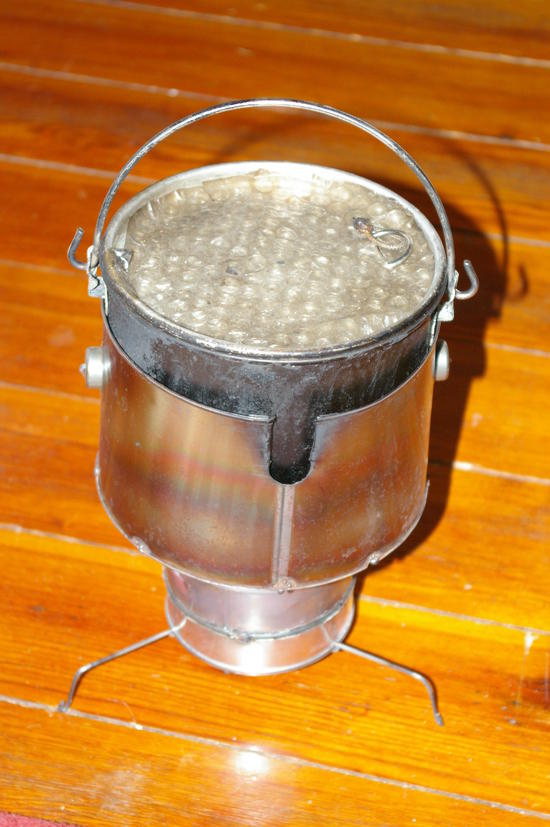
The super insulated double walled wood burner:
1st test burn = 190 degrees at 9 min.
2nd test burn = 186 degrees at 9 min.
3rd test burn = 154 degrees at 9 min.
Uninsulated double wall wood burner:
4th test burn = 180 degrees at 9 min.
5th test burn = 194 degrees at 9 min.
Single wall stove open base:
6th test burn = 172 degrees at 9 min.
7th test burn = 175 degrees at 9 min.
8th test burn = 210 degrees at 9 min. (American made hardwood clothes pins)
Single wall stove with new base added to replicate hole pattern of Outer can. American made clothes pins for fuel for next 5 tests.
9th test burn = 204 degrees at 8 min.
10th test burn = 188 degrees at 8 min.
Double wall stove:
11th test burn = 134 degrees at 8 min.
12th test burn = 180 degrees at 8 min.
13th test burn = 192 degrees at 8 min.
The last 5 tests are significant. They give you a visual of what is taking place during the burning process and you are able see how the two stoves compare.
Please add your comments.
<center>


</center>
<center>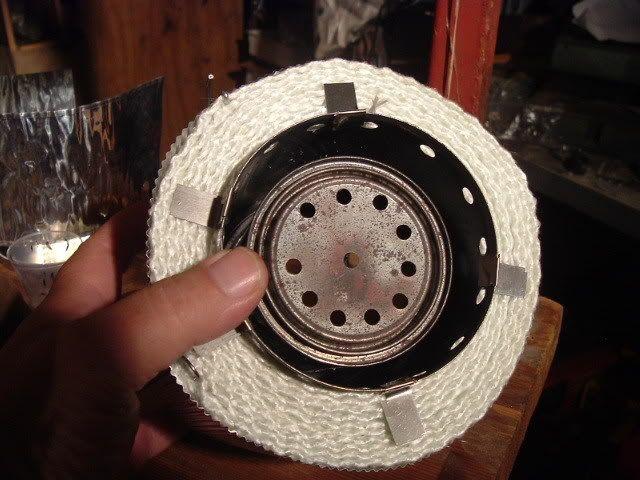


</center>
<center>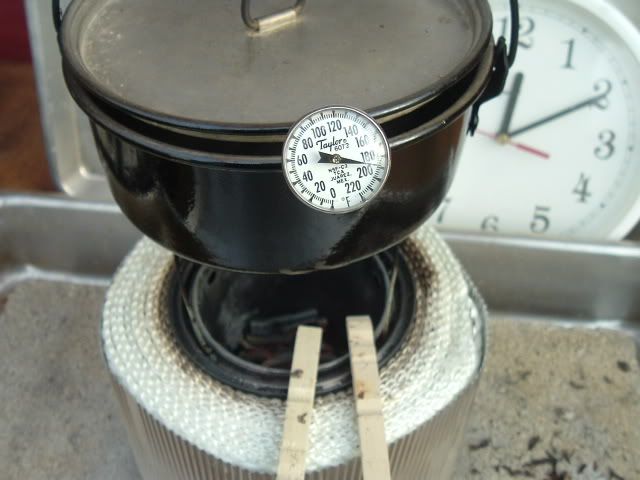
</center>
1. <center>
</center>
2. <center>
</center>
3. <center>
</center>
4. <center>
</center>
5. <center>
</center>
6. <center>
</center>
7. <center>
</center>
8. <center>
</center>
9. <center>
</center>
10. <center>
</center>
11. <center>
</center>
12. <center>
</center>
13. <center>
</center>
The last 5 tests are significant. I can only say at this point that there is no significant benefit to having a double walled wood burner for backpackers. We don’t need the extra weight.
All of you that have made your own wood burners are invited to comment on the results of the above tests. All ideas are welcome to improve testing proceedures etc.
Dan Yeruski/zelph



 .
.