This link should open the .PDF.
http://www.repp.org/discussiongroups/resources/stoves/Pcia/
Design%20Principles%20for%20Wood%20Burning%20Cookstoves.pdf
If it doesn't, Google "Design Principles for Wood Burning Cook Stoves" and you'll get links to it.
Even if you get a pop-rivet tool, you'll find they're a royal pain for this application. It's extremely difficult to get all the holes to line up. I just finished a rivetless version. It was a heck of a lot easier to assemble and looks nicer (to me), but I needed a MIG welder to put it together. The Rivet tool only costs a couple of bucks so you pay your money and take your choice.
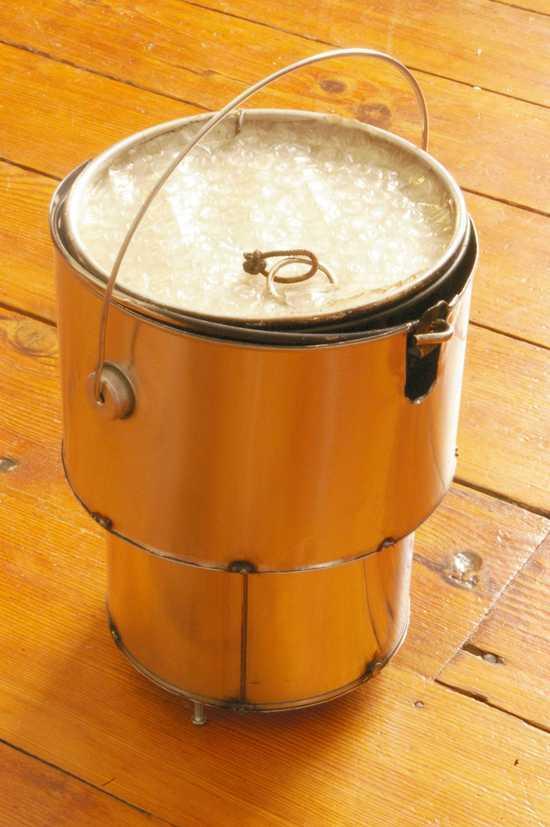
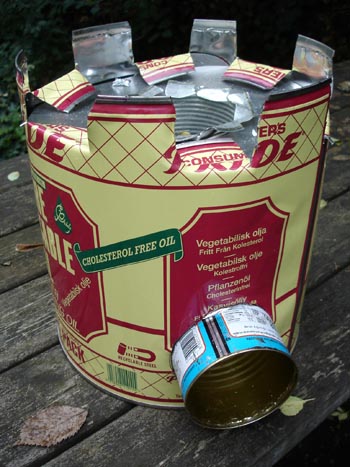
You might be able to find someone with a welder who can make the final assembly for you. The photo's below show my latest stove including sub-assemblies to give you a better idea of how it's made. If you look at these and the previous post you should get a pretty good idea of how its built.
I used gallon, half gallon and pint paint cans which can be had on the web. The cans just make it easier to build. You can make it from 0.01" galvanized steel and aluminum if you need to save money.
Note the handle on the chimney of this version. It comes in handy when the wind shifts. Fellow campers aren't always appreciative of being down wind unless there's bugs about. With a little care, you can move the stove without burning yourself.

Firebox
Insulated firebox

Configured for cooking. Chimney mounted on firebox, feet extended, pot in place.