Josepth,
broadly there is about 1-1.5ft of free space between the front doors and the top of your head (my groundsheet is 6ft7 long and 3ft wide tapering to 1.5ft) . There is about 6 dry inches down each side of the groudsheet where you lie. Internal height at the front is about 3ft when pitched normally.
Basically there is enough space for a pack+stuff and a stove and that's all.
When the weather is fine I can tie back front and/or back doors to produce a normal tarp again.
The best way to think of it is that when weather is fine you use it like a tarp and if things look a bit rough you shut the doors.
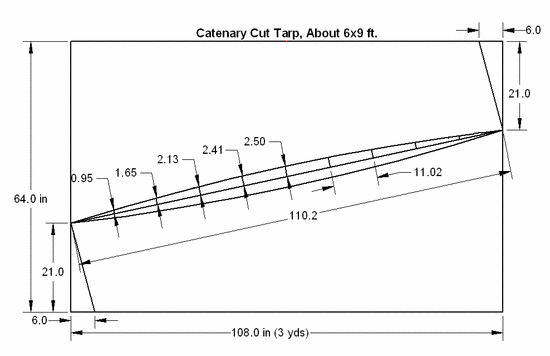
I sat down a few years back and worked out all the math for tarps and beaks and various variation including things like driving rain at different angles.
Simple flat doors and panels do the job with minimal fabric use. Point tapers on tarps tend to use more fabric even if they are more aerodynamic.
I've changed the design recently to turn the front into a dome (by adding a triangle extension between the two doors and a point at the rear (two equilateral triangles). This has increased the tent weight by 2oz but allowed me to use poles that are 2oz lighter and double the usable porch space.
What I often tend to do is peg out any design ideas in the garden using tent poles and long lengths of string. This can give me an idea of usable space and panel angles and things without spending money. If your neighbors see you then just tell them it's the latest in stealth camping technology ;-)
It's well worth calculating the surface area of the fabric for anything you design before you start cutting cloth. In that way it is then easy to work out how it all compares.
Most designs can be broken down into triangles and rectangles which is then simple high-school math to work wtih.