So I just watched the movie "Meru" about Conrad Anker climbing Meru. Great documentary. Anywho, I was surprised to see them using jetboils in temps as low as -20F. Granted they were in a ledge tent thing protected from the wind. Back in the day I used the original jetboil at 10F and had trouble. I remember a thread a while back about an improved fuel regulator when the Ti came out. Anyone recently try melting snow in sub freezing temps with a flash?
Topic
Jetboil in “Meru”
Become a member to post in the forums.
- This topic is empty.
I use a Sol Ti in temps below freezing (as low as 9F) all the time. Just warm the canister for a few minutes ahead of time and use the winter mix fuels. I do swap out an aluminum cup if I intend to melt snow with it. This is a rare occurrence as the standard Sol cups are really too small for this purpose. Tedious, slow and inefficient for watermaking…other than that, they work fine.
I noticed it too. I don't recall the specifics, but didn't it look like they were using a Sumo system? As I recall, they had a different JetBoil on their first attempt than they had on their 2nd. I'm getting the Blu-Ray next week. I can't wait to watch the film again with friends.
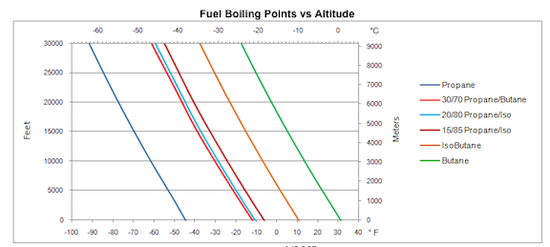
if they were at high altitude, canister stoves will work at lower temperature
"if they were at high altitude, canister stoves will work at lower temperature" How so? Vaporization pressure in the canister will not change, regardless of altitude. Teach me.
man, you can't get away with anything on BPL vaporization pressure inside the canister will stay the same, but the atmosphere pressure will be less. If vaporization pressure inside canister is less than atmosphere, then it'll work I don't have experience, just vaguely remembering this topic coming up before, too lazy to google it I thought I made a mistake once, but I was wrong : )
OK. Maybe this is the article you are thinking of According to Will R. – “Altitude offsets the effect of cold temperatures. The lower atmospheric pressure (with higher altitude) makes it easier for the liquid fuel to vaporize in the canister and supply the burner with gas.” And from the Zen of Stoves –
I think I get it. Once you open the canister to a lesser atmospheric pressure vaporization pressures change. (Similar to “boiling” water under an evacuated bell jar.)
and I make a perfect troll, get other people to do my googling : )
With the Sumo Ti you are warned to not use it to melt snow or cook food, as it will melt the fins badly. I use my Sumo Ti for freezer-bag style cooking so I don't need to use bags.
nm
The trick to safely melting snow on a JB is to always have a volume (1-1.5") of water in the cup. Introduce snow into the cup in a way that doesn't shock it with a rapid temp change. They work fine…slow, but fine.
>"if they were at high altitude, canister stoves will work at lower temperature" >How so? You know how water boils at a lower temperature at elevation? (that's why they include separate baking instructions for some packaged foods). Butane, iso-butane, and propane also each boil at a lower temperature at altitude. "boiling" if when the liquid's vapor pressure equals local atmospheric pressure. Higher elevation = lower atmospheric pressure = lower vapor pressure at boiling = a lower boiling point temperature. You might object, "the butane isn't in an open container exposed to the atmosphere", but after whatever pressure drop occurs the stove's valve, the vapors exit into the atmosphere. At 14,500 feet that's 6 psi lower and 8 psi at 20,320 feet.
Become a member to post in the forums.